
J-Times Editorial
J-Times 編集部 / J-Times Editorial Team
Shinjuku's year turns on Hanazono Shrine's festival in late May and its Rooster fair in November, Kumano Shrine in September and the Eisa parade in July. 2026's remaining dates, a month-by-month table and what is announced for 2027, from official sources.
Read this article to earn +5 MTC
Shinjuku festivals calendar 2026–2027: shrine festivals, Eisa, Tori-no-ichi and Shinjuku Gyoen
Short answer (as of 2026-10-25): Shinjuku's festival year rests on four events: Hanazono Shrine's annual festival in late May, the Shinjuku Eisa Festival on the last Saturday of July, Juniso Kumano Shrine's festival in September, and Hanazono Shrine's Rooster fair in November. In 2026 the Rooster fair falls on 6–7 and 18–19 November.
Disclosure: J-Times and Matsuri are both operated by Jon&Coo Inc. This article mentions Matsuri once, at the end. Everything else comes from the shrines' own pages, Shinjuku City, the Ministry of the Environment (which runs Shinjuku Gyoen), the Shinjuku Eisa Festival committee, the Shinjuku Central Park office and the other sources listed at the end, all checked on 25 October 2026.
Shinjuku is best known for its station, its towers and its nightlife. It is also a set of old parishes. Before the skyscrapers, it was Naitō-Shinjuku, a post town on the Kōshū road, and its shrines still carry their portable shrines through those streets every year. This guide lists the main festivals and seasonal events month by month. For each one it explains what it is, why it is held, when and where, and how to watch without getting in the way. Where a 2027 date has not been announced, we say so instead of guessing.
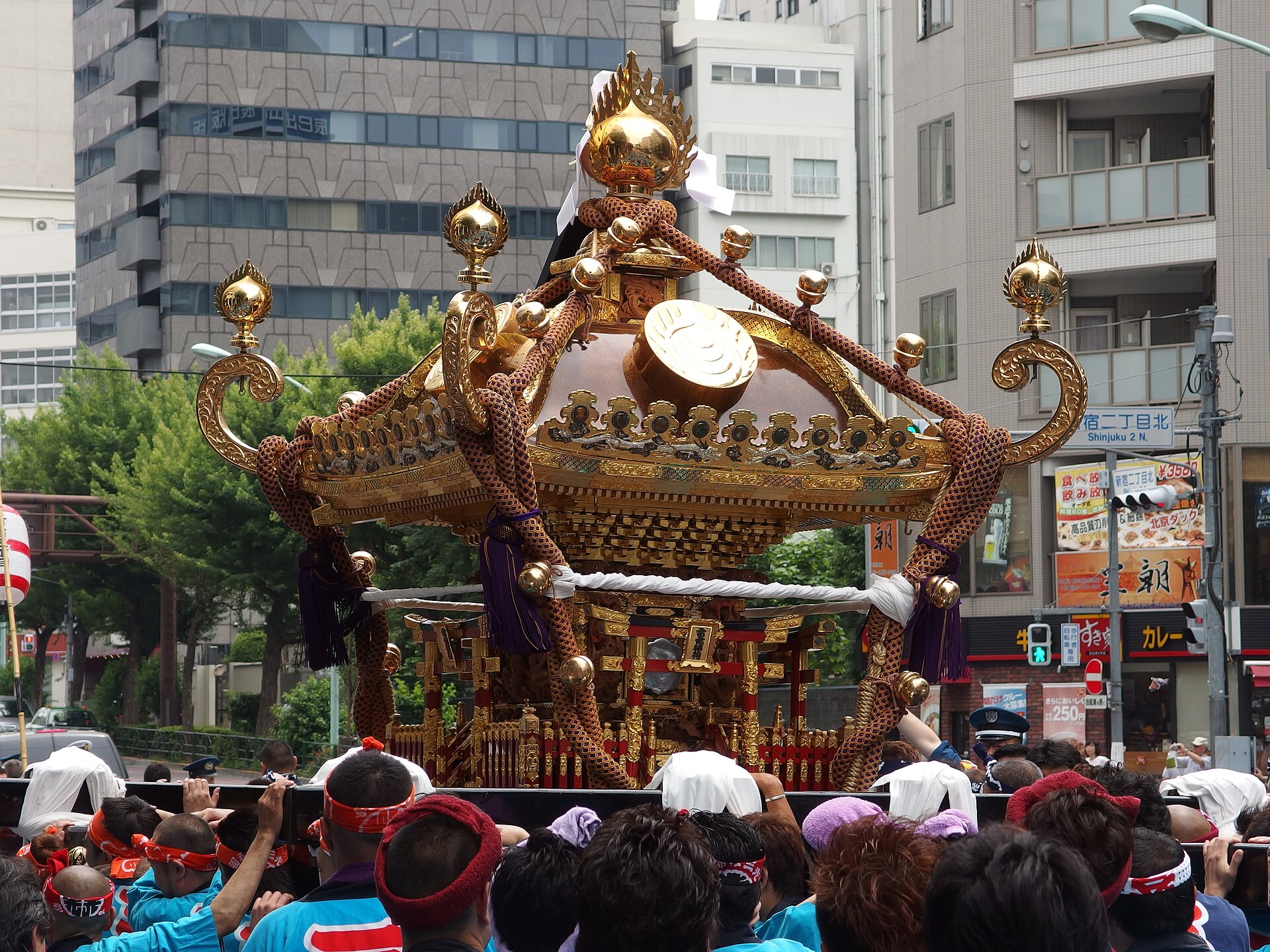
Photo: Guilhem Vellut / Wikimedia Commons / CC BY 2.0
What are the main festivals in Shinjuku?
The four big dates are Hanazono Shrine's annual festival (late May), the Shinjuku Eisa Festival (July), Juniso Kumano Shrine's annual festival (September) and Hanazono Shrine's Ōtori-sai Rooster fair (November).
Two shrines sit at the heart of Shinjuku's festival year. Hanazono Shrine, in Shinjuku 5-chome, says on its history page that it has been the guardian shrine (sō-chinju) of Shinjuku since before Tokugawa Ieyasu founded his government in Edo in 1603. Juniso Kumano Shrine stands on the west side, next to Shinjuku Central Park. The National Diet Library dates its founding to the Ōei era (1394–1428), when a man from Kii province enshrined the twelve Kumano deities of his home. Each shrine's annual festival sends mikoshi through its own parish.
The Eisa Festival is newer. It began in 2002, when the shopping-street associations around Shinjuku Station brought in Okinawan eisa drum dancing. Shinjuku Gyoen adds a garden calendar: cherry blossoms in spring and a chrysanthemum exhibition in November that continues an imperial tradition.
Shinjuku festival calendar, month by month
The table below lists each event's 2026 date and whether its 2027 date is out. As of 25 October 2026, the only 2027 date announced is Shinjuku Gyoen's spring opening period.
Dates come from the organisers' own pages where they exist. Neighbourhood shrine dates come from Kōhō Shinjuku, the city newsletter, which prints a "Shinjuku this year" calendar in its 1 January issue (the 2026 edition is used here, cross-checked with the 2024 edition).
| Month | Event | Where | 2026 | 2027 |
|---|---|---|---|---|
| January | New Year rites; Shinjuku Yamanote Seven Lucky Gods pilgrimage from 1 Jan; first Benzaiten day (5 Jan) | Hanazono Shrine; seven temples and shrines; Itsukushima Shrine (Nukebenten) | 1 Jan (Thu); 5 Jan | Not announced |
| February | Setsubun (bean-throwing to drive out misfortune) | Hanazono Shrine and many local shrines | 3 Feb (Tue) | Setsubun falls on 3 Feb (Wed) by the official calendar; programmes not announced |
| March–April | Spring special opening for cherry blossoms (open every day, Mondays included) | Shinjuku Gyoen | 25 Mar–24 Apr | 25 Mar (Thu)–24 Apr (Sat) 2027, published |
| March | Spring festival | Shinjuku Central Park | March (city calendar) | Not announced |
| May | Hanazono Shrine annual festival (reitaisai) | Hanazono Shrine and its parish streets | 22–25 May | Not announced |
| May | Nishimuki Tenjin Shrine annual festival | Nishimuki Tenjin Shrine, Shinjuku 6-chome | 25 May | Not announced |
| June | Suga Shrine annual festival | Suga Shrine, Yotsuya | 5–8 Jun | Not announced |
| June | Nagoshi no harae (mid-year purification) | Hanazono Shrine, Kumano Shrine and others | 30 Jun | Not announced |
| July | Shinjuku Eisa Festival | East and west sides of Shinjuku Station | 25 Jul (Sat), 13:00–20:00 | Not announced (traditionally the last Saturday of July) |
| August | Bon odori dance | Hanazono Shrine | 1–2 Aug | Not announced |
| August | Summer festival | Shinjuku Central Park | August (city calendar) | Not announced |
| September | Itsukushima Shrine (Nukebenten) annual festival | Yochō-machi | 5 Sep | Not announced |
| September | Juniso Kumano Shrine annual festival | Kumano Shrine, Nishi-Shinjuku, and its parish | 19–20 Sep | Not announced |
| September | Mori no Takigi Noh (Noh by firelight) | Shinjuku Gyoen | 24 Sep (garden calendar) | Not announced |
| October | Ebisu festival | Inari Kiō Shrine, Kabukichō | 19–20 Oct | Not announced |
| November | Chrysanthemum Exhibition | Shinjuku Gyoen, Japanese garden | 1–15 Nov | Not announced (the garden says it is held 1–15 Nov every year) |
| November | Ōtori-sai (Tori-no-ichi) | Hanazono Shrine | Eves 6 and 18 Nov; main days 7 and 19 Nov | Not announced; the Rooster days fall on 2, 14 and 26 Nov 2027 by the calendar |
| November | Ōtori-sai at neighbourhood shrines | Minakai Inari, Kumano, Suga, Narukotenjin and others | 7 and 19 Nov | Not announced |
| November | Orchid Exhibition | Shinjuku Gyoen greenhouse | 17–23 Nov | Not announced |
| December | Year-end purification (toshikoshi no harae) | Kumano Shrine (30 Dec), Hanazono Shrine (31 Dec) | 30 and 31 Dec | Not announced |
Dates that had already passed by 25 October 2026 are shown for reference only. Do not treat them as next year's dates.
What is still on in Shinjuku in late 2026?
From November 2026 to early 2027, the confirmed events are the Gyoen Chrysanthemum Exhibition (1–15 November), Hanazono Shrine's Ōtori-sai (6–7 and 18–19 November), the Gyoen Orchid Exhibition (17–23 November) and the shrines' year-end purification rites (30 and 31 December).
- Saturday 31 October – Tuesday 3 November: "Shinjuku Gourmet Garden", a food event listed on Shinjuku Central Park's own events page. Note that the park office has announced a full closure of the central lawn (shibafu hiroba) from Friday 30 October to Friday 13 November 2026.
- Sunday 1 – Sunday 15 November: Chrysanthemum Exhibition at Shinjuku Gyoen. The garden stays open on Mondays during the show.
- Friday 6 and Saturday 7 November; Wednesday 18 and Thursday 19 November: Hanazono Shrine's Ōtori-sai, the Shinjuku Tori-no-ichi. Several smaller shrines hold their own Ōtori-sai on 7 and 19 November.
- Tuesday 17 – Monday 23 November: Orchid Exhibition in the Gyoen greenhouse.
- Wednesday 30 and Thursday 31 December: Year-end purification at Kumano Shrine (30th) and Hanazono Shrine (31st).
- Every Sunday: Hanazono Shrine hosts an open-air antique market from sunrise to sunset. It is cancelled on festival days and when it rains.
For all of Tokyo in November, see Tokyo festivals and cultural events in November 2026.
Hanazono Shrine: when are the annual festival and the Rooster fair?
Hanazono Shrine holds its annual festival over four days in late May (22–25 May in 2026) and its Ōtori-sai Rooster fair on the Rooster days of November (6–7 and 18–19 November in 2026). 2027 dates are not yet announced.
Why it matters. Hanazono Shrine calls itself Shinjuku's guardian shrine. Its history page says the shrine moved to its present site in the Kan'ei era (1624–1644), onto part of a garden of the Owari Tokugawa estate "where many flowers bloomed". That garden gave the shrine its name, hanazono ("flower garden"). The shrine also explains its long link with the performing arts. When fires destroyed its buildings in 1780 and 1811, it raised money for rebuilding by staging shows and plays in its grounds. In the post-war years the grounds hosted experimental tent theatre.
The annual festival (reitaisai). A reitaisai is a shrine's most important festival of the year, held on a day linked to its deity or its founding (Kokugakuin University, Encyclopedia of Shinto). The shrine's 2026 notice set out the programme:
- 22 May (Fri): eve-of-festival rite; stalls from the evening until 22:00.
- 23 May (Sat): main ceremony at 11:00; the eight parish neighbourhoods carry their own mikoshi.
- 24 May (Sun): shinkōsai, when the shrine's two great mikoshi, the Honsha and the Raiden, leave the shrine at 9:40 and return at about 19:30. The shrine published a live GPS map of their position for that day only.
- 25 May (Mon): closing rite. There are no stalls.
About 100 stalls set up in the grounds. A mikoshi is a palanquin that carries a deity (Kokugakuin University Museum), so on procession day the shrine's deity travels through the streets of its parish. The shrine's grounds guide adds two details. Its two great mikoshi stay in the treasure house until the omote-matsuri, the grand version of the festival held once every two years; 2026 was such a year. A festival float (dashi), donated in 1985, carries children playing Shimada-bayashi music in front of the main mikoshi in May. The shrine has not said what the 2027 festival will include.
The Ōtori-sai (Tori-no-ichi). Hanazono Shrine merged its smaller Ōtori shrine into the main shrine when the hall was rebuilt in 1965, and it holds the Ōtori-sai in November. This is Shinjuku's Tori-no-ichi. The shrine's notice of 7 October 2026 gives:
| Day | Stall hours |
|---|---|
| Eve of the first Rooster day, Fri 6 Nov | from about 15:00 to 24:00 |
| First Rooster day, Sat 7 Nov | from about noon to 24:00 |
| Eve of the second Rooster day, Wed 18 Nov | from about 15:00 to 24:00 |
| Second Rooster day, Thu 19 Nov | from about noon to 24:00 |
The shrine says about 260 stalls set up during the fair, and the lanterns go out at about midnight. Entry to the grounds may be restricted when crowded after 18:00. Its own lucky rakes (hana-kumade) are given out in limited numbers on the main days only, and during the fair, goshuin (shrine stamps) are available only pre-written. For how the fair works and how to buy a kumade rake, see our Tori-no-ichi 2026 guide.
Other dates at Hanazono Shrine in 2026: the yubana hot-water rite (8 January), Setsubun (3 February), purification on 30 June and 31 December, and a bon odori dance on 1–2 August.
Where: Shinjuku 5-17-3. The shrine's access page gives 0 minutes from Shinjuku-sanchome Station exit E2 and 7 minutes from the east exit of JR Shinjuku.
When is the Juniso Kumano Shrine festival?
Juniso Kumano Shrine in Nishi-Shinjuku holds its annual festival in September. Shinjuku City's calendars list it on 21–22 September in 2024 and 19–20 September in 2026. The 2027 date is not announced.
Why it is held. The National Diet Library's guide to famous Edo sites says that around the Ōei era a man named Suzuki Kurō arrived from Kii province and enshrined the twelve Kumano deities of his home. The area took the name Jūnisō ("twelve shrines") from them. A leaflet published by the West Shinjuku 4-chome neighbourhood association and Shinjuku City adds that the shrine's pond and waterfall made it a famous beauty spot in the Edo period, and that the shogun Tokugawa Yoshimune visited on a hawking trip. Today the shrine stands beside Shinjuku Central Park, and the towers of West Shinjuku rise behind it.
The same leaflet calls the September festival the high point of the neighbourhood's year and says that the neighbourhood is one of the thirteen mutsumi (festival groups) of the shrine's parish. It also mentions a hand-made mikoshi donated by local residents in 1980, which is shown to the neighbourhood at each year's festival. We could not find a working official website for the shrine (see note below), so check the posters in the shrine grounds and the neighbourhood boards in late August for the year's programme.
Note: The web address shown as this shrine's official site on English Wikipedia (12so-kumanojinja.jp) now leads to an unrelated content site, as of 25 October 2026. Don't rely on it.
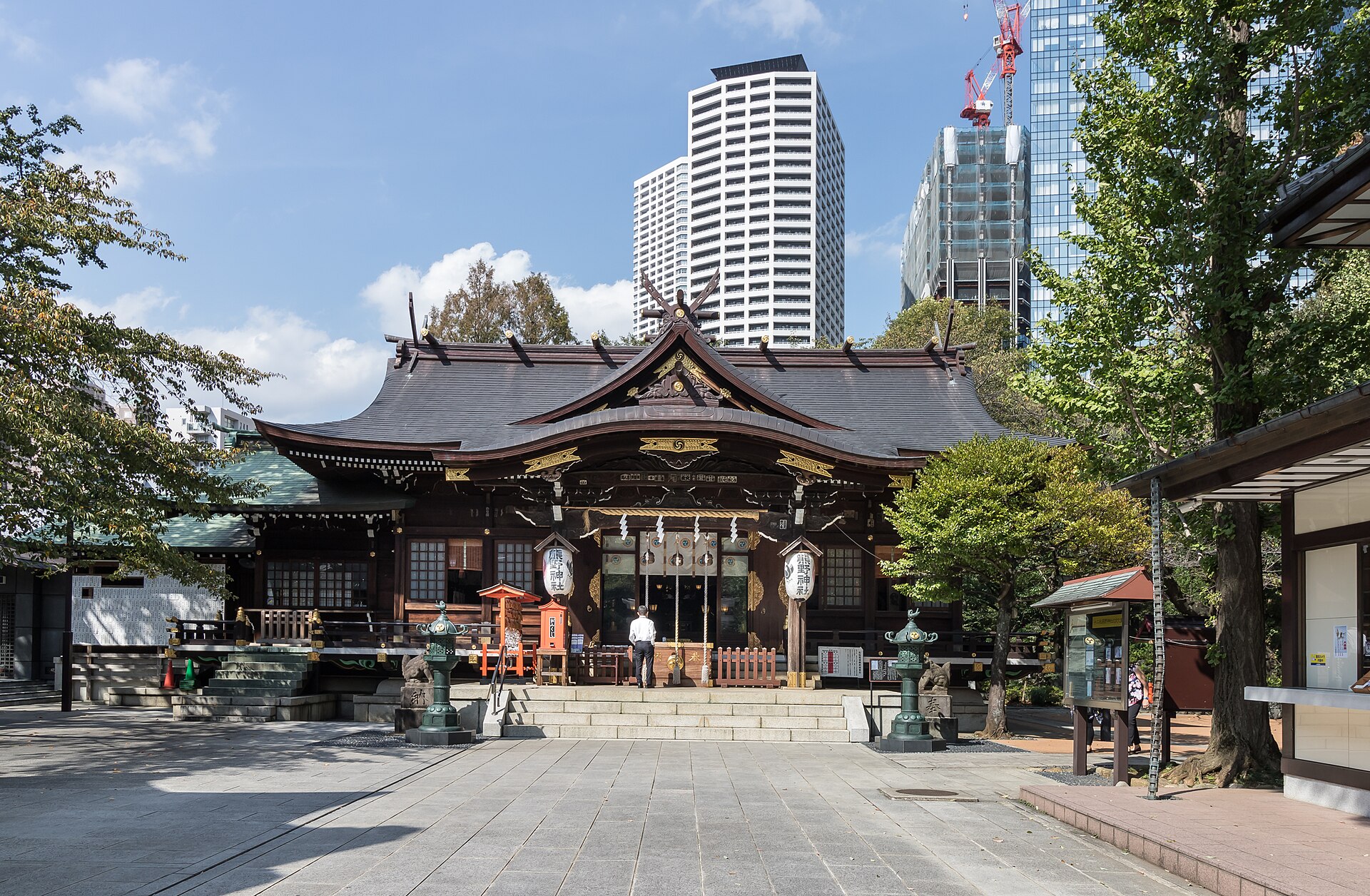
Photo: Kakidai / Wikimedia Commons / CC BY-SA 4.0
Where: Nishi-Shinjuku 2-11-2, on the west edge of Shinjuku Central Park. The shrine also holds an Ōtori-sai on the November Rooster days and purification rites on 30 June and 30 December (Shinjuku City calendar).
What is the Shinjuku Eisa Festival, and why is an Okinawan dance in Shinjuku?
The Shinjuku Eisa Festival is a street parade of Okinawan eisa drum dancing around Shinjuku Station, watched from the roadside, held on the last Saturday of July. In 2026 it was the 23rd festival, on 25 July from 13:00 to 20:00. The 2027 date is not announced.
What eisa is. The festival's own explanation says that eisa is a nembutsu dance, held on the last day of the Okinawan Bon festival (the 15th day of the 7th lunar month) to send the spirits of the ancestors back to the other world. Young men and women traditionally danced through the village, praying for each household's health and prosperity. After the war, eisa contests were held on Okinawa and the dance became more of a spectacle, with big drums, hand dancers and the white-faced clown figure, the chondarā.
Why Shinjuku. In 2001 an eisa team from Okinawa was invited to a Shinjuku festival. The festival committee says that officers of four shopping-street associations who saw it agreed that eisa suited Shinjuku better than any other dance. The first Shinjuku Eisa Festival followed in 2002, on the last Saturday of July, and it has been held on that day ever since. The 2026 festival was run by eight shopping-street associations from both sides of the station, with Shinjuku City, Okinawa Prefecture and Naha City among its supporters. Shinjuku City reported that 23 groups performed in 2026.
How big? The committee's own figures for 2025 were 21 groups, 759 performers and 670,000 visitors.
How to watch. The festival's FAQ says that there is no seating, so viewers stand around each performance site and share the space. No temporary toilets or parking are provided. It goes ahead in light rain. Okinawan food and promotion booths line Mo-A 4-bangai, the street off the station's east side.
If the July tradition holds, the last Saturday of July 2027 is 31 July. That is a calendar fact, not an announcement. In 2026 the committee announced the date on 15 May.
What seasonal events does Shinjuku Gyoen hold?
Shinjuku Gyoen's main seasonal events are the spring special opening for cherry blossoms (25 March–24 April 2027, already announced), the Chrysanthemum Exhibition (1–15 November every year) and the Orchid Exhibition in November (17–23 November in 2026).
Shinjuku Gyoen is a national garden run by the Ministry of the Environment. The land was the Naitō family estate that gave Naitō-Shinjuku its name, as Hanazono Shrine's history page also notes.
- Spring special opening. The garden opens every day, Mondays included, from 25 March to 24 April, the cherry season. The 2027 calendar already shows 25 March (Thursday) to 24 April (Saturday) 2027.
- Chrysanthemum Exhibition, 1–15 November. The garden says this continues an imperial tradition. In 1878 the Imperial Household Ministry held the first chrysanthemum viewing at the Akasaka palace. From 1925 all the chrysanthemums for the imperial viewing party were grown at Shinjuku Gyoen, and in 1929 the party itself moved there. Since 1949, when the garden became a national garden open to the public, the display has been opened every year. Each bed sits in its own wooden or bamboo pavilion (uwaya) and shows one style: cascading kengai chrysanthemums, the ōzukuri style of hundreds of blooms trained from one plant, and classic regional types from Edo, Ise, Saga and Higo.
- Orchid Exhibition. Every mid-November in the greenhouse: orchids grown in the garden plus about 200 pots entered by orchid growers. The garden describes itself as the birthplace of serious Western-orchid growing in Japan.
- Mori no Takigi Noh. An evening of Noh and Kyōgen by firelight, held in the garden since 1985. The garden's 2026 calendar marked it on 24 September.
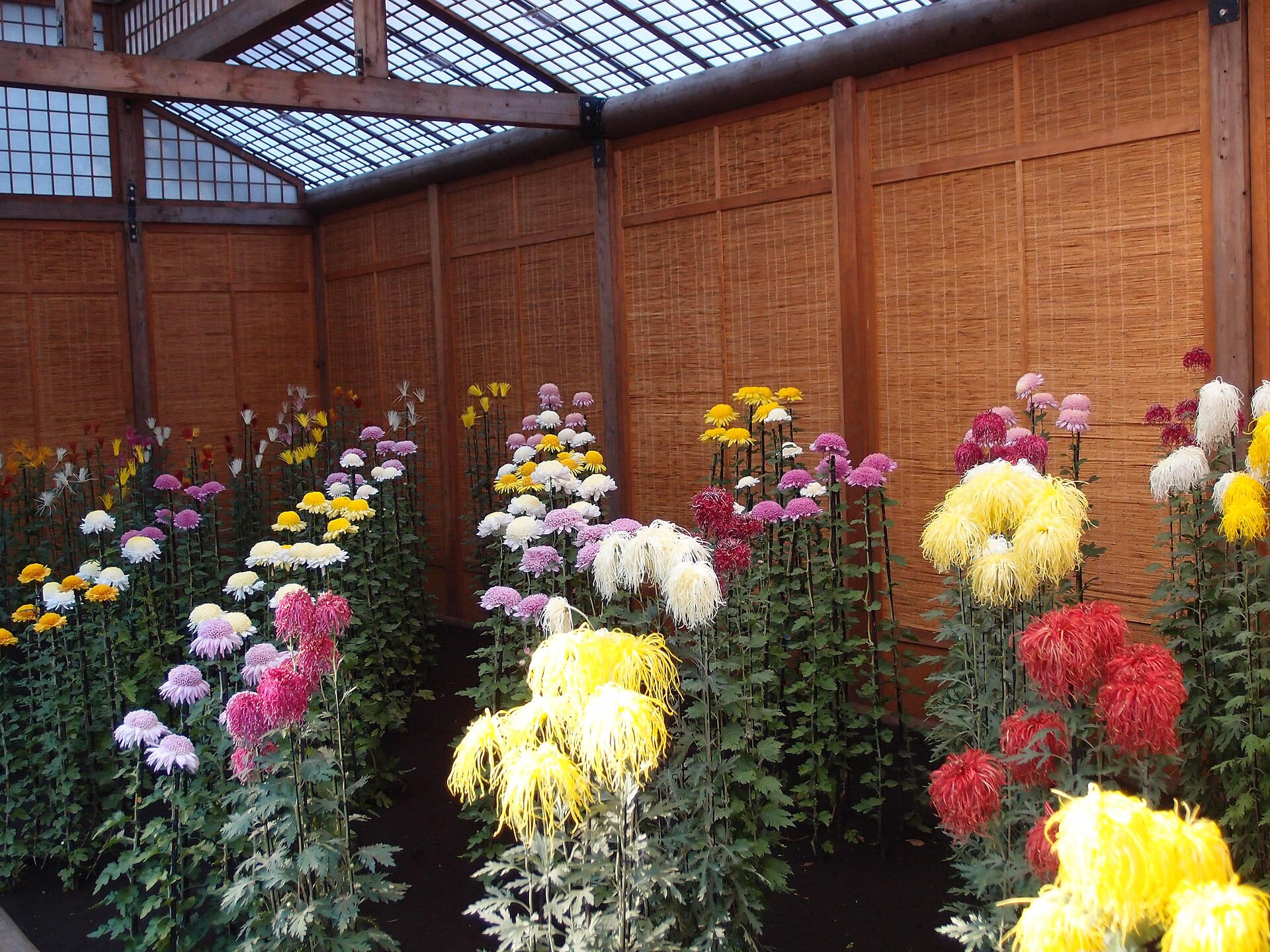
Photo: Guilhem Vellut / Wikimedia Commons / CC BY 2.0
Rules to know. Shinjuku Gyoen charges admission and bans alcohol. Its rules also forbid profit-making activity without the garden's permission: selling goods, and holding paid classes, competitions, shows or exhibitions of any kind (photo, sketching, yoga and walking classes are named). Flags and banners are banned too. Before you plan a picnic or a group visit, read our Shinjuku Gyoen rules guide.
Which other neighbourhood shrines in Shinjuku hold festivals?
Shinjuku City's 2026 calendar lists annual festivals at Nishimuki Tenjin Shrine (25 May), Suga Shrine in Yotsuya (5–8 June), Itsukushima Shrine, known as Nukebenten (5 September), and an Ebisu festival at Inari Kiō Shrine (19–20 October). None has announced a 2027 date.
These are small parish festivals with local mikoshi and a few stalls, not tourist events. The dates below come from the city's calendar. The 2024 edition gave the same days or the same season.
- Nishimuki Tenjin Shrine (Shinjuku 6-chome): a Tenjin shrine, dedicated to the scholar Sugawara no Michizane. Annual festival on 25 May in both 2024 and 2026.
- Suga Shrine (Sugachō, Yotsuya): annual festival in early June (5–8 June 2026; 31 May–3 June 2024). It also holds an Ōtori-sai on the November Rooster days.
- Itsukushima Shrine, "Nukebenten" (Yochō-machi): the Benzaiten stop on the Shinjuku Yamanote Seven Lucky Gods pilgrimage. First Benzaiten day on 5 January, annual festival on 5 September.
- Inari Kiō Shrine (Kabukichō): Ebisu festival on 19–20 October, plus its own Setsubun rite.
- Minakai Inari Shrine (Hyakunin-chō) and Narukotenjin Shrine (Nishi-Shinjuku): annual festivals in September (27 and 25 September in 2026), and Ōtori-sai in November.
None of these shrines publishes its programme on a website we could find. If you want to go, check the notice board at the shrine gate in the weeks before.
What happens in Shinjuku Central Park through the year?
Shinjuku Central Park hosts a spring festival in March and a summer festival in August, both run by the park office according to Shinjuku City's calendar, plus food events, flea markets and nature programmes that it lists on its own events page.
The park sits next to Juniso Kumano Shrine and below the Tokyo Metropolitan Government Building. In summer the city calendar also lists an evening event, the "Water and Green Evening Bar" (July–August), and the shallow jabu-jabu paddling pool for children (July–September). On 25 October 2026 the park's events page showed the Shinjuku Gourmet Garden (31 October–3 November), a barbecue event (7–8 November) and a flea market (21 November).
Groups: the park's FAQ says that groups of 20 or more should consult Shinjuku City first, because some uses need an application. Open fires are banned except at authorised events. For a casual picnic, see our Shinjuku Chuo Park hanami picnic report.
How do you watch a Shinjuku festival respectfully?
Treat the procession as a religious rite, not a parade put on for you. Give the mikoshi and its bearers the right of way, follow the instructions of marshals and police, and keep to the edges of the road.
- Know what is passing. The mikoshi carries the deity through its parish. Do not touch it or step into the bearers' path. If you want to help carry one, ask a neighbourhood association well in advance; do not join in on the day.
- Pray first, shop second. At a shrine festival, the usual order is to pay your respects at the hall before visiting the stalls. If you are unsure how, read how to visit a Japanese shrine, step by step.
- Expect entry limits. Hanazono Shrine says it may restrict entry to the grounds after 18:00 on busy Rooster-fair nights. Go earlier if you want to look at the rakes calmly.
- Photograph the festival, not strangers. Ask before taking close-up photos of bearers, dancers or children.
- Take your rubbish home. The Eisa Festival FAQ notes that no temporary toilets or seats are provided. Plan for crowds and leave the space as you found it.
- Mind the garden rules. No alcohol and no unauthorised paid gatherings in Shinjuku Gyoen.
What is the biggest festival in Shinjuku?
There is no official ranking. By visitors, the Shinjuku Eisa Festival is the largest single day: its organisers counted 670,000 people in 2025. By religious importance, Hanazono Shrine's annual festival in May is the main festival of Shinjuku's guardian shrine.
The Eisa figures are the committee's own and include people who pass through the station area. Hanazono Shrine's November Ōtori-sai, with about 260 stalls by the shrine's count, is the busiest event inside a shrine's grounds.
Is there a Tori-no-ichi in Shinjuku?
Yes. Hanazono Shrine's Ōtori-sai is Shinjuku's Tori-no-ichi. In 2026 it is held on 6–7 and 18–19 November, with stalls until about midnight.
Smaller Ōtori-sai are held on the main days (7 and 19 November 2026) at Minakai Inari, Kumano, Suga and Narukotenjin shrines, according to Shinjuku City's calendar. The best-known fair is in Asakusa. For a comparison of venues and how to buy a kumade, see our Tori-no-ichi 2026 guide.
Are Shinjuku's festivals free to attend?
Watching the shrine festivals and the Eisa parade costs nothing; none of the organisers' notices mention an entry charge. Shinjuku Gyoen's seasonal events are inside a garden that charges admission.
You pay only for what you buy at the stalls, and for any offering or charm at the shrine. Shinjuku Central Park is free to enter; some events inside it charge for food or activities.
When will the 2027 festival dates be announced?
Most organisers publish only weeks or months ahead. In 2026, Hanazono Shrine posted its May festival notice on 24 April and its Ōtori-sai notice on 7 October, and the Eisa committee announced its date on 15 May. Shinjuku City's newsletter prints the year's calendar in its 1 January issue.
The one 2027 date already out is Shinjuku Gyoen's spring special opening (25 March–24 April 2027). We plan to update this calendar in early January 2027.
Can I organise a group meetup at one of these places?
Check the rules first. Shinjuku Gyoen bans paid classes and events without permission. In Shinjuku Central Park, groups of 20 or more should consult Shinjuku City. Shrine grounds are places of worship, so ask the shrine office before you plan anything there.
If you are looking for an existing language exchange or social meetup rather than organising your own, our guide how to join a language exchange in Tokyo explains the formats and how to choose a safe one. For festivals across Japan, see Japanese festivals: the ultimate cultural experience.
Finding smaller gatherings between the big dates
Shinjuku's big festivals come a few times a year. Matsuri, run by the same company as J-Times, lists cultural experiences and community gatherings in Tokyo, including language exchanges, on its events page. Each listing shows its own calendar, and a listing takes bookings only when its host has opened a date.
Sources and dates checked (all checked on 2026-10-25)
- Hanazono Shrine, "Annual events" (2026 calendar: New Year, yubana, Setsubun, annual festival 22–25 May, purifications, bon odori 1–2 Aug, Ōtori-sai 6/7 and 18/19 Nov, Sunday antique market) — http://hanazono-jinja.or.jp/ceremony/ (primary)
- Hanazono Shrine, "Reiwa 8 (2026) Hanazono Shrine annual festival", posted 24 April 2026 (programme, mikoshi times, about 100 stalls, GPS map) — http://hanazono-jinja.or.jp/news/%e4%bb%a4%e5%92%8c8%e5%b9%b4%e5%ba%a6%e3%80%80%e8%8a%b1%e5%9c%92%e7%a5%9e%e7%a4%be%e4%be%8b%e5%a4%a7%e7%a5%ad/ (primary)
- Hanazono Shrine, "Reiwa 8 (2026) Ōtori-sai", posted 7 October 2026 (stall hours, about 260 stalls, entry restriction after 18:00, hana-kumade, goshuin) — http://hanazono-jinja.or.jp/news/%e4%bb%a4%e5%92%8c%e4%ba%94%e5%b9%b4%e5%a4%a7%e9%85%89%e7%a5%ad/ (primary)
- Hanazono Shrine, "Reiwa 8 bon odori", posted 11 July 2026 — http://hanazono-jinja.or.jp/news/%e4%bb%a4%e5%92%8c%ef%bc%98%e5%b9%b4%e7%9b%86%e8%b8%8a%e3%82%8a/ (primary)
- Hanazono Shrine, "Origins and history", "Hanazono Shrine and Shinjuku" and "Guide to the grounds" (guardian shrine before 1603, the flower-garden name, Ōtori shrine merged 1965, theatre and fund-raising shows of 1780 and 1811, mikoshi every two years, dashi float, neighbourhood mikoshi) — http://hanazono-jinja.or.jp/about/about1/ , http://hanazono-jinja.or.jp/about/about2/ , http://hanazono-jinja.or.jp/about/about3/ , access: http://hanazono-jinja.or.jp/access/ (primary)
- Shinjuku City, Kōhō Shinjuku, 1 January 2026 issue, page 4, "Shinjuku this year" (2026 calendar of shrine festivals, Eisa, Central Park festivals, Gyoen events; shrine addresses) — https://www.city.shinjuku.lg.jp/content/000444613.pdf ; issue index https://www.city.shinjuku.lg.jp/kusei/koho_20260101_index.html (primary)
- Shinjuku City, Kōhō Shinjuku No. 2450, 1 January 2024, page 4, "Shinjuku this year" (2024 calendar, cross-check) — https://www.city.shinjuku.lg.jp/content/000385466.pdf (primary)
- West Shinjuku 4-chome neighbourhood association and Shinjuku City Community Division, neighbourhood leaflet (Juniso name, September festival, thirteen bearer groups, 1980 mikoshi, Juniso chronicle) — https://www.city.shinjuku.lg.jp/content/000400887.pdf (primary)
- National Diet Library, "Famous places of Japan in prints and photographs: Kumano Jūnisō" (origin, Suzuki Kurō, pond and waterfall) — https://www.ndl.go.jp/landmarks/sights/kumanojuniso/
- Shinjuku Eisa Festival committee, official site: 2026 outline, "What is eisa?", "How the festival began" (history and organisers' visitor figures), Q&A — https://shinjuku-eisa.com/ , https://shinjuku-eisa.com/about/index.html , https://shinjuku-eisa.com/story/index.html , https://shinjuku-eisa.com/faq/index.html (primary)
- Shinjuku City, Mayor's diary, July 2026 (23rd Shinjuku Eisa Festival, 25 July 2026, 23 groups, organisers) — https://www.city.shinjuku.lg.jp/kucho/diary/diary_202607_03.html (primary)
- Ministry of the Environment, Shinjuku Gyoen: "Major events", calendars for September and November 2026 and March 2027, "Chrysanthemums and the Chrysanthemum Exhibition", "Garden rules" — https://policies.env.go.jp/national-garden/shinjukugyoen/event/major_events/ , https://policies.env.go.jp/national-garden/shinjukugyoen/event/calendar/202609.html , https://policies.env.go.jp/national-garden/shinjukugyoen/event/calendar/202611.html , https://policies.env.go.jp/national-garden/shinjukugyoen/event/calendar/202703.html , https://policies.env.go.jp/national-garden/shinjukugyoen/highlights/kiku/ , https://policies.env.go.jp/national-garden/shinjukugyoen/guide/rule/ (primary)
- Shinjuku Central Park (Parks and Recreation Foundation consortium), home page and events (Gourmet Garden 31 Oct–3 Nov 2026, lawn closure notice 30 Oct–13 Nov 2026), FAQ (groups of 20 or more, fire) — https://shinjukuchuo-park.jp/ , https://shinjukuchuo-park.jp/faq/ (primary)
- National Astronomical Observatory of Japan, Rekiyōkō 2027 (Setsubun 3 February 2027), announced 2 February 2026 — https://eco.mtk.nao.ac.jp/koyomi/yoko/2027/rekiyou272.html (primary)
- Kokugakuin University, Encyclopedia of Shinto, "Reisai" — https://d-museum.kokugakuin.ac.jp/eos/detail/?id=9282
- Kokugakuin University Museum, "MIKOSHI – The Portable Shrine" exhibition overview (2024) — https://museum.kokugakuin.ac.jp/en/special_exhibition/detail/2024_mikoshi.html
- Images: Wikimedia Commons file pages (licences checked) — https://commons.wikimedia.org/wiki/File:Hanazono_Shrine_Festival_@_Shinjuku_(15048948167).jpg , https://commons.wikimedia.org/wiki/File:Juniso_Kumano-jinja_(Shinjuku).jpg , https://commons.wikimedia.org/wiki/File:Chrysanthemum_@_Shinjuku_Gyoen_National_Garden_(10960043093).jpg
By J-Times Editorial (information as of 2026-10-25)
Written by
J-Times Editorial
J-Times 編集部 / J-Times Editorial Team