J-Times Editorial
J-Times 編集部 / J-Times Editorial Team
Tokyo in November 2026, with dates checked on organisers' official pages: Tori-no-ichi rake fairs on 7 and 19 Nov, Meiji Jingu on 1 and 3 Nov, Shichi-Go-San, Niinamesai and the ginkgo season.
Read this article to earn +5 MTC
Tokyo festivals and cultural events in November 2026
Short answer (as of 2 October 2026): November 2026 in Tokyo is anchored by the Tori-no-ichi rake fairs on 7 and 19 November, Meiji Jingu's festival on 3 November, Shichi-Go-San around 15 November and Niinamesai on 23 November. Ginkgo and maple colour peaks in late November.
Disclosure: J-Times and Matsuri are both operated by Jon&Coo Inc. This calendar includes one Matsuri event (8 November, Ebisu), marked as ours. Every other date below was checked on the organiser's official page on 2 October 2026.
November is one of the best months to be in Tokyo. The summer heat is gone, the city's shrines hold some of their most important rites of the year, and the ginkgo avenues turn gold towards the end of the month. This page lists what is confirmed for November 2026, with the official link for each entry, and says plainly which events have not yet announced their 2026 dates. Dates can change, so check the official page again in the week before you go.
Which festivals and events in Tokyo have confirmed dates for November 2026?
As of 2 October 2026, these November 2026 dates are confirmed on the organisers' own pages. Events that start in late October and run into November are included.
| Date (2026) | Event | Place | Official page |
|---|---|---|---|
| 23 Oct (Fri) – 1 Nov (Sun) | 66th Kanda Used Book Festival | Jimbocho, Chiyoda | jimbou.info |
| 26 Oct (Mon) – 4 Nov (Wed) | 39th Tokyo International Film Festival | Hibiya, Yurakucho, Marunouchi, Ginza | tiff-jp.net |
| 31 Oct (Sat) – 1 Nov (Sun) | Tokyo Grand Tea Ceremony 2026 (Hama-rikyu venue) | Hama-rikyu Gardens, Chuo | Tokyo Metropolitan Government |
| 1 Nov (Sun) | Chinza Kinensai, the start of Meiji Jingu's autumn festival | Meiji Jingu, Shibuya | meijijingu.or.jp |
| 1 Nov (Sun) – 15 Nov (Sun) | Chrysanthemum Exhibition | Shinjuku Gyoen | Ministry of the Environment |
| 3 Nov (Tue, Culture Day) | Reisai, Meiji Jingu's annual grand festival | Meiji Jingu | meijijingu.or.jp |
| 7 Nov (Sat) | Ichi-no-tori, the first Tori-no-ichi day (midnight to midnight) | Otori Shrine, Asakusa; Hanazono Shrine, Shinjuku | otorisama.or.jp / Hanazono Shrine |
| 7 Nov (Sat) – 8 Nov (Sun) | 25th Dream Yosacoy Festival | Odaiba, Marunouchi | dreamyosacoy.jp |
| 8 Nov (Sun) 16:00–22:00 | Matsuri release event (our own event) | Ebisu | The Matsuri feature |
| 15 Nov (Sun) | Shichi-Go-San (the customary day) | Shrines across Tokyo | Association of Shinto Shrines |
| 17 Nov (Tue) – 23 Nov (Mon) | Orchid Exhibition | Shinjuku Gyoen | Ministry of the Environment |
| 19 Nov (Thu) | Ni-no-tori, the second and last Tori-no-ichi day of 2026 | Otori Shrine, Asakusa; Hanazono Shrine, Shinjuku | otorisama.or.jp / Hanazono Shrine |
| 21 Nov (Sat) – 22 Nov (Sun) | 47th Hachioji Ginkgo Festival | Koshu Kaido avenue, Hachioji | ichou-festa.org |
| 23 Nov (Mon, Labour Thanksgiving Day) | Niinamesai, the harvest thanksgiving rite | Imperial Palace and shrines, including Meiji Jingu | Imperial Household Agency |
| 25 Nov (Wed) – 6 Dec (Sun) | Rikugien autumn-leaf night viewing | Rikugien Gardens, Bunkyo | Tokyo Metropolitan Park Association |
Two public holidays fall in November 2026: Culture Day on Tuesday 3 November and Labour Thanksgiving Day on Monday 23 November, according to the Cabinet Office. The second gives Tokyo a three-day weekend from Saturday 21 to Monday 23 November.
Which November events have not announced their 2026 dates yet?
As of 2 October 2026, four regular November events had not published 2026 dates on their official pages. Do not plan around a date for these until the organiser posts one.
- Meiji Jingu Gaien Ginkgo Festival. 2026 dates not announced (as of 2026-10-02). The Gaien's official event page still shows the 2019 festival, which ran from 15 November to 1 December.
- Mt. Takao Momiji (autumn leaves) Festival. 2026 dates not announced (as of 2026-10-02). The Hachioji tourism association's page still shows the 2025 festival, held from 25 October to 14 December.
- Autumn public opening of Inui-dori, the road through the Imperial Palace grounds. 2026 dates not announced (as of 2026-10-02). The Imperial Household Agency's page lists only the spring 2026 opening. Its records show that the autumn openings from 2022 to 2025 each began between 25 and 30 November and ran for nine days.
- The programme of Meiji Jingu's autumn festival. The rites on 1 and 3 November are fixed annual dates. The schedule of performances, including yabusame (horseback archery), was not yet on the shrine's news page (as of 2026-10-02).
When is Tori-no-ichi in 2026, and is there a third rooster day?
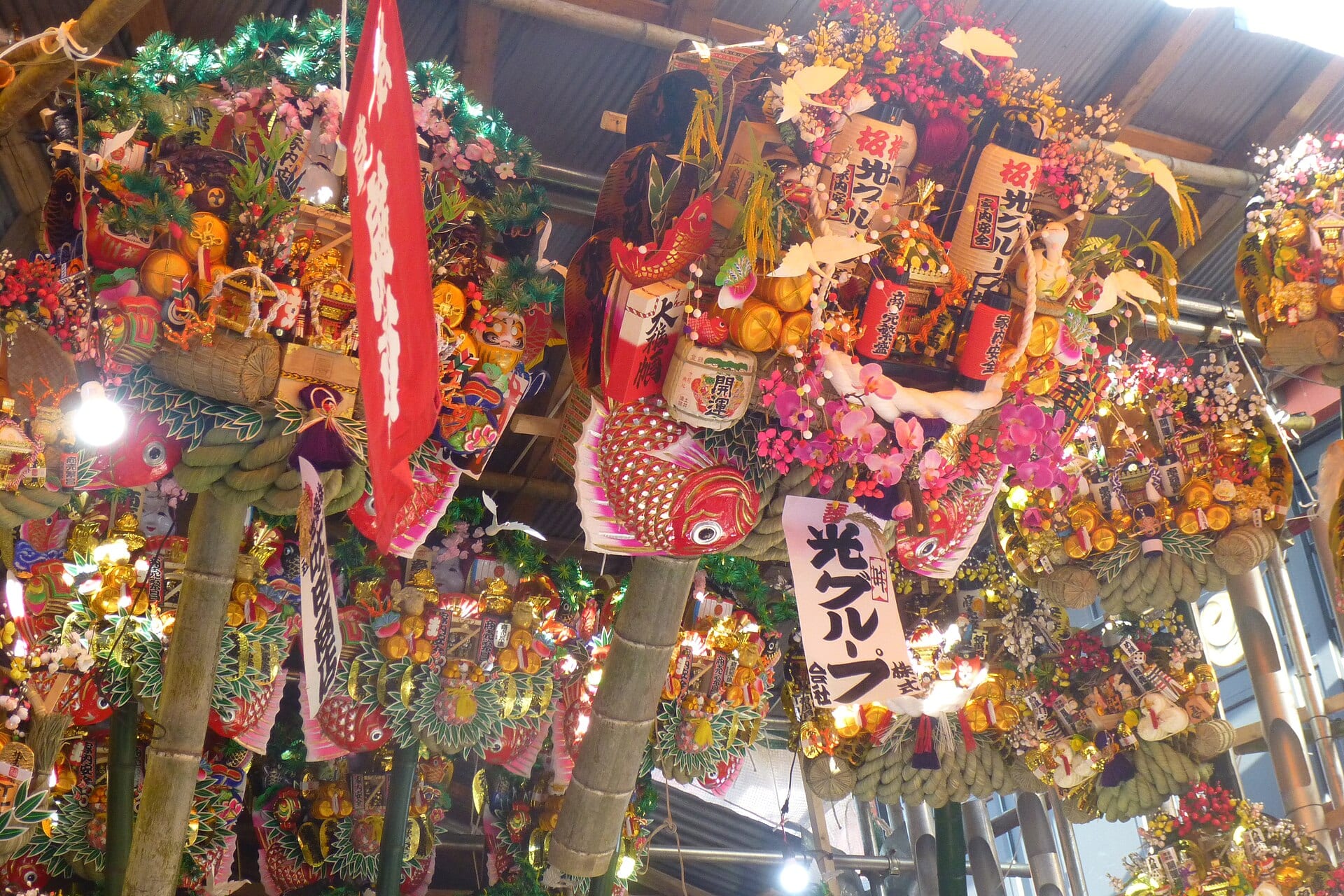
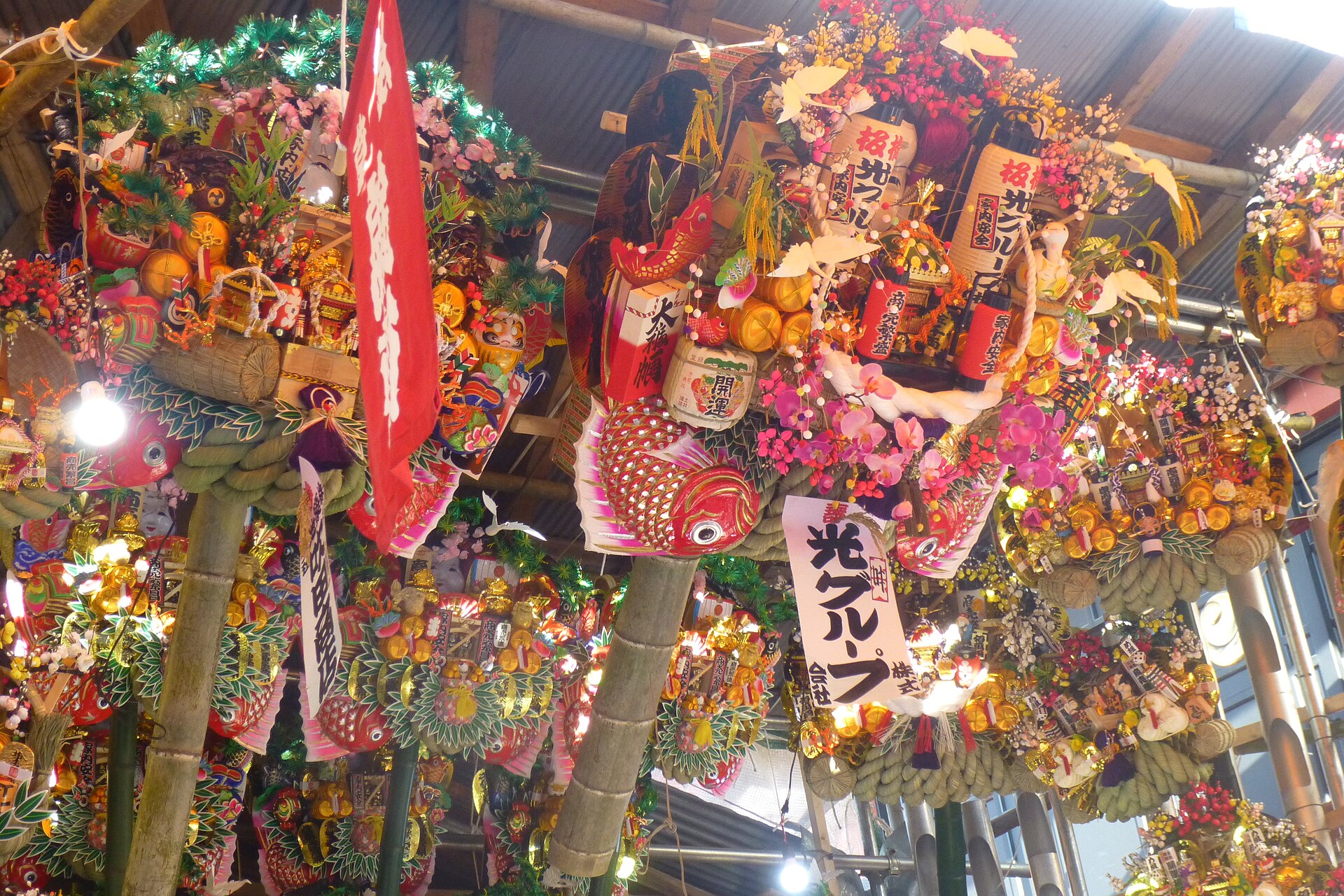
In 2026 Tori-no-ichi falls on Saturday 7 November and Thursday 19 November. There is no third day. Otori Shrine in Asakusa holds each fair for 24 hours, from midnight to midnight.
Tori-no-ichi is a fair held at Otori (eagle) shrines on the days of the rooster in November. The days follow the old 12-day cycle of the Chinese zodiac, so some years have two rooster days in November and some have three. Otori Shrine in Asakusa says the 2026 fair "will be held up to the second rooster day". The travel sites Rurubu and LIVE JAPAN give the same two dates.
People come to buy kumade, bamboo rakes decorated with lucky charms, to rake in good fortune and business for the year ahead. The Asakusa shrine says around 150 kumade stalls set up in and around its grounds, and that the fair draws 700,000 to 800,000 people a year. Its own advice: start with a small rake and buy a bigger one each year as your business or household grows. Two old lucky foods are still sold at the Asakusa fair: yatsugashira, a taro said to bring promotion and many children, and kirizansho, strips of sweet rice cake flavoured with Japanese pepper.
Hanazono Shrine in Shinjuku holds its own fair, the Ōtori-sai, on the same days. Its eve festivals are on Friday 6 and Wednesday 18 November, and its main days are 7 and 19 November.
Tips: The fair runs through the night, and the first rooster day in 2026 is a Saturday, so expect the biggest crowds that evening. The second day is a weekday. You do not have to buy a rake to visit. Ask before photographing a stall, and keep to the flow of the crowd near the shrine.
When is Meiji Jingu's autumn festival in 2026?
Meiji Jingu holds its Chinza Kinensai on 1 November and its Reisai, or grand annual festival, on 3 November. Together they are known as the autumn grand festival.
Meiji Jingu's annual calendar sets both dates. 1 November marks the day in 1920 when the shrine's deities were enshrined, and the shrine says performances are offered on its stage and around the grounds. 3 November is the birthday of Emperor Meiji, and an imperial envoy attends the rite. The shrine's calendar shows yabusame as one of the offerings made during the autumn festival, but the 2026 programme had not been posted on 2 October.
Meiji Jingu's gates follow the sun. In November they open at 6:10 and close at 16:10, according to the shrine's website. Arrive early on 3 November, a public holiday. If you have never visited a shrine, read how to visit a Japanese shrine, step by step first.
When do families celebrate Shichi-Go-San?
The customary day is 15 November, which falls on a Sunday in 2026. Most families visit on a nearby weekend or holiday rather than on the day itself.
Shichi-Go-San ("seven-five-three") celebrates children aged three, five and seven. Japan's Association of Shinto Shrines explains that it grew out of older coming-of-age rites for small children, and that the custom of celebrating on 15 November spread among ordinary people in the Edo period. On the weekends around 15 November, shrine grounds fill with children in kimono and families taking photographs. Meiji Jingu performs Shichi-Go-San prayers at its Kaguraden hall every day.
Tips: This is a family occasion, not a show. Do not photograph children without asking their parents, and step aside for families on the approach paths.
What happens on Culture Day (3 November) and Labour Thanksgiving Day (23 November)?
Culture Day is Meiji Jingu's Reisai, and some national museums let visitors in free. Labour Thanksgiving Day is also the day of Niinamesai, the most important harvest rite of the imperial court.
The Cabinet Office describes Culture Day as a day to "love freedom and peace and promote culture". The National Museum of Western Art in Ueno lists Culture Day (3 November) as a free day for its permanent collection. Special exhibitions are still charged.
Niinamesai takes place on 23 November. The Imperial Household Agency describes it as the most important of the court's regular rites. The Emperor offers newly harvested rice and other crops to the deities in the Shinkaden hall, then partakes of them himself. Shrines, including Meiji Jingu, hold their own Niinamesai on the same day to give thanks for the harvest. Public holiday law describes Labour Thanksgiving Day as a day to honour work, celebrate production and thank one another.
When do the ginkgo trees and autumn leaves peak in Tokyo?
Expect the ginkgo trees to turn gold in late November, with maples following into early December. The Japan Meteorological Agency (JMA) recorded the ginkgo at its Tokyo observation site turning yellow on 22 November 2025, one day earlier than normal, and the maple turning red on 23 November 2025, five days earlier than normal.
For the Meiji Jingu Gaien ginkgo avenue, Weathernews forecast on 12 September 2026 that the trees would be at their best from around 29 November. That is a forecast, so check it again nearer the time. The Hachioji tourism association says the leaves on Mt. Takao usually peak from mid-November to early December.
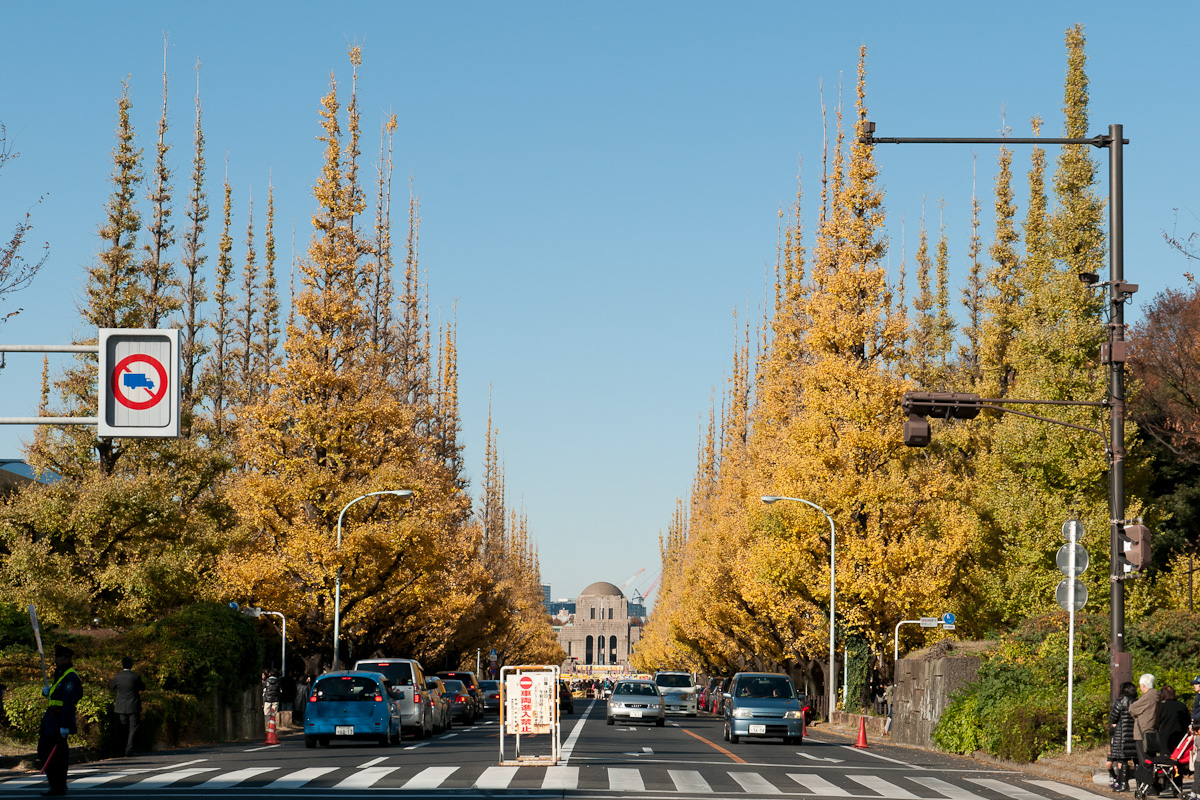
Two confirmed autumn-colour events fall late in the month. The 47th Hachioji Ginkgo Festival is on 21–22 November along the Koshu Kaido, where the festival says the ginkgo avenue is celebrating its 100th year. Rikugien, an Edo-period stroll garden in Bunkyo, opens at night from 25 November to 6 December. According to the Tokyo Metropolitan Park Association, night entry is 18:00–20:30 (last entry 19:30) and needs a special night ticket.
Where can you see traditional Japanese culture in Tokyo in November?
Gardens and seasonal fairs are the easiest way in. In 2026 the confirmed options include chrysanthemums at Shinjuku Gyoen, a large public tea gathering at Hama-rikyu and a yosakoi dance festival in Odaiba.
- Chrysanthemum Exhibition, Shinjuku Gyoen (1–15 November). The Ministry of the Environment says the garden builds special pavilions in its Japanese garden to display chrysanthemums in its own styles, a tradition linked to the imperial family. The garden normally closes on Mondays, but stays open on Mondays during the exhibition. Before you go, see our Shinjuku Gyoen rules guide. Alcohol is not allowed in the garden.
- Tokyo Grand Tea Ceremony, Hama-rikyu Gardens (31 October – 1 November, 10:00–17:30). A Tokyo Metropolitan Government event with tea from several schools. From 2026 all tea tickets are sold on the day. The Hama-rikyu venue also has a kabuki talk and demonstration by a kabuki actor. Garden admission is charged separately.
- Dream Yosacoy Festival (7–8 November). About 5,000 dancers (the organiser's planned figure) perform yosakoi, a high-energy festival dance with wooden naruko clappers, at venues around Odaiba. The Marunouchi venue in front of Tokyo Station runs on 8 November only. Watching is free, and some venues also sell paid seats.
- Kanda Used Book Festival (until 1 November). The organiser says about 120 secondhand bookshops line the streets of Jimbocho.
For the bigger picture, see Japanese festivals: the ultimate cultural experience and our month-by-month guide to Japan's seasons.
What is the Matsuri event on 8 November 2026?
Matsuri holds a release event on Sunday 8 November 2026, from 16:00 to 22:00, in Ebisu, Tokyo. Matsuri is a service run by the same company as J-Times (Jon&Coo Inc.). The details will be on the Matsuri event page. The date, time and area are all that is confirmed so far, and this page will not guess at the rest. To see what Matsuri is, start with the Matsuri feature hub.
The event falls the day after the first rooster day and on the second day of the Dream Yosacoy Festival. You could spend the morning at a shrine and the evening in Ebisu.
How should you plan a November trip around these events?
Pick a fixed-date rite first, add one garden, and check the official page again the week before.
- Weather: GO TOKYO, the city's official travel site, gives average highs of 17.8°C and lows of 10.2°C for November, based on 2024 data. Bring a light jacket for evenings, especially for night fairs and garden night openings.
- Crowds: 3 November (a holiday), 7 November (a Saturday rooster day) and the 21–23 November long weekend will be the busiest days.
- Shrine manners: The same simple rules apply at a busy fair. See how to visit a Japanese shrine and shrines vs temples explained.
- Meeting people: If you want company, our guide to language exchange meetups in Tokyo explains how to choose a good one.
The Matsuri feature
- What is Matsuri? — the hub: what the site offers and how to read it. Details of the 8 November event will be on the Matsuri event page.
- How to join a language exchange in Tokyo
- Shinjuku Gyoen picnic rules
Sources and dates checked
All checked on 2 October 2026.
- Otori Shrine (Asakusa), "This year's Tori-no-ichi" (7 and 19 Nov 2026, midnight to midnight; eve rites) — https://www.otorisama.or.jp/kotoshi.html
- Otori Shrine (Asakusa), "Tori-no-ichi trivia" (about 150 rake stalls, 700,000–800,000 visitors, yatsugashira, kirizansho) — https://www.otorisama.or.jp/mame.html
- Rurubu, "Tori-no-ichi (first and second rooster days)" — https://rurubu.jp/andmore/spot/20000348
- LIVE JAPAN, "Tori-no-Ichi Fair 2026 (Nov 7 & 19)" — https://livejapan.com/en/in-tokyo/in-pref-tokyo/in-asakusa/article-a0000687/
- Hanazono Shrine, 2026 calendar (Ōtori-sai on 6/7 and 18/19 Nov) — http://hanazono-jinja.or.jp/ceremony/
- Meiji Jingu, annual calendar (1 Nov Chinza Kinensai, 3 Nov Reisai, 23 Nov Niinamesai; yabusame) — https://www.meijijingu.or.jp/event/
- Meiji Jingu, latest news (no 2026 autumn festival programme posted; November gate hours on the home page) — https://www.meijijingu.or.jp/news/ , https://www.meijijingu.or.jp/
- Meiji Jingu, visits and prayers (Shichi-Go-San prayers daily at the Kaguraden) — https://www.meijijingu.or.jp/sanpai/
- Association of Shinto Shrines (Jinja Honcho), "Shichi-Go-San" — https://www.jinjahoncho.or.jp/omairi/shichigosan/
- Cabinet Office, "National holidays" (3 and 23 Nov 2026; purposes of the holidays) — https://www8.cao.go.jp/chosei/shukujitsu/gaiyou.html
- Imperial Household Agency, "Imperial court rites" (Niinamesai, 23 Nov) — https://www.kunaicho.go.jp/learn/gokomu-kyuchu/saishi/saishi01.html
- Imperial Household Agency, Inui-dori public opening (spring 2026 only) and past visitor numbers (autumn 2022–2025 dates) — https://www.kunaicho.go.jp/visit/event/inuidori/index.html , https://www.kunaicho.go.jp/visit/event/inuidori/inui01.html
- National Museum of Western Art, "Visit" (free permanent collection on Culture Day) — https://www.nmwa.go.jp/en/visit/
- Japan Meteorological Agency, ginkgo yellowing and maple reddening dates 2025–2026 — https://www.data.jma.go.jp/sakura/data/phn_012.html , https://www.data.jma.go.jp/sakura/data/phn_014.html
- Weathernews, "Meiji Jingu Gaien ginkgo avenue" (forecast as of 12 Sep 2026) — https://weathernews.jp/koyo/spot/24408/
- tenki.jp (Japan Weather Association), Tokyo autumn leaves 2026 — https://tenki.jp/kouyou/3/16/
- Meiji Jingu Gaien, event information (Ginkgo Festival page shows 2019) — https://www.meijijingugaien.jp/event/
- Hachioji Convention & Visitors Association, Mt. Takao Momiji Festival (2025 dates; usual peak) — https://www.hkc.or.jp/takaosan/momiji_fes/
- Hachioji Ginkgo Festival (official), 47th festival 21–22 Nov — https://www.ichou-festa.org/
- GO TOKYO, Hachioji Ginkgo Festival — https://www.gotokyo.org/en/spot/ev122/index.html
- GO TOKYO, "Best things to do and see in Tokyo in November" (weather, events) — https://www.gotokyo.org/en/story/guide/november/index.html
- Ministry of the Environment, Shinjuku Gyoen calendar for November 2026 and "Chrysanthemums" — https://policies.env.go.jp/national-garden/shinjukugyoen/event/calendar/202611.html , https://policies.env.go.jp/national-garden/shinjukugyoen/highlights/kiku/
- Tokyo Metropolitan Park Association, Rikugien night viewing 2026 — https://www.tokyo-park.or.jp/park/rikugien/news/2026/rikugiengardens.html
- Tokyo Metropolitan Government press release, Tokyo Grand Tea Ceremony 2026 — https://www.metro.tokyo.lg.jp/information/press/2026/08/2026082022
- GO TOKYO, Tokyo Grand Tea Ceremony 2026 — https://www.gotokyo.org/en/spot/ev044/index.html
- Dream Yosacoy Festival (official), 25th festival 7–8 Nov — https://www.dreamyosacoy.jp/
- Tokyo International Film Festival (official), 39th festival 26 Oct – 4 Nov — https://2026.tiff-jp.net/en/
- The Hollywood Reporter Japan, TIFF 2026 dates — https://hollywoodreporter.jp/fest/tokyo/190619/
- BOOKTOWN Jimbou (official), 66th Kanda Used Book Festival — https://jimbou.info/news/20260908.html
- GO TOKYO, 66th Kanda Used Book Festival — https://www.gotokyo.org/en/spot/ev118/index.html
- Matsuri release event: date, time and area from Jon&Coo Inc. (our own company); venue, price and programme not yet announced
Featured image: Nesnad / Wikimedia Commons / CC BY 3.0 (https://commons.wikimedia.org/wiki/File:Big-kumade-asakusa-nov20-2012.jpg)
Written by
J-Times Editorial
J-Times 編集部 / J-Times Editorial Team