J-Times Editorial
J-Times 編集部 / J-Times Editorial Team
You can picnic on Shinjuku Gyoen's lawns, but alcohol, ball games, music and tents are banned. Adults pay ¥500; from 1 Oct to 14 Mar it opens 9:00–16:30, closed Mondays (as of Oct 2026).
Read this article to earn +5 MTC
Shinjuku Gyoen picnic rules: what you can and can't bring
Short answer (as of 2026-10): You can picnic on Shinjuku Gyoen's lawns, but you cannot bring alcohol. Ball games, frisbees, musical instruments, speakers, tents, parasols and stoves are also banned. Adult admission is ¥500, and from 1 October to 14 March the garden opens 9:00–16:30 (last entry 16:00), closed on Mondays.
Disclosure: J-Times and Matsuri are both operated by Jon&Coo Inc. Matsuri lists picnic meetups in nearby Shinjuku Central Park, which this guide compares with Shinjuku Gyoen. The garden rules, fees and hours below come from the Ministry of the Environment, which runs Shinjuku Gyoen, and were checked on 2 October 2026.
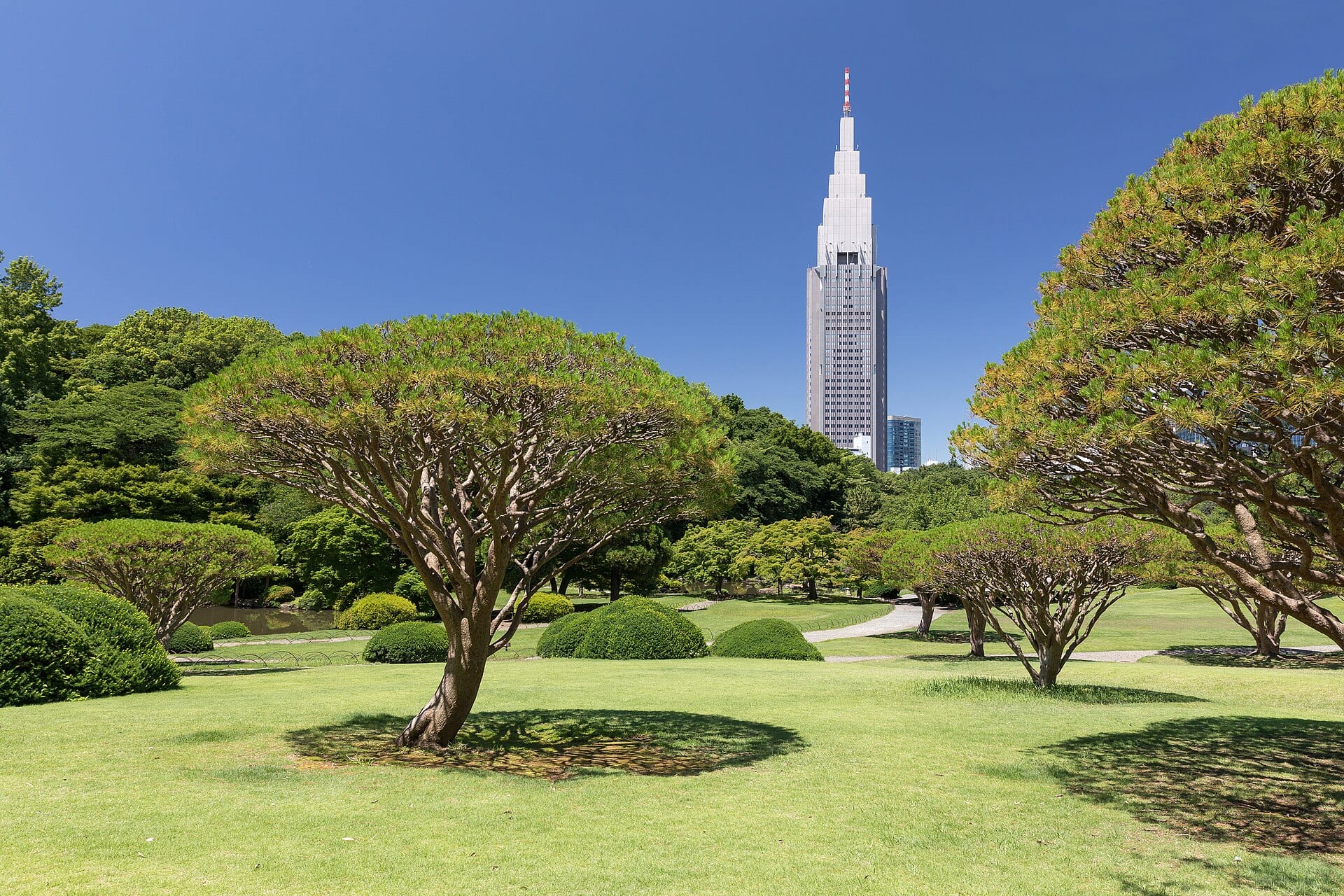
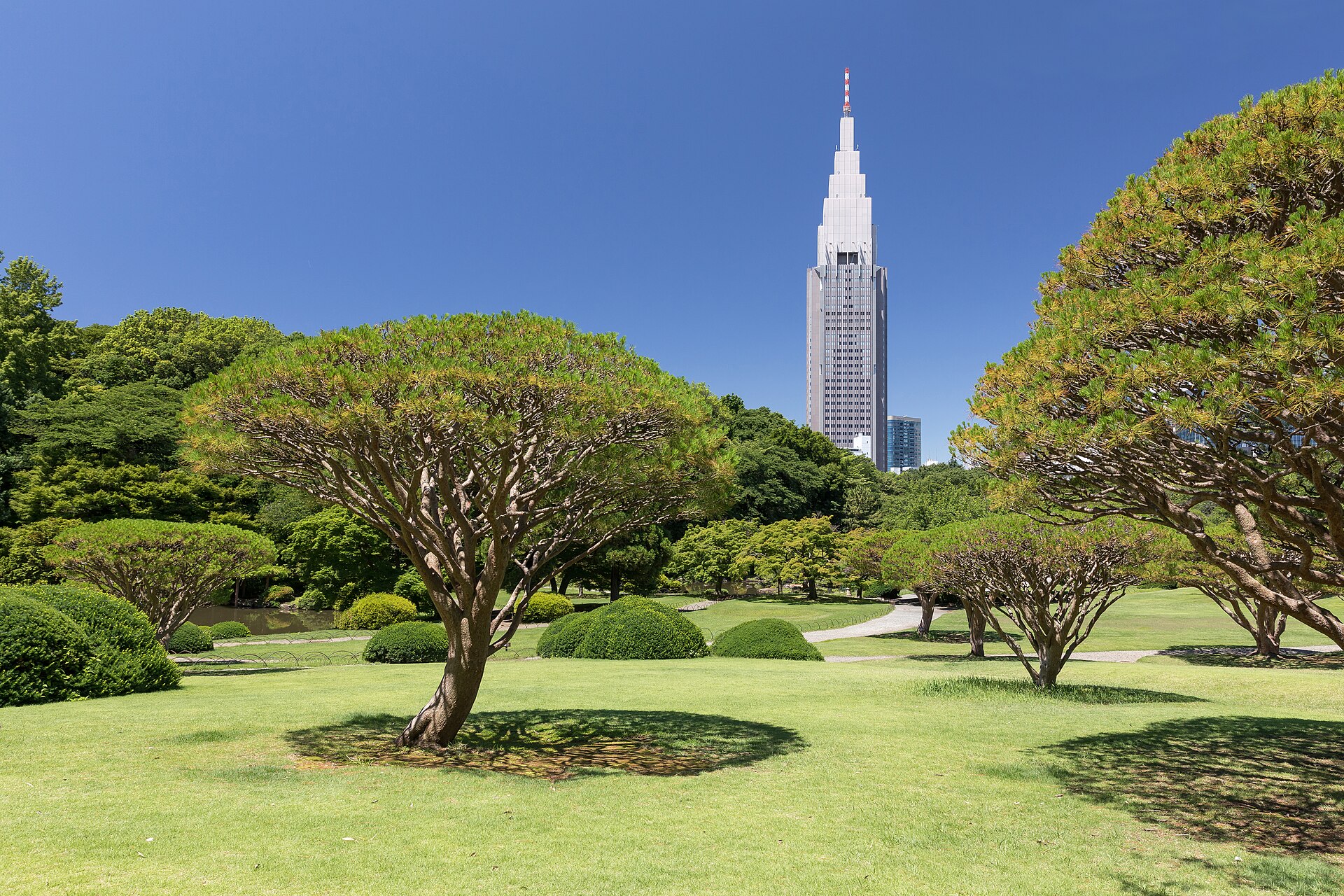
Shinjuku Gyoen National Garden is one of the best places in central Tokyo to sit on grass. It covers 58.3 hectares across Shinjuku and Shibuya cities and combines a formal garden, a landscape garden with wide lawns, and a traditional Japanese garden. It also has more rules than most Tokyo parks, because it is a former imperial garden run by the national government rather than a city park. The rule that catches most visitors out is the alcohol ban. This guide covers the rules, the practical details, and how the garden differs from Shinjuku Central Park, the free public park on the west side of Shinjuku Station.
Can you have a picnic in Shinjuku Gyoen?
Yes. Picnicking on the lawns is a normal part of a visit, as long as you follow the garden rules. GO TOKYO, Tokyo's official travel guide, lists "picnicking under the cherry blossoms" as a tip for the garden, with the warning not to bring alcoholic drinks.
Bring food, soft drinks and a mat. Take everything home again: the rules ban leaving rubbish anywhere other than the garden's bins, and they also ban bringing household rubbish into the garden. The rules also ask visitors not to occupy one spot on a lawn or bench for a long time, so a picnic should not turn into a day-long camp.
Can you drink alcohol in Shinjuku Gyoen?
No. Bringing alcoholic beverages into Shinjuku Gyoen is prohibited. Alcohol is the first item on the garden's official list of things you may not bring in, and GO TOKYO repeats the ban.
This surprises many visitors, because drinking in public places is generally not illegal in Japan (UK government travel advice), and many people picture hanami with a drink in hand. Shinjuku Gyoen is an exception. If a cherry-blossom picnic with drinks is the plan, choose a park that allows it. If the plan is a quiet afternoon with tea and food, Shinjuku Gyoen is ideal.
What else is not allowed in Shinjuku Gyoen?
Besides alcohol, the garden bans most sports equipment, anything loud, open flames, smoking, tents and parasols, and unauthorised commercial activity. The main rules, summarised from the official list (as of 2026-10):
| Category | Not allowed |
|---|---|
| Items you cannot bring in | Alcohol; animals (assistance dogs excepted); plants; bicycles, balance bikes, tricycles and large carts; drones; bug nets and cages; household rubbish; dangerous items |
| Play and sport | Ball games such as catch and soccer; badminton; frisbees and boomerangs; roller skates, scooters and skateboards; radio-controlled toys; skipping ropes and kites; running in groups of 10 or more |
| Noise and fire | Musical instruments, radios, speakers, loudspeakers and whistles; bonfires, portable stoves and anything with a flame |
| Smoking | Smoking, including e-cigarettes, anywhere in the garden, the promenade and the car park |
| The landscape | Tents and parasols; flags, banners, signs and posters; leaving rubbish outside the bins |
| Commercial activity | Selling goods, paid photo or video shoots, and paid classes or events (yoga, sketching, walking and the like) unless authorised by the garden |
There are two narrow exceptions. In the Kids' Area, children of elementary-school age or younger may use soft play equipment such as rubber balls and skipping ropes. Small sun tents for babies and toddlers (each side 150 cm or less) are allowed in the Kids' Area only, from 7 May to 31 October. Jogging is allowed only on a designated route, and not at all during the cherry-blossom season.
What are Shinjuku Gyoen's opening hours and admission fees?
From 1 October to 14 March the garden opens 9:00–16:30 (last entry 16:00). Adults pay ¥500. The garden is closed on Mondays (or the next weekday if Monday is a public holiday) and from 29 December to 3 January.
| Period | Open | Last entry |
|---|---|---|
| 1 October – 14 March | 9:00–16:30 | 16:00 |
| 15 March – 30 September (except below) | 9:00–18:00 | 17:30 |
| 11 June – 31 July | 9:00–19:00 | 18:30 |
| Ticket | Price |
|---|---|
| Adults | ¥500 (¥400 each for groups of 30 or more) |
| Seniors (65 and over) | ¥250 |
| Students (16 and over) | ¥250 |
| Children (15 and under) | Free |
| Annual passport (adults) | ¥2,000 |
You can pay at the gate with a transport IC card, and web tickets can be bought in advance through the garden's official ticket partner. The garden stays open on Mondays during the cherry-blossom period (25 March to 24 April) and the Chrysanthemum Exhibition (1 to 15 November). The official page warns that weekend entry in cherry-blossom season may require an advance reservation (Ministry of the Environment; adult fee, Monday closure and the 9:00–16:30 autumn hours confirmed by GO TOKYO, checked 2026-10-02).
Early openings. On some Sundays the garden opens two hours early, at 7:00, and only Shinjuku Gate admits visitors before 9:00. The National Gardens Association, which runs visitor services at the garden, lists 11 October, 25 October, 8 November and 13 December 2026 among the dates. Normal fees apply, and the dates can change with the weather.
Which gate should you use?
Shinjuku Gyoen has three gates: Shinjuku Gate, Okido Gate and Sendagaya Gate. Choose by the station you are coming from.
| Gate | Nearest stations (walking time, per the official access page) |
|---|---|
| Shinjuku Gate | Shinjuku-gyoenmae Station Exit 1, Marunouchi Line (5 min); Shinjuku-sanchome Station, Fukutoshin Line E5 or Toei Shinjuku Line C1/C5 (5 min); JR Shinjuku Station South Exit (10 min) |
| Okido Gate | Shinjuku-gyoenmae Station Exit 2, Marunouchi Line (5 min). The car park is beside this gate |
| Sendagaya Gate | JR Sendagaya Station, Sobu Line (5 min); Kokuritsu-kyogijo Station Exit A5, Oedo Line (5 min) |
Construction work at Okido Gate is scheduled from 6 October 2026 to late November 2026. Paths near the gate will be narrower and bicycle parking will be limited (Ministry of the Environment and the National Gardens Association notices, both dated 1 October 2026). If you are coming from Shinjuku Station, Shinjuku Gate is the natural choice anyway.
When is the best time for a picnic in Shinjuku Gyoen?
Late March to mid-April for cherry blossoms, and November to early December for autumn colour. Spring is the most crowded time; autumn is calmer and the light is softer.
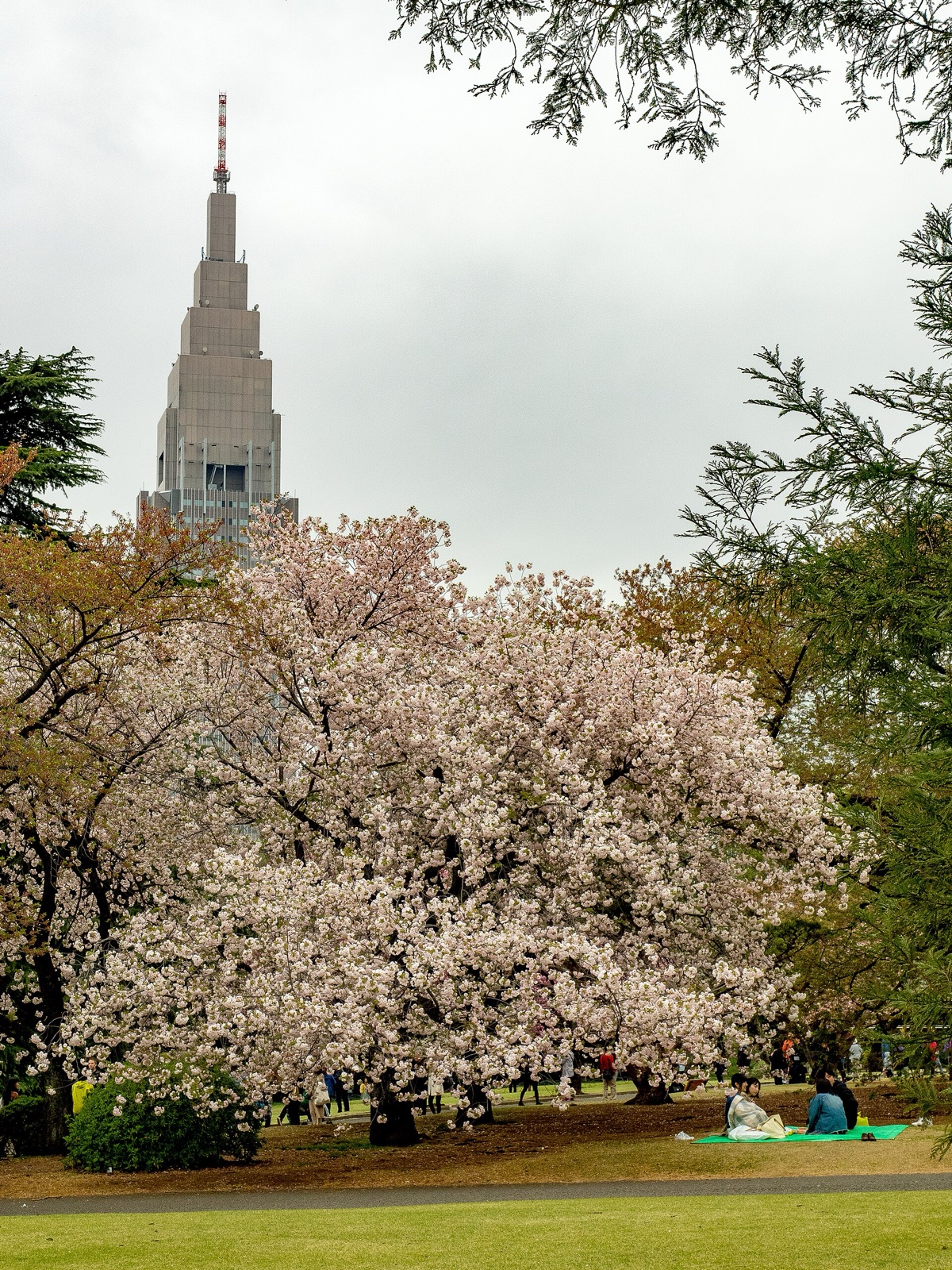
- Cherry blossoms. The garden has about 900 cherry trees of about 70 varieties (Ministry of the Environment; GO TOKYO also gives 900 trees). The early kanzakura types bloom from February to early March. About 300 Somei-yoshino, the classic pale-pink cherry, bloom from late March to early April. Double-flowered yaezakura follow into mid- and late April, so the season is unusually long. For the cultural side of hanami, see our essay why cherry blossoms are beautiful because they fall.
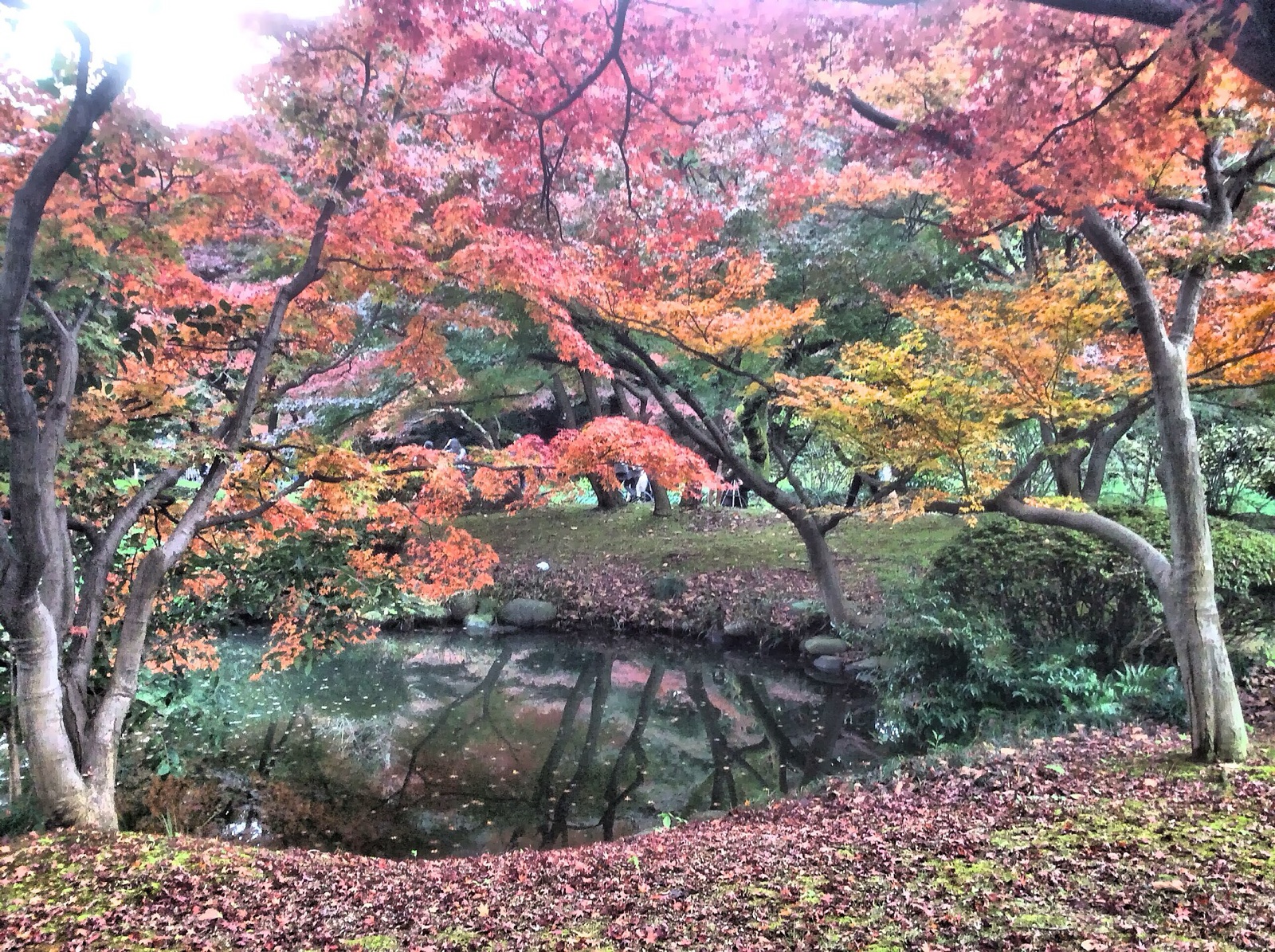
- Autumn. The official seasonal calendar lists ginkgo turning yellow in November and maples turning red in December, while the plane-tree avenue in the formal garden goes gold. The jugatsu-zakura (October cherry) flowers in autumn as well as spring.
- Chrysanthemum Exhibition. From 1 to 15 November each year, the Japanese garden hosts a chrysanthemum exhibition carried on from the imperial tradition, and the garden opens every day including Mondays.
How is Shinjuku Gyoen different from Shinjuku Central Park?
Shinjuku Gyoen is a national garden with an entrance fee, set hours and strict rules, alcohol ban included. Shinjuku Central Park is a free city park with no gate, where drinking itself is not banned but rowdy drinking is. Both are good for picnics; they suit different plans.
| Shinjuku Gyoen | Shinjuku Central Park | |
|---|---|---|
| Run by | Ministry of the Environment (national garden) | Shinjuku City (the largest park the city runs) |
| Entry | Ticket gates; ¥500 for adults | No gate, no admission fee; open every day |
| Hours | 9:00–16:30 from 1 Oct to 14 Mar; closed Mondays | No closing day (management office 9:00–17:00) |
| Alcohol | Cannot be brought in | Not banned, but drinking that disturbs others is |
| Sheets and furniture | Mats are fine; tents and parasols banned | Breathable mats only on the lawn (no blue tarps); no tables or chairs; simple sun tents only from July to September |
| Fire | Banned | Banned (except permitted events) |
| Ball games | Banned (soft play for small children in the Kids' Area) | Only in the sports corner (soft balls for small children allowed) |
| Groups | Running in groups of 10+ banned | Groups of 20+ must apply to or notify Shinjuku City in advance |
| Nearest station | Shinjuku-gyoenmae (Marunouchi Line) | Tochomae (Oedo Line), 1 min |
Sources: Shinjuku Gyoen official rules and admission pages; Shinjuku City park rules; the Shinjuku Central Park management office's park guide and FAQ (all checked 2026-10-02).
In short: choose Shinjuku Gyoen for gardens, seasonal flowers and quiet, and pay the entry fee. Choose Shinjuku Central Park for a free picnic at any hour, close to the skyscrapers of West Shinjuku. J-Times covered a Matsuri hanami picnic in Shinjuku Central Park in spring 2026: cherry-blossom picnics at Shinjuku Chuo Park.
Where do Matsuri's picnic meetups take place?
Matsuri's free language-exchange picnics are held in Shinjuku Central Park, on the lawn next to the Peace Bell. On 2 October 2026, the one with a bookable date was on Saturday 3 October 2026, 14:00–16:30, free of charge (listing page).
If you read this after that date, the listing will show a past event. Matsuri shows a booking calendar only when a host has opened a date. How these meetups work, and how to choose a good language exchange in Tokyo, is in our guide how to join a language exchange in Tokyo. The booking steps are in how to book an experience on Matsuri.
The Matsuri feature
- What is Matsuri? — the hub: what the site offers and how to read it
- How to join a language exchange in Tokyo — formats, choosing a good meetup, safety and etiquette
- How to book an experience on Matsuri — dates, payment and your QR ticket
Sources and dates checked
- Ministry of the Environment, Shinjuku Gyoen, Garden Rules — https://policies.env.go.jp/national-garden/shinjukugyoen/english/guide/rule/ — checked 2026-10-02
- Ministry of the Environment, Shinjuku Gyoen, Admission (hours, closed days, fees) — https://policies.env.go.jp/national-garden/shinjukugyoen/english/guide/information/ — checked 2026-10-02
- Ministry of the Environment, Shinjuku Gyoen, Access (gates and stations) — https://policies.env.go.jp/national-garden/shinjukugyoen/guide/access/ — checked 2026-10-02
- Ministry of the Environment, Shinjuku Gyoen, Overview (58.3 ha, about 900 cherry trees of about 70 varieties) — https://policies.env.go.jp/national-garden/shinjukugyoen/intro/overview/ — checked 2026-10-02
- Ministry of the Environment, Shinjuku Gyoen, Cherry Blossom — https://policies.env.go.jp/national-garden/shinjukugyoen/english/highlights/sakura/ — checked 2026-10-02
- Ministry of the Environment, Shinjuku Gyoen, Major Events (seasonal calendar) — https://policies.env.go.jp/national-garden/shinjukugyoen/event/major_events/ — checked 2026-10-02
- Ministry of the Environment, Shinjuku Gyoen, Chrysanthemums and the Chrysanthemum Exhibition — https://policies.env.go.jp/national-garden/shinjukugyoen/english/highlights/kiku/ — checked 2026-10-02
- Ministry of the Environment, Shinjuku Gyoen, notice on Okido Gate construction — https://policies.env.go.jp/national-garden/shinjukugyoen/english/news/detail/?54 — checked 2026-10-02
- National Gardens Association (Shinjuku Gyoen), Okido Gate construction notice — https://fng.or.jp/shinjuku/2026/10/01/20261001-02/ — checked 2026-10-02
- National Gardens Association (Shinjuku Gyoen), autumn–winter opening hours — https://fng.or.jp/shinjuku/2026/09/30/20260930-01/ — checked 2026-10-02
- National Gardens Association (Shinjuku Gyoen), early morning openings 2026 — https://fng.or.jp/shinjuku/2026/09/25/20260925-04/ — checked 2026-10-02
- GO TOKYO (Tokyo Convention & Visitors Bureau), Shinjuku Gyoen National Garden — https://www.gotokyo.org/en/spot/75/ — checked 2026-10-02
- Shinjuku City, "Rules for using parks" (Japanese) — https://www.city.shinjuku.lg.jp/seikatsu/midori01_000001_00022.html — checked 2026-10-02
- Shinjuku City, Shinjuku Central Park — https://www.city.shinjuku.lg.jp/seikatsu/file15_02_00001.html — checked 2026-10-02
- Shinjuku Central Park management office, park guide and lawn rules — https://shinjukuchuo-park.jp/about/ — and FAQ — https://shinjukuchuo-park.jp/faq/ — checked 2026-10-02
- GO TOKYO, Shinjuku Chuo Park — https://www.gotokyo.org/en/spot/613/index.html — checked 2026-10-02
- UK Foreign, Commonwealth & Development Office, "Japan: Safety and security" (section on alcohol bans: drinking in public places generally not illegal) — https://www.gov.uk/foreign-travel-advice/japan/safety-and-security — checked 2026-10-02
- matsuri.group listing page and Matsuri public API (picnic listings and booking calendars) — checked 2026-10-02
Written by
J-Times Editorial
J-Times 編集部 / J-Times Editorial Team