The Japanese custom of removing shoes is more than hygiene. Learn about the sacred boundary between outside and inside.
Transcript
The full conversation of each episode, as text. The voices are AI-generated.
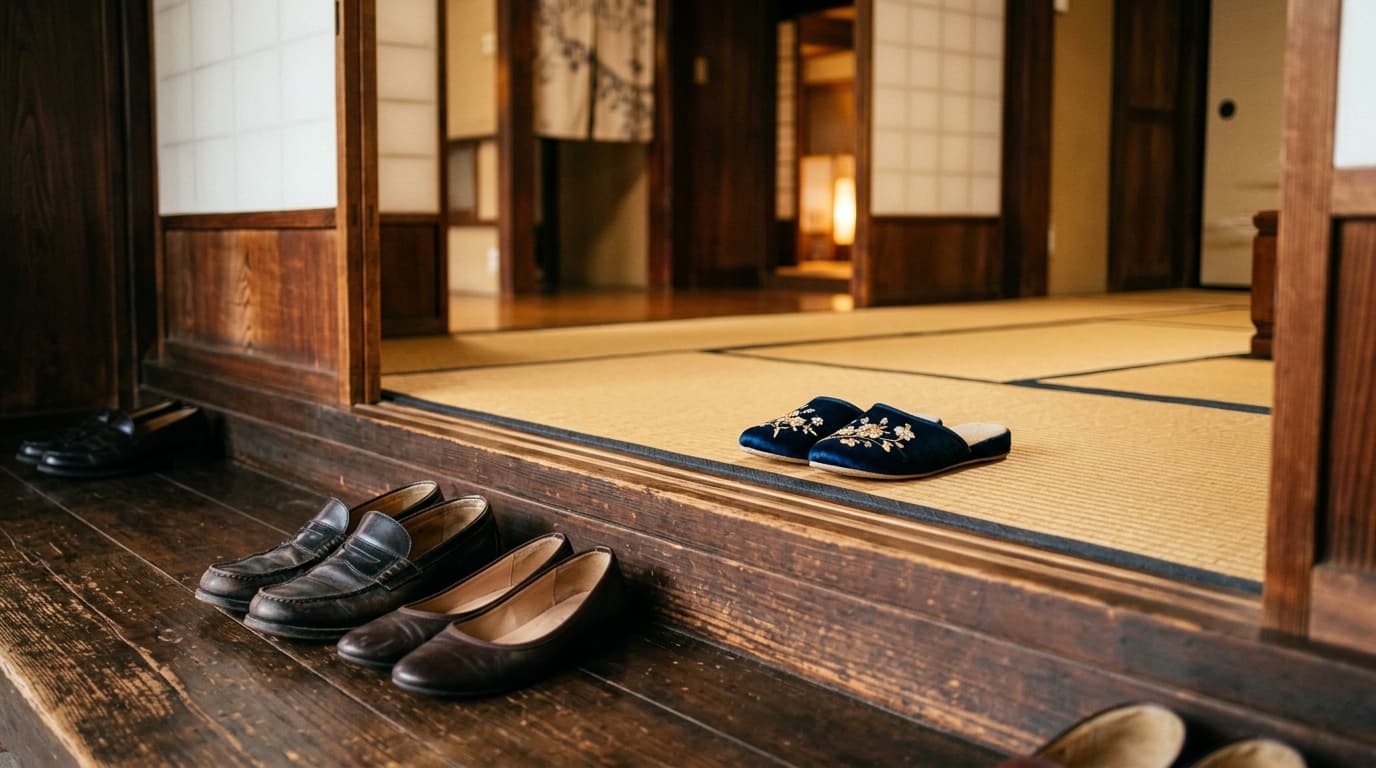
Welcome to J-Times! I'm Akira. Today on Japanese Manners Decoded, we explore 'The Sacred Threshold' — why shoes stay at the door in Japan. Kyoko here. This is such a fundamental part of Japanese life that we barely think about it, but the meaning behind it is really deep. Kenzo here. The practice of removing shoes at the entrance is one of the most visible markers of Japanese culture. But it's far more than a hygiene habit. In Japanese homes, the entrance area called 'genkan' serves as a boundary between the outside world and the private inner space. It's literally a sacred threshold separating two worlds. The concept goes back to Shinto beliefs about purity and impurity. The outside world carries 'kegare' — spiritual impurity. Removing shoes is a purification ritual, separating the clean inside from the unclean outside. That's why you'll notice the genkan is always slightly lower than the main floor. The step up into the house literally represents stepping into a cleaner, more sacred space. There are specific rules too. When you remove your shoes, you should turn them around so they face the door. This makes them easy to put on when leaving and shows consideration for your host. In many homes and traditional ryokan inns, there are also separate slippers for the bathroom — 'toilet slippers.' You must switch to these before entering the bathroom and never forget to switch back. Oh, the toilet slipper mistake is a classic one for foreign visitors. Walking back into the living room wearing toilet slippers is one of the most embarrassing things you can do. This practice extends beyond homes. Temples, shrines, many restaurants, schools, some offices, and traditional ryokan all require shoe removal. You'll often find rows of shoe lockers or shelves at the entrance. Schools are interesting — students change into indoor shoes called 'uwabaki' at the entrance. This teaches children from a young age about the boundary between inside and outside, and respect for shared spaces. It's also connected to the practical reality of Japanese living. With tatami floors and futons laid directly on the ground, cleanliness isn't just aesthetic — it's essential for daily life. The cultural significance goes even deeper. In Japanese martial arts, the dojo floor is considered sacred. Stepping onto it with shoes would be a profound disrespect to the practice and all who train there. For visitors to Japan, the key tip is simple: whenever you see shoes lined up at an entrance, take yours off too. If you're unsure, just look at what others are doing and follow their lead. And wear clean, presentable socks! Nothing is more embarrassing than taking off your shoes to reveal mismatched or holey socks. Many Japanese people specifically choose nice socks for this reason. This small act of removing shoes contains a beautiful philosophy: respect for boundaries, mindfulness of transitions between spaces, and care for the people who share your living space. It's one of those Japanese customs that, once you understand it, makes so much sense. The idea of leaving the outside world at the door and entering a clean, peaceful space is really appealing. Many people around the world are actually adopting this practice now, especially since the pandemic made us more conscious about what we bring into our homes from outside. Japan was ahead of its time on this one. What started as a spiritual practice thousands of years ago turns out to be a genuinely healthier way to live. The wisdom of tradition. Thanks for listening to J-Times! Step carefully and catch those Matsuri Coins. See you next time!