From standing chopsticks in rice to passing food chopstick-to-chopstick, discover the taboos that shock Japanese hosts.
Transcript
The full conversation of each episode, as text. The voices are AI-generated.
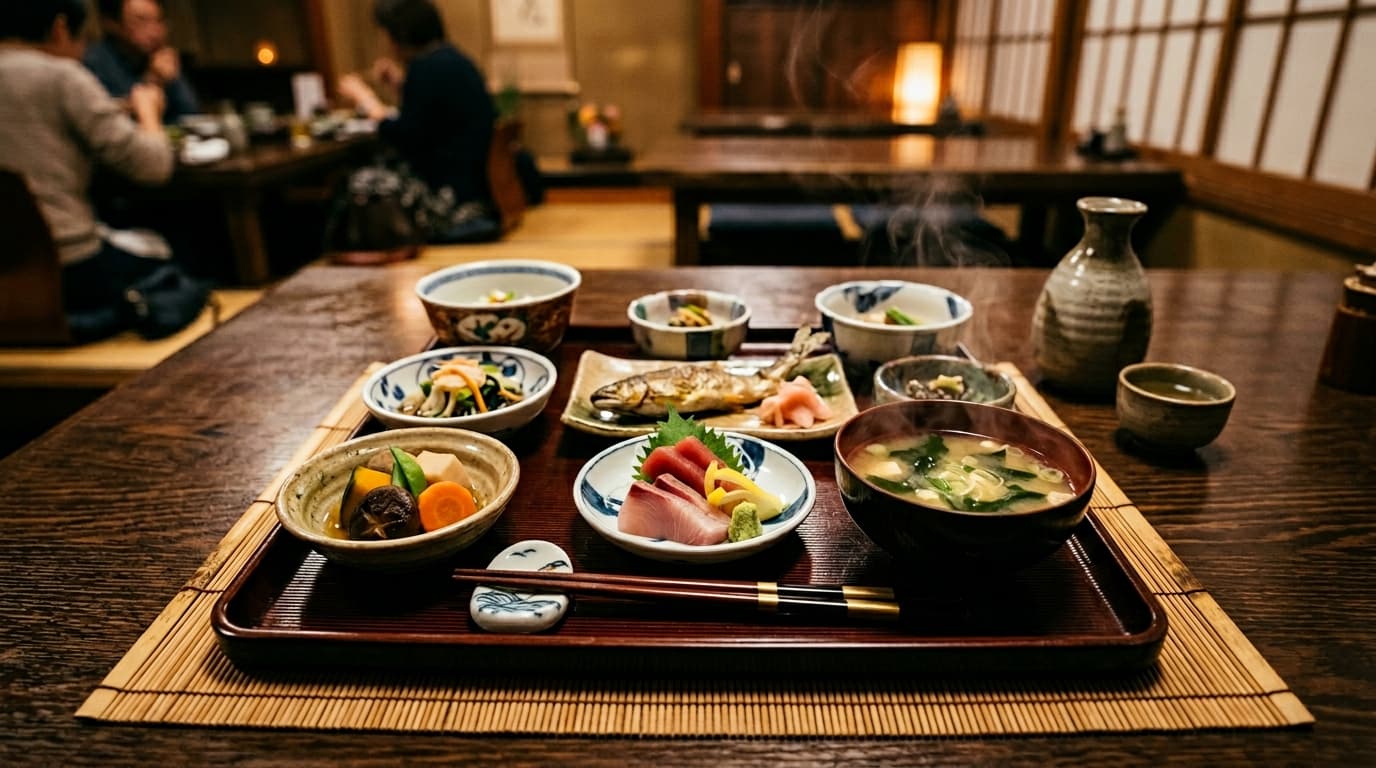
Welcome to J-Times! I'm Akira. Today on Japanese Manners Decoded, we're talking about 'Chopstick Crimes' — the unwritten rules of Japanese dining. Kyoko here. This is a topic that every visitor to Japan needs to know about. Some chopstick mistakes can really shock Japanese people. Kenzo here. Japanese dining etiquette around chopsticks — or 'hashi' — has deep cultural and even spiritual significance. Let's explore the major taboos. The biggest one is 'tate-bashi' — standing your chopsticks upright in a bowl of rice. This resembles incense sticks at a funeral altar and is strongly associated with death. Never do this. Another major taboo is 'utsushi-bashi' — passing food from one pair of chopsticks to another. This mirrors a funeral ritual where bones are passed between chopsticks after cremation. I've seen foreign visitors do both of these innocently, and the entire table goes silent. It's not that Japanese people will scold you, but they'll definitely be uncomfortable. There's also 'sashi-bashi' — pointing at people with chopsticks. And 'mayoi-bashi' — hovering your chopsticks over dishes while deciding what to eat. Both are considered rude. 'Yose-bashi' is another one — using your chopsticks to pull a dish closer to you. Always use your hands to move dishes. And 'neburi-bashi' — licking your chopsticks — is also a no-go. The interesting thing is that many Japanese people can't even explain why these are taboo. They just know instinctively that it feels wrong. It's deeply embedded in the culture. When you're not using your chopsticks, place them on the chopstick rest — 'hashioki.' If there isn't one, you can use the chopstick wrapper folded into a rest. Never lay them across the top of your bowl. For shared dishes, use the opposite end of your chopsticks — called 'sakasa-bashi' or use separate serving chopsticks. Though opinions on sakasa-bashi vary, it shows consideration. There are also some positive etiquette points. Saying 'itadakimasu' before eating and 'gochisousama' after. These expressions show gratitude for the food and everyone who prepared it. When eating noodles, slurping is not only acceptable but encouraged. It shows you're enjoying the food and actually helps cool the noodles. This surprises many Western visitors. The underlying philosophy is respect — for the food, for the people you're eating with, and for the cultural traditions. Japanese dining etiquette is ultimately about mindfulness and gratitude. If you make a mistake, don't worry too much. Japanese people understand that foreigners may not know all the rules. A sincere effort to be respectful goes a long way. My advice to visitors: learn the two funeral-related taboos — standing chopsticks and passing food — as these are the most serious. The rest will come naturally as you observe Japanese diners around you. Mastering chopstick etiquette opens a door to deeper cultural understanding. It's not about rules — it's about the Japanese spirit of caring for others through small, mindful actions. Thanks for listening to J-Times! Practice your chopstick skills and catch those Matsuri Coins. See you next time!