J-Times Editorial
J-Times 編集部 / J-Times Editorial Team
GCF (Global Community Friends) is a Tokyo community linking Japan's culture bearers with the world through meetups, events and language exchange on Matsuri.
Read this article to earn +5 MTC
What is GCF (Global Community Friends)? The Tokyo community connecting Japan's culture bearers with the world
Short answer (as of 2026-10-25): GCF (Global Community Friends) is a members' community run from Nishi-Shinjuku, Tokyo, by Jon&Coo Inc. It connects the people who keep Japanese culture going, such as festival organisers, teachers and makers, with people from around the world through meetups, cultural events and language exchange. Experiences hosted through GCF are listed and booked on the Matsuri app.
Disclosure: J-Times, Matsuri and GCF are all operated by Jon&Coo Inc. This is an explainer about our own company's community. Everything we say about GCF comes from pages anyone can open: the GCF sign-up and Gold pages on gcf.works, matsuri.group, and GCF's App Store listing, all checked on 25 October 2026. We do not quote membership prices, for a reason explained below. We point to a sign-up page once, at the very end.
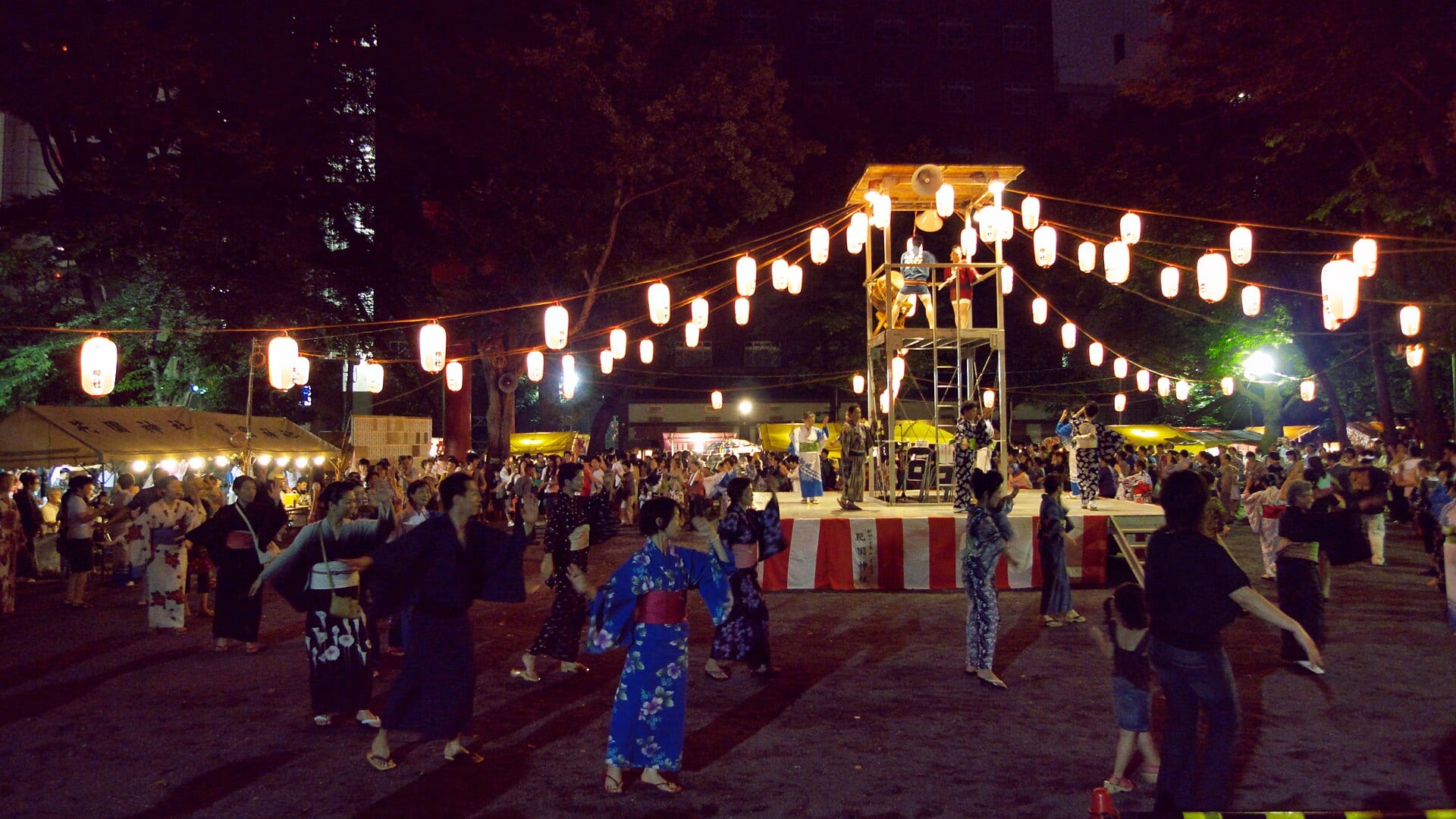
At a bon odori dance, nobody sells you a seat. You watch one lap of the circle, copy the hands of the person in front of you, and on the next lap you are dancing. That is a useful picture to keep in mind when reading about GCF, a community that says it wants visitors to take part in Japanese culture instead of watching it from outside.
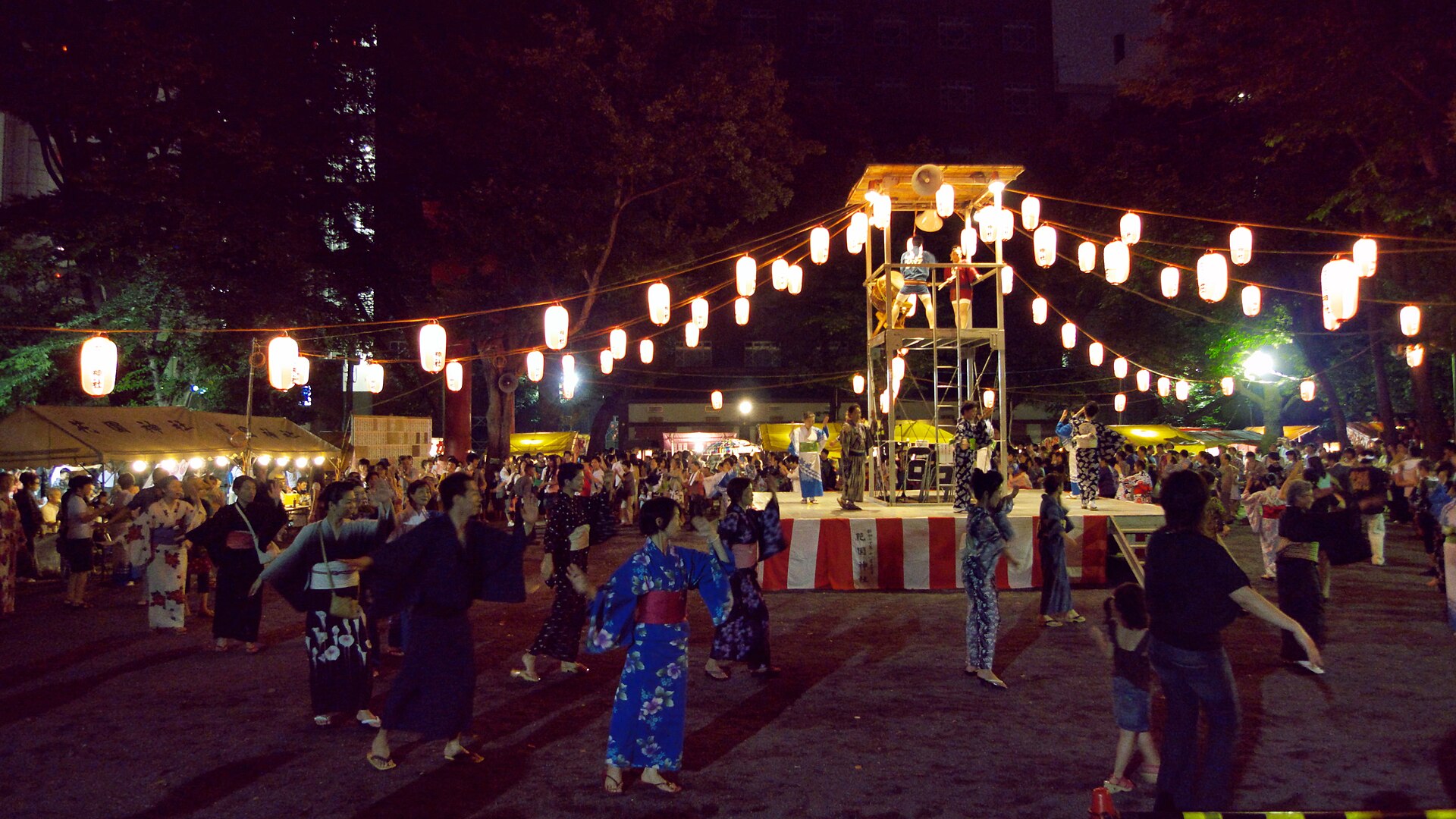
Photo: Yasu / Wikimedia Commons / Public domain (released by the author). File page
What is GCF?
GCF is a membership community based in Tokyo that links the people who carry Japanese culture with people around the world who want to take part in it. It is operated by Jon&Coo Inc., the company that also runs Matsuri and J-Times.
Jon&Coo's company page lists GCF among its operations as a "members-only global community" (会員制グローバルコミュニティ), next to the Matsuri experience platform and J-Times. The company's registered address on that page, and on the GCF Gold page, is Shinjuku Park Tower in Nishi-Shinjuku.
GCF describes itself in two ways, depending on who it is talking to:
- To people who love Japanese culture, the GCF sign-up page says GCF is "a members-only community for people who love Japanese culture" that connects "entrepreneurs, makers and lovers of Japanese culture". Its stated aim is to move members "from consuming culture to sustaining it".
- To the people who carry the culture, Matsuri's page for businesses calls GCF "a community founded in Japan" that stays with newcomers "all the way", through hosting events and receiving their sales, "so you don't have to figure it out alone". The same page names the kinds of places it welcomes: dojos, shrines and temples, classes, workshops and shops that teach sumo, tea ceremony, Zen, calligraphy, ikebana and pottery.
So GCF is less a club with a fixed activity than a meeting point between two groups: people in Japan who keep a practice alive, and people (living in Japan or visiting) who want to be part of it.
What does GCF stand for?
GCF stands for Global Community Friends. This is the official name, confirmed by the operator, Jon&Coo Inc., on 26 October 2026.
The letters GCF are also used by unrelated organisations (the UN-backed Green Climate Fund, for example), so if you search for the community, add "Matsuri" or "Tokyo".
The word J-Times wants you to notice is the last one: friends. We come back to why later in this article.
What do GCF members actually do?
Members meet, host and make: they join meetups and language exchanges, host cultural events and experiences that are listed on Matsuri, and, as makers and performers, use GCF's creator tools. These are the activities GCF's own pages describe as of 25 October 2026.
Meetups and language exchange. The FAQ on the GCF Gold page says "the community has language exchange meetups", and the sign-up page's "Experience" category covers "events, guides, culture experiences, meetups". On matsuri.group you can see what this looks like in practice: Japanese–English meetups in Shinjuku, such as picnics on the lawn beside the Peace Bell in Shinjuku Central Park and morning café chats near Shinjuku Station. How to choose a good meetup, and how to stay safe at evening ones, is in our guide How to join a language exchange in Tokyo. For an earlier look at one GCF international meetup, see Global perspectives: Japan seen by the world, the world seen by Japan.
Hosting cultural events and experiences. Matsuri's page for event organisers starts its five-step path with "Join GCF". After that you submit a plan, refine it with staff in an online meeting, publish and recruit on Matsuri, then host and get paid. A festival committee, a tea teacher or a pottery studio can therefore use GCF as the way in, and Matsuri as the place where people from abroad find them.
Making, performing and streaming. GCF also has its own iOS app. Its App Store description (in Japanese) calls it the official app for creators, sellers and streamers on the GCF (Global Community Friends) platform, with tools for live streaming, running a shop and crowdfunding. The GCF sign-up page lists "you dream of offering your own experience or products someday" among the reasons people join. J-Times does not link shop pages in this article. We also could not confirm any current or scheduled live broadcast when we checked on 25 October 2026, so we do not point you to one.
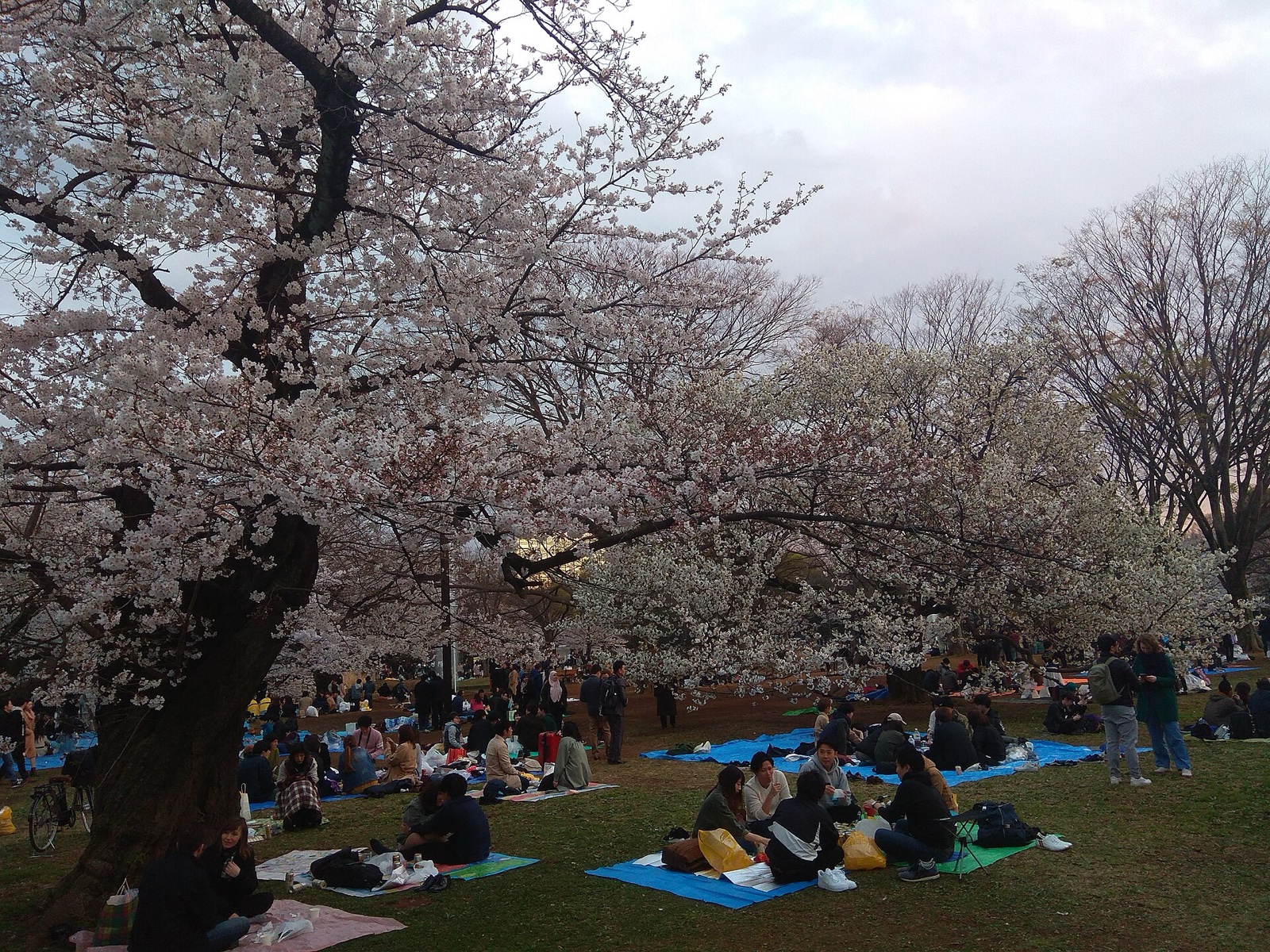
Photo: NMaia / Wikimedia Commons / CC BY-SA 4.0. File page
How is GCF related to the Matsuri app?
Matsuri is the app and website where people find and book Japanese cultural experiences; GCF is the community behind the people who host many of them. The GCF sign-up page puts it in one line: "Beneath GCF is Matsuri, our platform for Japanese culture."
The three services run by Jon&Coo divide the work like this (as of 25 October 2026):
| Service | What it is for | Who it is mainly for |
|---|---|---|
| J-Times (j-times.org) | Media: articles, podcasts and video about Japanese culture | Anyone curious about Japan |
| Matsuri (matsuri.group) | Finding, booking and paying for tours, meetups, events and classes; tickets arrive as a QR code | Visitors and residents who want to take part |
| GCF (gcf.works) | The members' community; the route by which hosts and makers get onto Matsuri | People who host, make or want to belong |
A few practical points follow from this:
- You do not need to be a GCF member to join a meetup on Matsuri. As our booking guide found on 30 September 2026, you can book a Matsuri listing with only an email address.
- One account works across both. The GCF sign-up page says a member's account can be used "across the Matsuri platform".
- What guests pay. Matsuri's organiser page says the platform fee (5% for card payments) is added on top of the ticket price and paid by the guest, so the host receives the price they set. Matsuri's "What is Matsuri?" page gives the same 5% card rate.
For a screen-by-screen tour of Matsuri itself, see What is Matsuri? A guide to finding cultural experiences in Japan.
Why does GCF say "friends" and not "customers"?
Because the relationship it describes runs both ways. Visitors are invited to help carry a festival or a craft, not just to buy it, and the people who carry it gain friends from around the world. Jon&Coo frames this with the opening line of Japan's Seventeen-Article Constitution: "Harmony is to be valued" (wa wo motte tōtoshi to nasu).
Where "harmony is to be valued" comes from
The Nihon Shoki, Japan's official chronicle completed in 720, dates the Seventeen-Article Constitution to the year 604 and credits it to Prince Shōtoku, according to the Nihon Kokugo Daijiten and Nipponica entries on Kotobank. It was not a constitution in the modern sense: the Britannica International Encyclopaedia (Japanese edition) describes it as moral guidance for court officials and clan leaders. Historians still debate who wrote it and when.
Its first article begins: "Harmony is to be valued, and avoiding contention is the fundamental principle." The text then goes on to observe that people form factions and few understand one another, and that when those above and below are at peace and talk matters through, things fall into place. In other words, wa in this text is not silence or sameness. It is the agreement people reach by talking with each other. Jon&Coo's company page quotes the line, attributed to Prince Shōtoku, as one of its values.
What changes when you call someone a friend
A customer pays, receives something and leaves. A friend comes back, learns names, helps carry the chairs, and is missed when absent. The GCF and Matsuri pages describe the second kind of relationship:
- Matsuri's "What is Matsuri?" page says a visitor is "welcomed not as a spectator but as someone who helps carry the festival", and that "places that are short of hands gain new friends from around the world".
- The GCF sign-up page calls its idea "from competition to co-creation".
The same idea runs through a language exchange. Each side is a teacher and a learner in turn, and nobody is the customer.
Respectful translation
J-Times has a second principle that shapes how we write about all this: translate with respect. In practice, that means explaining a custom the way the people who keep it would recognise, not as something "mysterious" or "exotic". A tea teacher's bow is a greeting with a meaning, not a show. The same applies in a community: a visitor who asks why something is done, and listens to the answer, is behaving as a friend.
A fair question to keep asking
A community run by a company that also sells memberships will always feel some pull between "friends" and "customers". We are the same company, so we will not settle that question for you. A practical test is to go to a meetup and watch what happens. Do people come back? Do hosts get paid for their work? Does anyone press you to buy something? Those answers say more about any community, this one included, than its name does.
What membership tiers does GCF have?
GCF's public pages describe two ways to join: a general membership, which is an annual membership you can cancel at any time, and GCF Gold, a paid, application-only referral-partner membership. (as of 2026-10-25)
General membership. The GCF sign-up page (gcf.works) describes card payment through Stripe, an account created as soon as payment goes through, and a member page on gcf.works. You can cancel at any time from that page, and the membership stays valid until the end of the period. Optional one-time add-ons cover four areas: experiences, shop, restaurants and crowdfunding.
GCF Gold. The Gold page describes Gold as "the authorized referral partner of the Matsuri ecosystem", with 100 "First Edition" seats and entry by application and review. Members are paid a share of the sales made by people and businesses they refer. Because of that structure, the page carries the disclosure for multilevel marketing (rensa hanbai torihiki) required by Article 35 of Japan's Act on Specified Commercial Transactions. It also states that income is not guaranteed and "may not arise at all". Japan's Consumer Affairs Agency explains that for this kind of contract you can cancel unconditionally, in writing or electronically, within 20 days of receiving the legally required contract documents; the Gold page states the same 20-day cooling-off. If you are considering Gold, read the contract documents and the Agency's guide before deciding.
Other tiers. J-Times found no public page describing any other GCF tier on 25 October 2026, so we do not describe one here.
Why we do not quote prices. On 25 October 2026 the operator's own pages did not agree on what joining GCF costs: one page for event organisers calls the first step a free account, while the sign-up page shows an annual fee. Rather than pick one, we ask you to check the terms shown on the page where you actually sign up, at the moment you sign up.
Can I take part if I don't speak Japanese?
Yes. GCF's sign-up page is published in English, Matsuri works in English and several other languages, and the Japanese–English meetups listed on Matsuri welcome every level. (as of 2026-10-25)
The sign-up page exists in English and Japanese versions (gcf.works/en/start and gcf.works/ja/start). Matsuri's "What is Matsuri?" page says you can "find, book and pay in English" without reading Japanese. A Japanese–English picnic listed on Matsuri in October 2026 told newcomers that "whether you're fluent or just starting out, everyone is welcome" and that "no one will correct your mistakes". The Gold page's FAQ adds that language ability is not part of its review.
What we could not find is a published statement on which languages member support is offered in. If that matters to you, ask before you join.
It works the other way, too. A Japanese tea teacher or festival organiser who speaks no English is exactly the kind of person GCF says it wants to bring in, and the Japanese version of Matsuri's business page says GCF supports them in Japanese. On a good day at a language exchange, each side is the one who doesn't speak the other's language.
Where can I learn more or join?
Start small: go to one meetup, talk to the people there, and see whether this community suits you. Our language exchange guide is a good first step. If you then want to become a member, read the terms on GCF's sign-up page first: GCF general membership (gcf.works).
Sources and dates checked (all checked on 2026-10-25)
- GCF, "GCF Start — Become a Member" (description, account and cancellation terms, add-on categories, "Beneath GCF is Matsuri") — https://gcf.works/en/start/ and https://gcf.works/ja/start/ (primary)
- GCF, "GCF Gold (First Edition)" (referral-partner description, 100 seats, review, Article 35 disclosure, cooling-off, FAQ on language and meetups, "GCF — Global Community Friends" footer, address) — https://gcf.works/en/gold/ and https://gcf.works/ja/gold/ (primary)
- Apple App Store, "GCF" app description ("GCF (Global Community Friends)", tools for creators, sellers and streamers) — https://apps.apple.com/jp/app/gcf/id6761515025 (primary)
- Jon&Coo, "About Us" (GCF as a members-only global community, address, "Harmony is to be valued" among values) — https://matsuri.group/en/aboutus/ and https://matsuri.group/ja/aboutus/ (primary)
- Matsuri, "What is Matsuri?" (welcomed "not as a spectator", "new friends from around the world", languages, 5% card fee) — https://matsuri.group/en/about-matsuri/ (primary)
- Matsuri, "For business" (GCF "a community founded in Japan", kinds of hosts welcomed; the Japanese version adds support in Japanese) — https://matsuri.group/en/for-business/ and https://matsuri.group/ja/for-business/ (primary)
- Matsuri, event organiser page (five-step path starting "Join GCF", fee paid by guests on top of the price) — https://matsuri.group/en/partnership/event-organizer/ (primary)
- Matsuri, home page and meetup listing (Japanese–English meetups in Shinjuku; "everyone is welcome") — https://matsuri.group/en/ and https://matsuri.group/en/events/308 (primary)
- Consumer Affairs Agency, "Guide to the Act on Specified Commercial Transactions: multilevel marketing" (definition, documents, 20-day cooling-off, Article 40) — https://www.no-trouble.caa.go.jp/what/multilevelmarketing/ (primary)
- Kotobank, "十七条憲法" (Seventeen-Article Constitution; Nihon Kokugo Daijiten, Nipponica, Heibonsha World Encyclopedia, Britannica International Encyclopaedia) — https://kotobank.jp/word/%E5%8D%81%E4%B8%83%E6%9D%A1%E6%86%B2%E6%B3%95-77837
- Wikipedia, "Seventeen-article constitution" (dating in the Nihon Shoki, authorship debate; cross-check only) — https://en.wikipedia.org/wiki/Seventeen-article_constitution
- Images: Wikimedia Commons file pages (licences checked) — https://commons.wikimedia.org/wiki/File:Bon_odori_at_Hanazono_Shrine.jpg , https://commons.wikimedia.org/wiki/File:Hanami_in_Yoyogi_Park_(2019).jpg
By J-Times Editorial (information as of 2026-10-25)
Written by
J-Times Editorial
J-Times 編集部 / J-Times Editorial Team