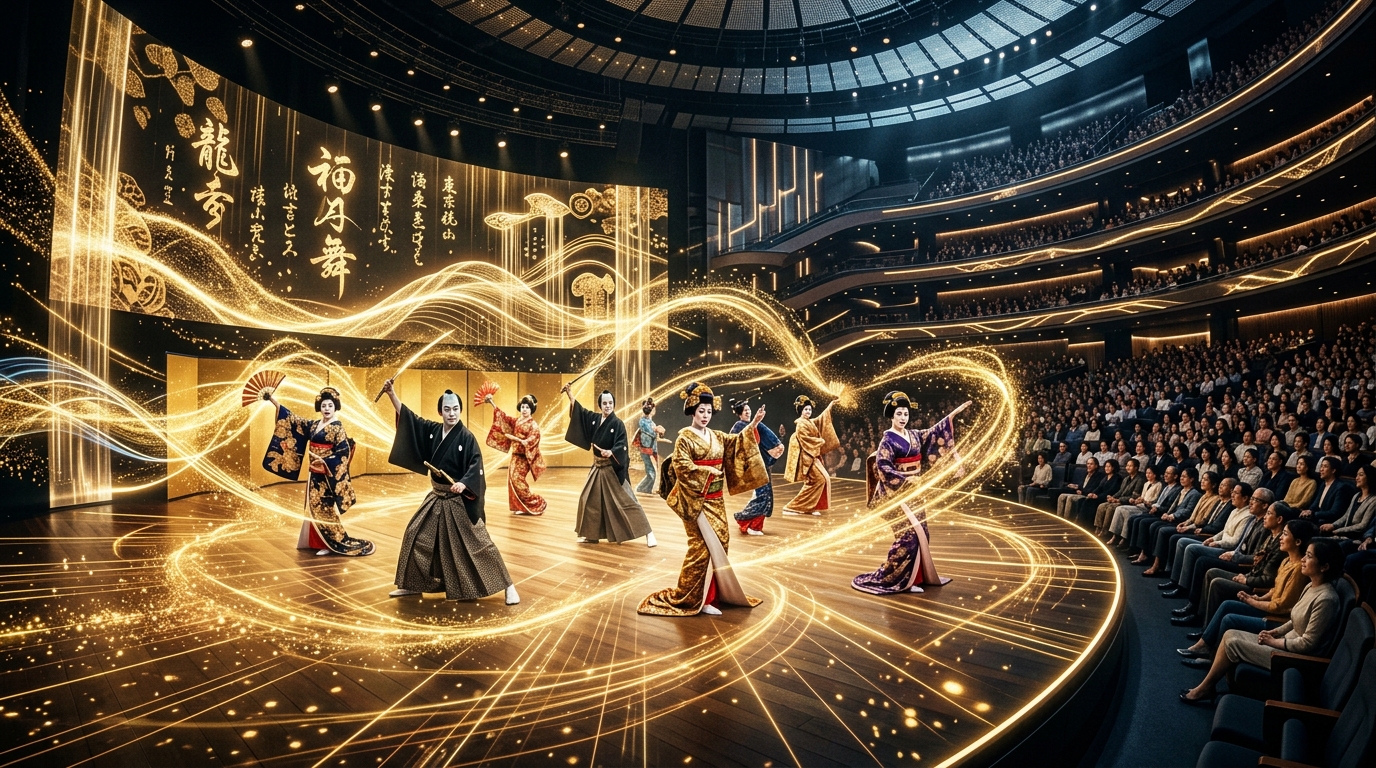
With 650 years of Noh and over 400 years of Kabuki, Japan's traditional performing arts — defined by unchanging form — are now embracing projection mapping, VR, and AI, breathing new life into ancient stages.
Read this article to earn +5 MTC
Introduction: In a World Where "Staying the Same" Was a Virtue
Noh theater has a history of roughly 650 years; Kabuki, over 400. Japan's traditional performing arts have survived by preserving kata — the forms passed down from master to apprentice, generation after generation. Staying the same was the point. Staying the same was beautiful.
And yet today, curtains of light descend upon these ancient stages, virtual characters dance alongside flesh-and-blood actors, and AI systems have begun recording centuries of technique. This isn't destruction of tradition. Technology is opening a new door for it.
Kabuki Meets Projection Mapping: Light Transforms the Stage into Another World
The Tokyo Metropolitan Government Building's massive wall serves as the canvas for "Tokyo Night & Light," a projection mapping series that includes "TYO337 (Kabuki Digitalized)" — a breathtaking work that translates Kabuki's iconic mie poses and tachimawari fight scenes into digital visual art. Projected onto a 48-meter-tall surface, the fusion of traditional power and digital brilliance creates an entirely new kind of experience.
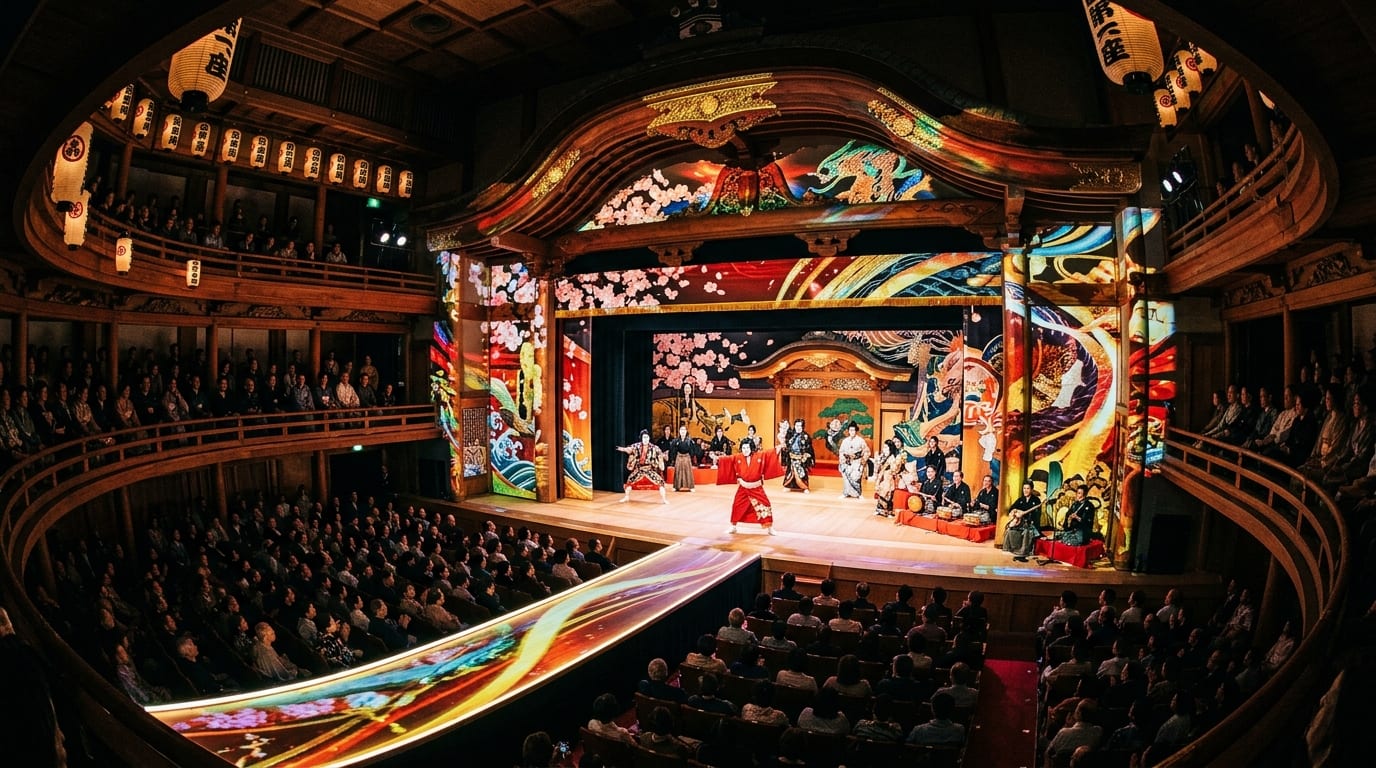
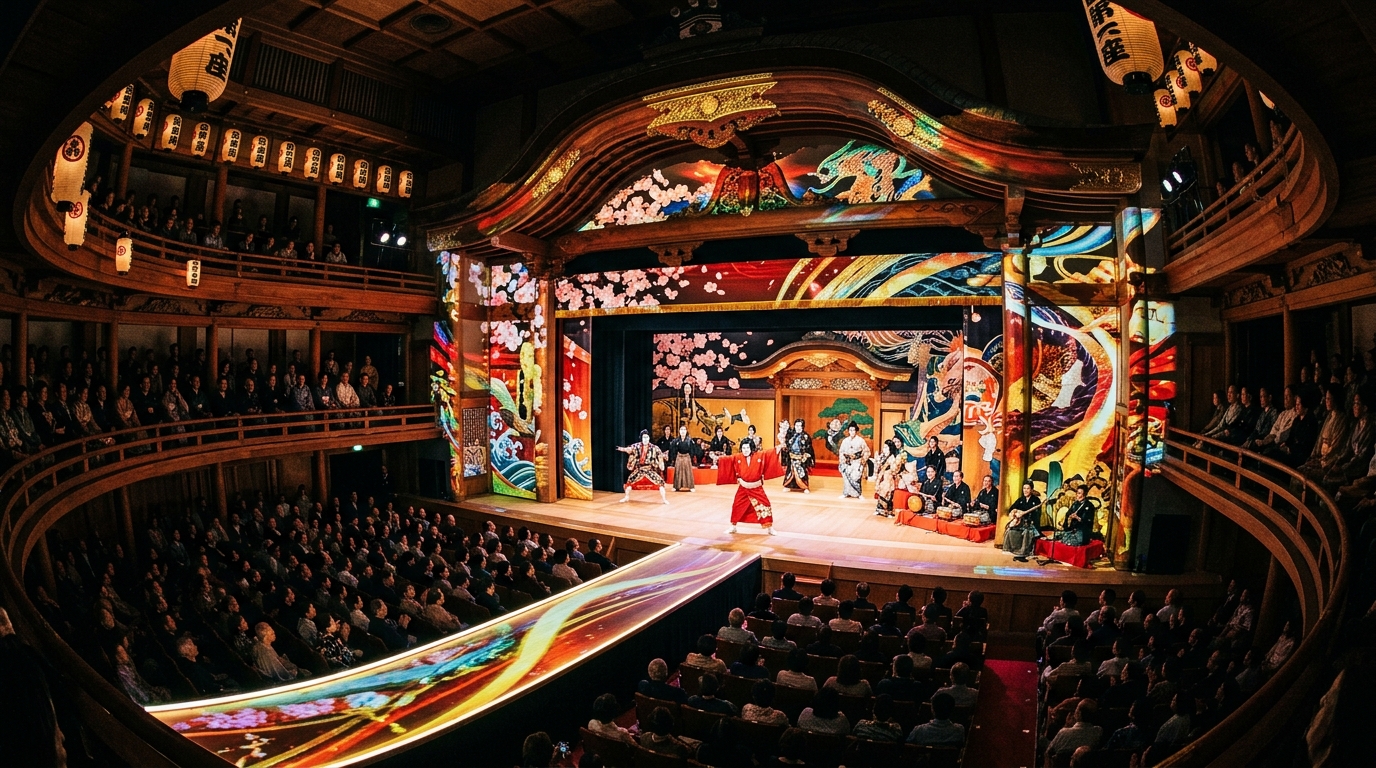
Even within the Kabuki-za theater itself, projection mapping has become an increasingly common tool. Fire, water, and cherry blossom storms — effects that once required elaborate physical stagecraft — are now rendered with stunning realism through light and video. But what matters most is that the technology never steals the spotlight. It functions as a kuroko, a stagehand dressed in black, always serving the actor's art. There's a distinctly Japanese aesthetic sensibility in that restraint.
Noh Meets AR/VR: Seeing the World of Yugen Through New Eyes
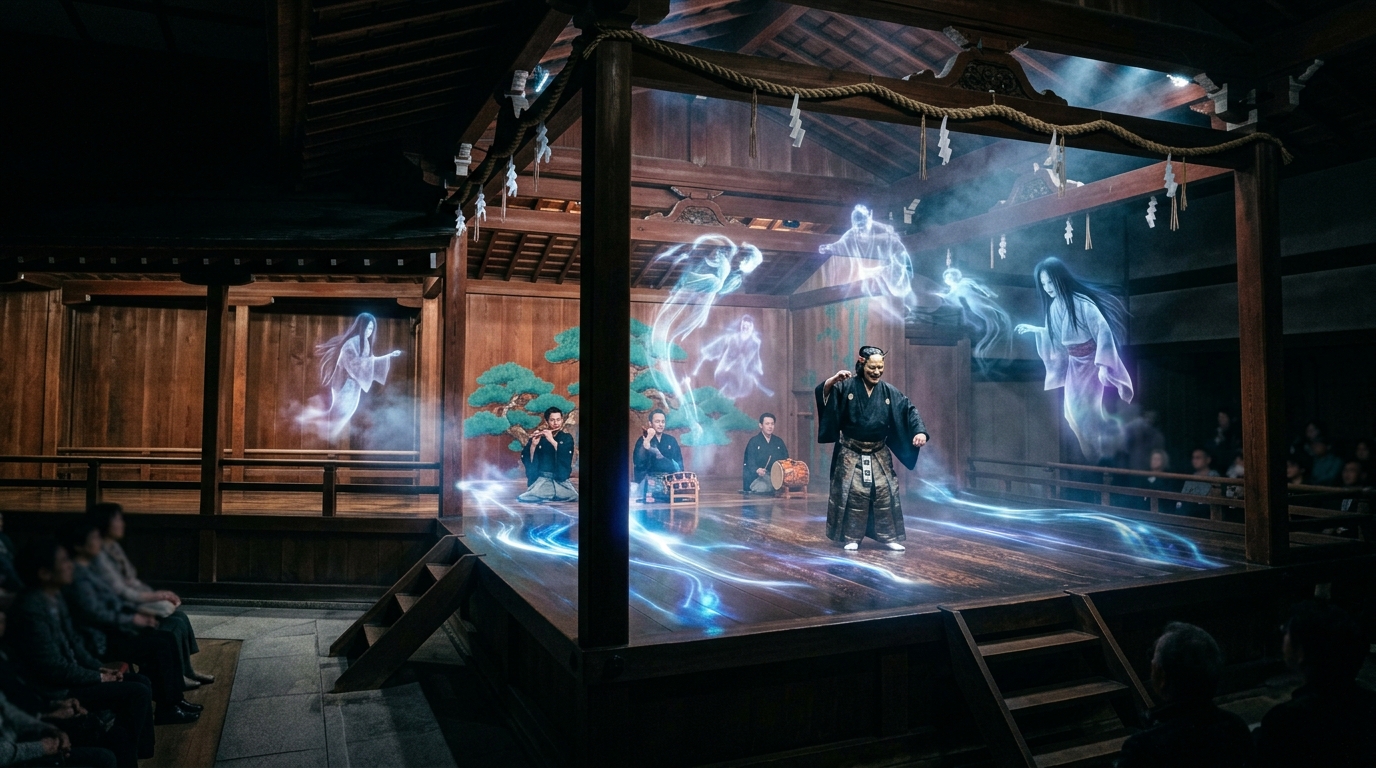
In 2017, a production called "Spectacle 3D Noh: The Tale of the Heike" invited audiences to watch the performance through special 3D glasses shaped like Noh masks. The ethereal world of Noh rose in three dimensions around the audience, creating the sensation of sharing the same space as the shite — the ghost protagonist.
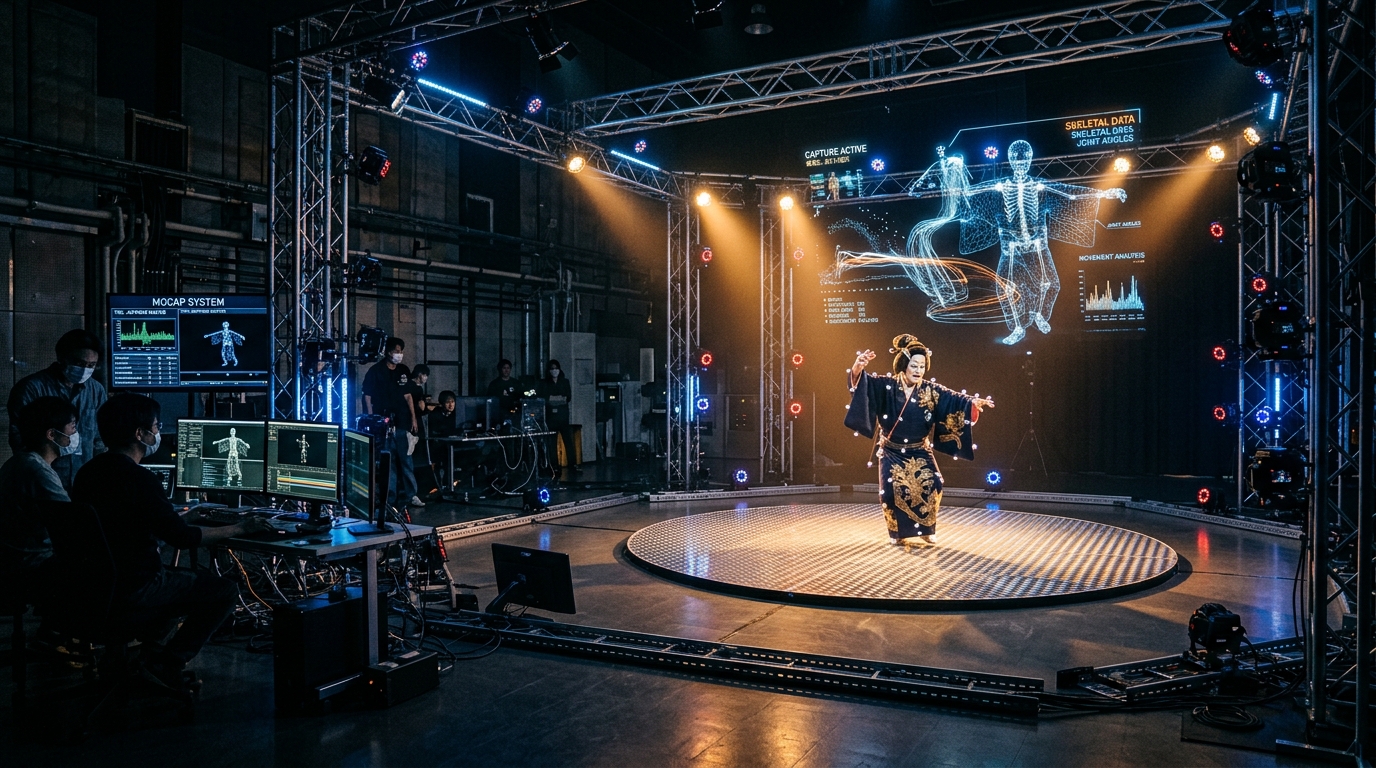
More recently, projects using motion capture to record Noh dance movements and recreate them in VR environments have emerged. Students can now observe a master's movements from every angle, transcending geographical barriers in their training. We've entered an era where 650 years of artistic form can be preserved as digital data — forever.
Hatsune Miku Meets Kabuki: When Virtual and Physical Share the Stage
Using NTT's next-generation communication platform "IOWN," a performance was realized that may be unique in the world: the virtual singer Hatsune Miku performing alongside a live Kabuki actor on the same stage. The ultra-low-latency communication technology allowed Miku's movements to align perfectly with the actor's ma — the carefully timed pauses that are the heartbeat of Kabuki. The moment where digital and physical, virtual and real dissolved into one left audiences with a sense of genuine wonder.
What this experiment reveals is the spirit of mitate — "creative substitution" — that has always been at the heart of Kabuki. The art form has always conjured vast oceans and deep mountain valleys from small stage devices. Performing alongside a holographic character is simply the next chapter — a 400-year-old tradition of mitate connecting naturally to 2026's technology.
AI and Digital Archives: Making Art Eternal
Japan's Intellectual Property Strategy Headquarters has formulated its "Digital Archive Strategy 2026-2030," positioning the digital preservation of cultural content — including traditional performing arts — as a national priority.
In practice, this means capturing the techniques of Living National Treasures through motion capture and ultra-high-definition video, building databases that future performers can reference. Folk performing arts in regional areas facing extinction are also being preserved in digital space through video, audio, and 3D scanning.
The role technology plays here isn't to change tradition — it's to protect it. Even when the master is gone, the art remains. This may be the most beautiful form of harmony between technology and tradition.
Immersive Art: Stepping Inside the Edo Period
At the Kadokawa Culture Museum, the "Ukiyo-e RE:BORN" exhibition transforms woodblock prints by Hokusai and Hiroshige into three-dimensional experiences using projection, wind, and vibration. Visitors don't simply view the art — they step inside the landscapes of Edo-period Japan.
These immersive exhibitions are attracting younger audiences and international tourists who might never have visited a traditional art venue. Technology is gracefully leaping over the perception that "traditional arts are difficult" or "Noh and Kabuki have too high a barrier to entry."
Conclusion: Tradition Never Stands Still
At first glance, Japan's traditional performing arts seem to be things that never change. But in truth, they have always evolved by absorbing the technologies of their time. Edo-period Kabuki made full use of the most advanced stage machinery available, and Noh has gradually adapted its repertoire and staging across the centuries.
The fusion with technology is not something foreign to traditional performing arts. It is the latest chapter in an age-old tradition of innovation. Whether it's a stage illuminated by projection mapping or a Living National Treasure's technique recorded by AI, everything points toward a single question: How can we carry this beautiful thing into the future?
The 650-year-old stage continues to awaken, day after day.