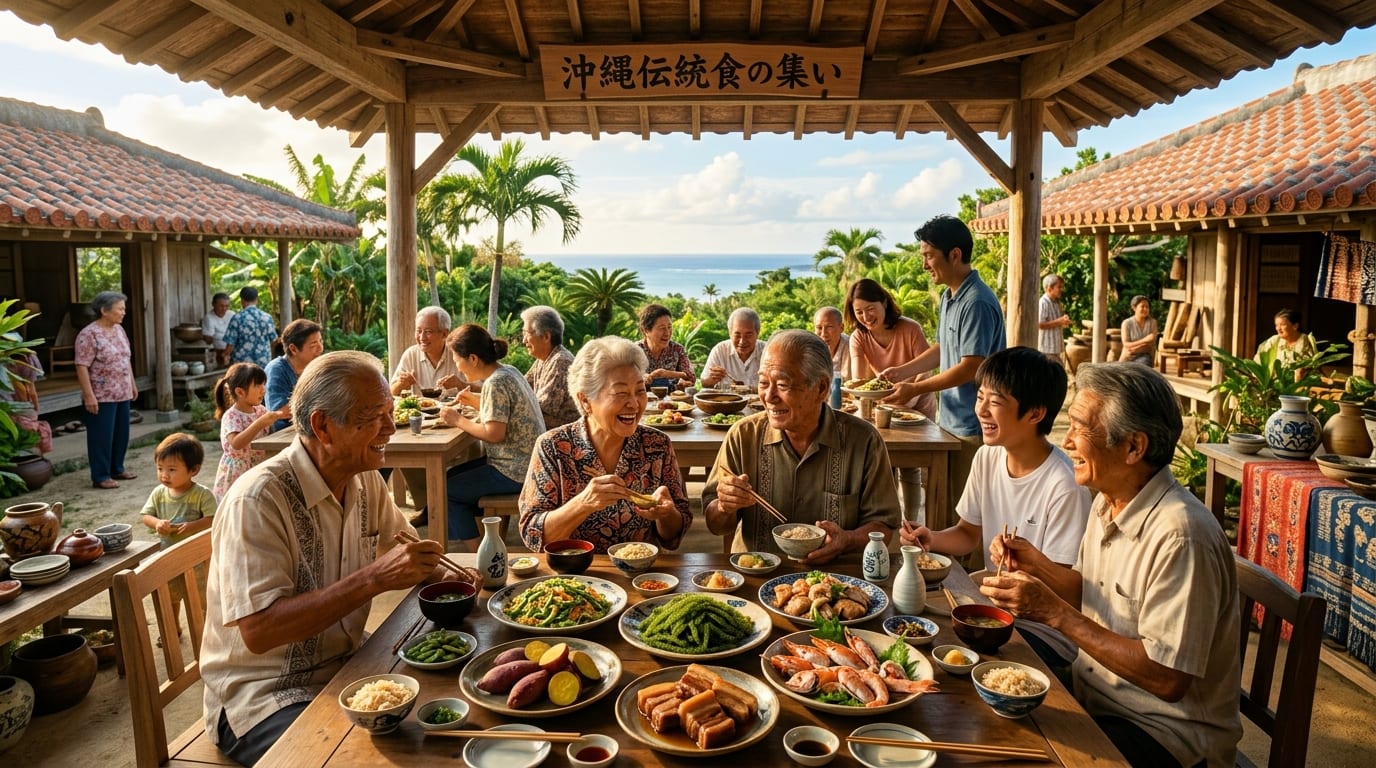
Okinawa has world's highest centenarian rate. The 7 sacred foods (goya, purple potato, tofu, kelp) and the real secret: hara hachi bu, plant-forward, yui-maru community.
Read this article to earn +5 MTC
The 7 Sacred Foods That Make Okinawans Live Past 100 (And Why Western "Diets" Miss the Point)
The Statistic Western Health Books Misuse
Okinawa has the world's highest concentration of centenarians. Per 100,000 people, Okinawa has 68 people aged 100+ — three times the global average.
Western health books love this fact. They've turned it into "The Okinawa Diet" — a quick weight loss program with portion control and superfoods.
But that misses the entire point. It's not just what they eat. It's how they eat. And what they eat is fundamentally different from Western "diet" foods.
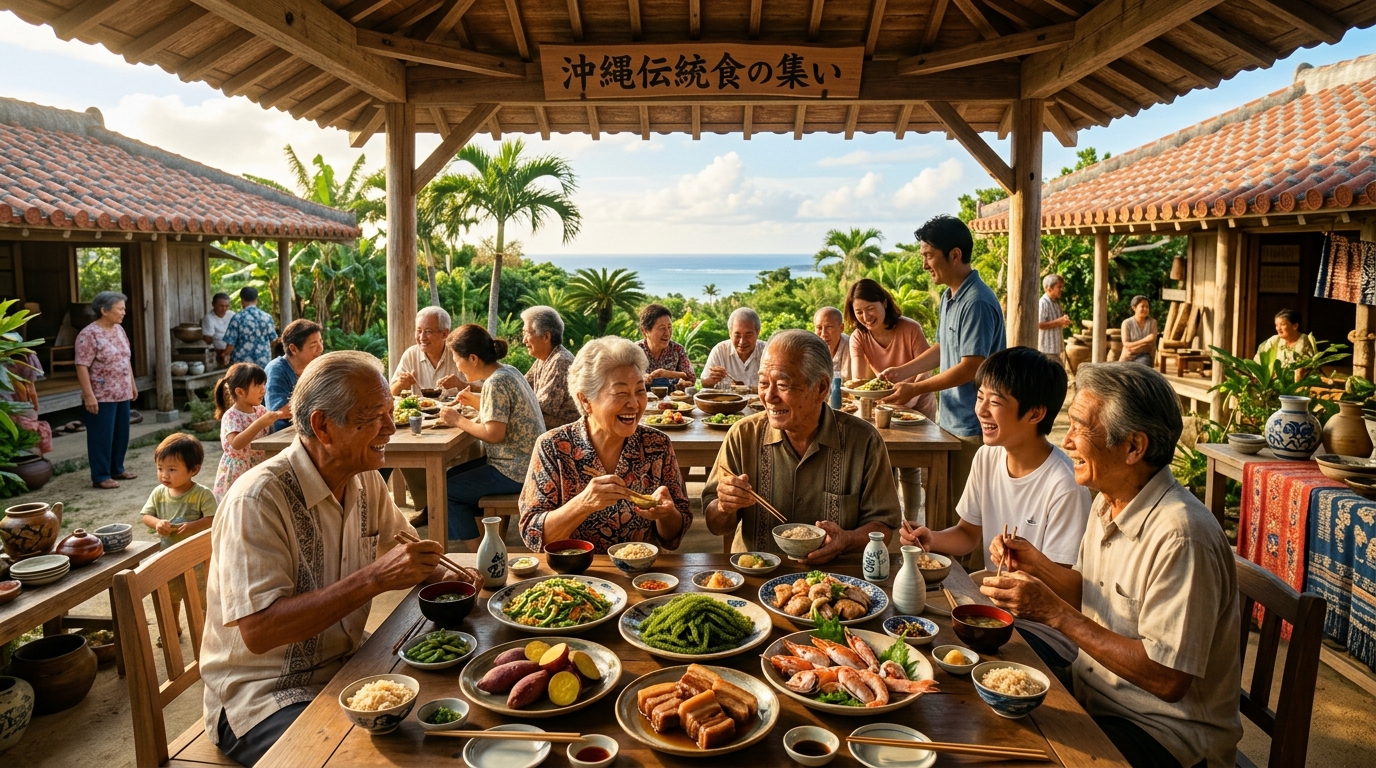
The 7 Sacred Okinawan Foods
1. Goya (Bitter Melon)
The most famous Okinawan vegetable. Looks like a wrinkled cucumber covered in bumps. Tastes intensely bitter.
Health benefit: Charantin (lowers blood sugar), polypeptide-p (insulin-like effects), high antioxidants.
How Okinawans eat it: Goya Champuru — stir-fried with tofu, eggs, pork, served as a daily side.
The bitterness is the point. Western diets exclude bitter foods, but bitterness signals beneficial compounds. Okinawans eat goya almost daily.
2. Imo (Purple Sweet Potato)
The historical staple food of Okinawa, replacing rice during the WWII era.
Health benefit: Anthocyanins (the purple pigment), 4x more antioxidants than blueberries, low glycemic index, satisfying without spiking blood sugar.
Today's Okinawan centenarians grew up eating imo as a primary calorie source. Their diets were 60% sweet potato until the 1960s.
This is the most underrated longevity food on Earth.
3. Tofu (Specifically Okinawan Tofu)
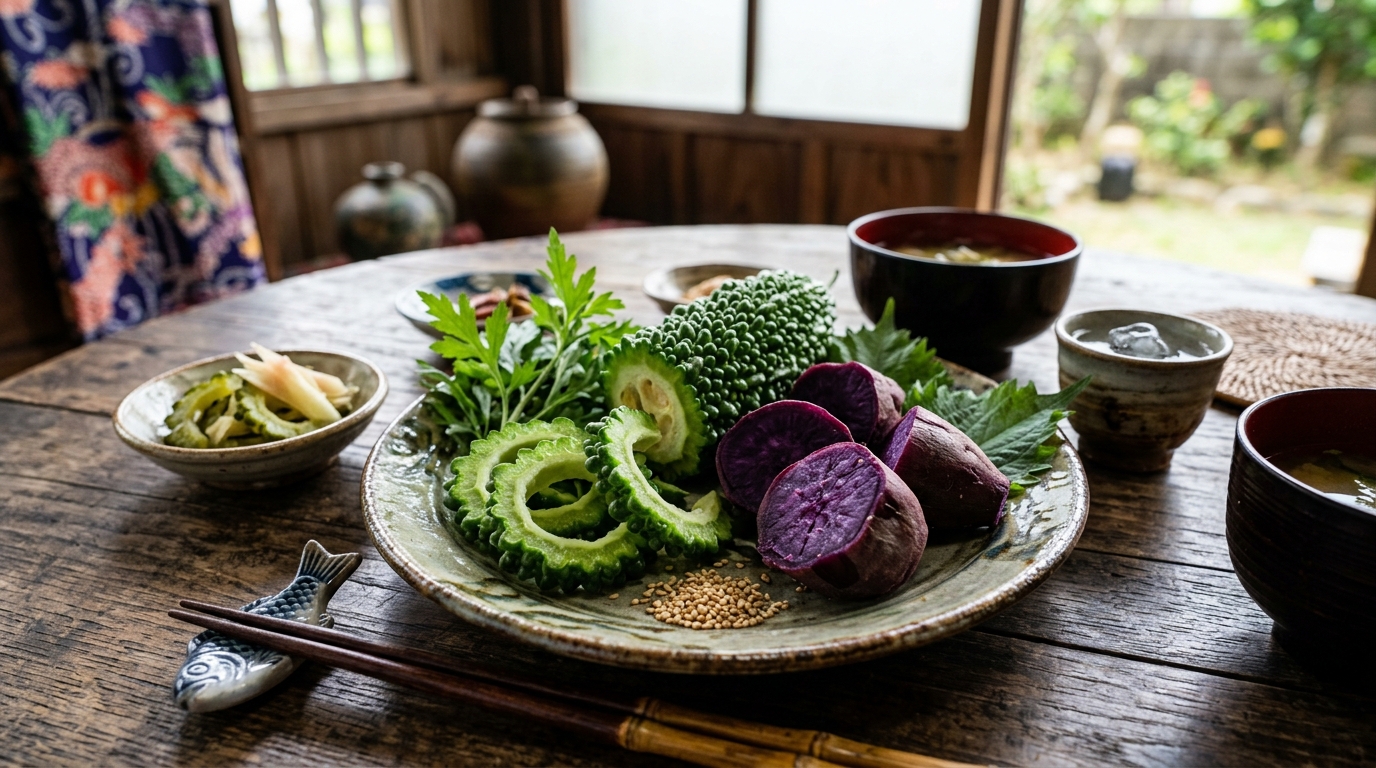
Not the soft tofu of mainland Japan. Okinawan tofu is island tofu (shima dofu) — denser, firmer, almost cheesy.
Health benefit: Complete plant protein, isoflavones (cancer prevention, hormone balance), magnesium-rich.
Okinawans eat tofu every single day, often as the protein source instead of meat. The average Okinawan over 70 eats tofu 6-7 times per week.
4. Pork (Yes, Pork)
This surprises people. Okinawans eat more pork than mainland Japanese. But there's a catch.
They eat the whole pig — feet, ears, intestines, skin. They cook it slowly for hours, so the fat renders and what remains is collagen-rich, gelatinous, flavorful meat.
The slow-cooked preparation also reduces saturated fat by 50%+ compared to raw pork.
Health benefit: Collagen for skin/joints, complete protein, B vitamins. The slow-cooking method preserves nutrients while reducing harmful compounds.
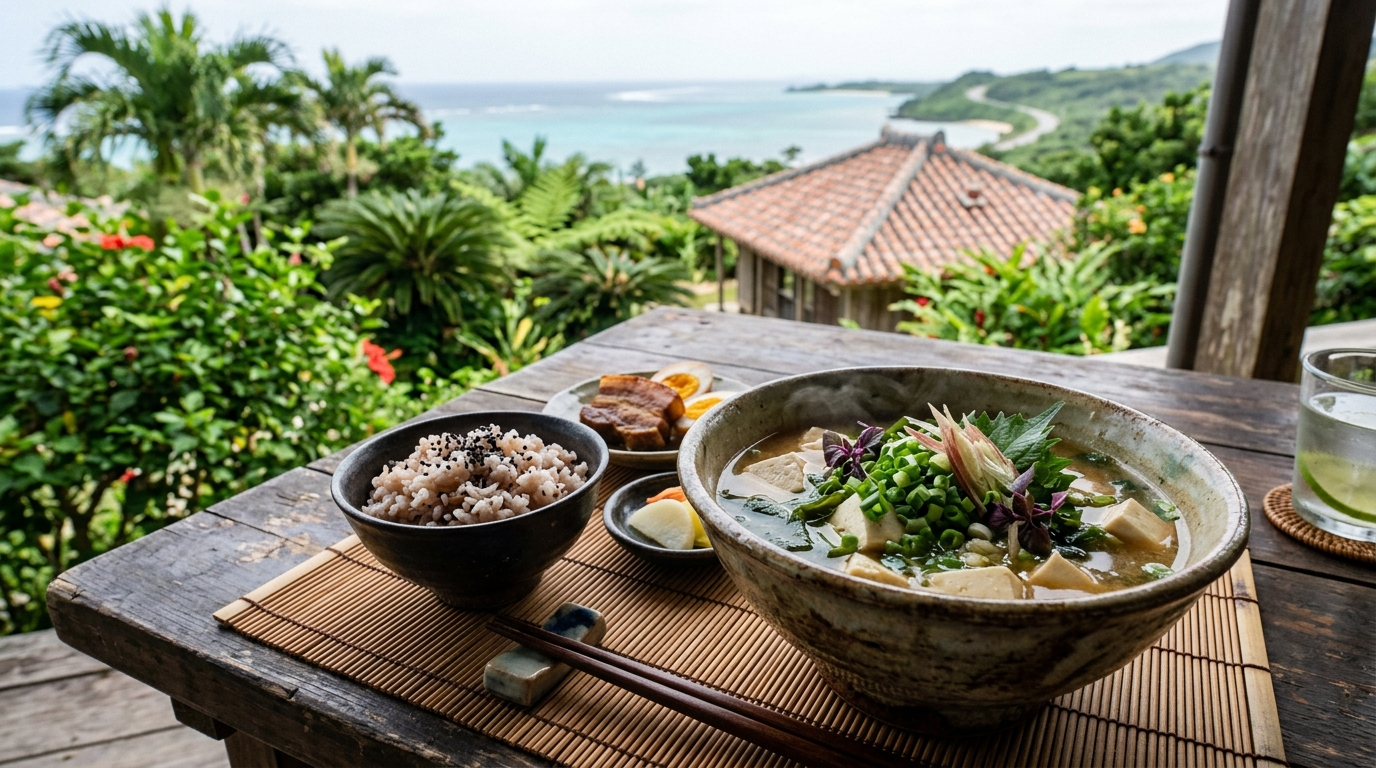
5. Konbu (Kelp Seaweed)
Okinawans consume more konbu per capita than anywhere on Earth.
Health benefit: Iodine for thyroid, fucoidan (anti-tumor properties), high in fiber, calcium, iron.
It's used to make dashi broth (basically all soups), in salads, as wraps, dried as snacks. Konbu is in nearly every meal.
6. Mozuku (Brown Seaweed)
A specific seaweed from Okinawan waters that's largely unknown to the rest of the world.
Health benefit: Highest concentration of fucoidan in any food (2-3x other seaweeds), strong anti-inflammatory, immune-supporting.
Eaten as a vinegared salad. Slimy, but addictively refreshing.
7. Awamori (Local Sake)
Yes, alcohol. Specifically: awamori — Okinawan distilled rice spirit, drunk in moderation.
Health benefit: When consumed at 1-2 small servings daily, has been correlated with longevity in Okinawan centenarian studies. Likely due to social bonding (drunk during gatherings) more than chemistry.
Importantly: Okinawans drink with food and friends, not alone. The social context matters.
Why Western "Diets" Miss the Point
Reading the above, you might think: "Okay, I'll add bitter melon and purple sweet potato to my diet."
You're missing the actual lesson.
The Real Secret #1: Hara Hachi Bu
Before each meal, Okinawans say "hara hachi bu" — "eat until 80% full." They literally stop eating before they're satiated.
This single practice — calorie restriction without counting — is more responsible for Okinawan longevity than any specific food.
The Real Secret #2: Plant-Forward, Not Vegetarian
About 80% of an Okinawan elder's plate is vegetables, beans, grains. About 20% is animal protein (mostly fish/pork).
This isn't a "vegetarian diet" or "high-protein diet." It's plant-forward with protein accents. Most Western "healthy diets" get this ratio wrong.
The Real Secret #3: Slow Eating
Meals are events. They take 30-60 minutes. People talk. People savor. Nobody scrolls phones.
Slow eating is correlated with weight management because it gives the brain time to register fullness.
The Real Secret #4: Cooking Together
Most Okinawan elders cook with family multiple times per week. Cooking is connection, not just calories.
Western "diet" research consistently shows: people who cook together eat better and live longer.
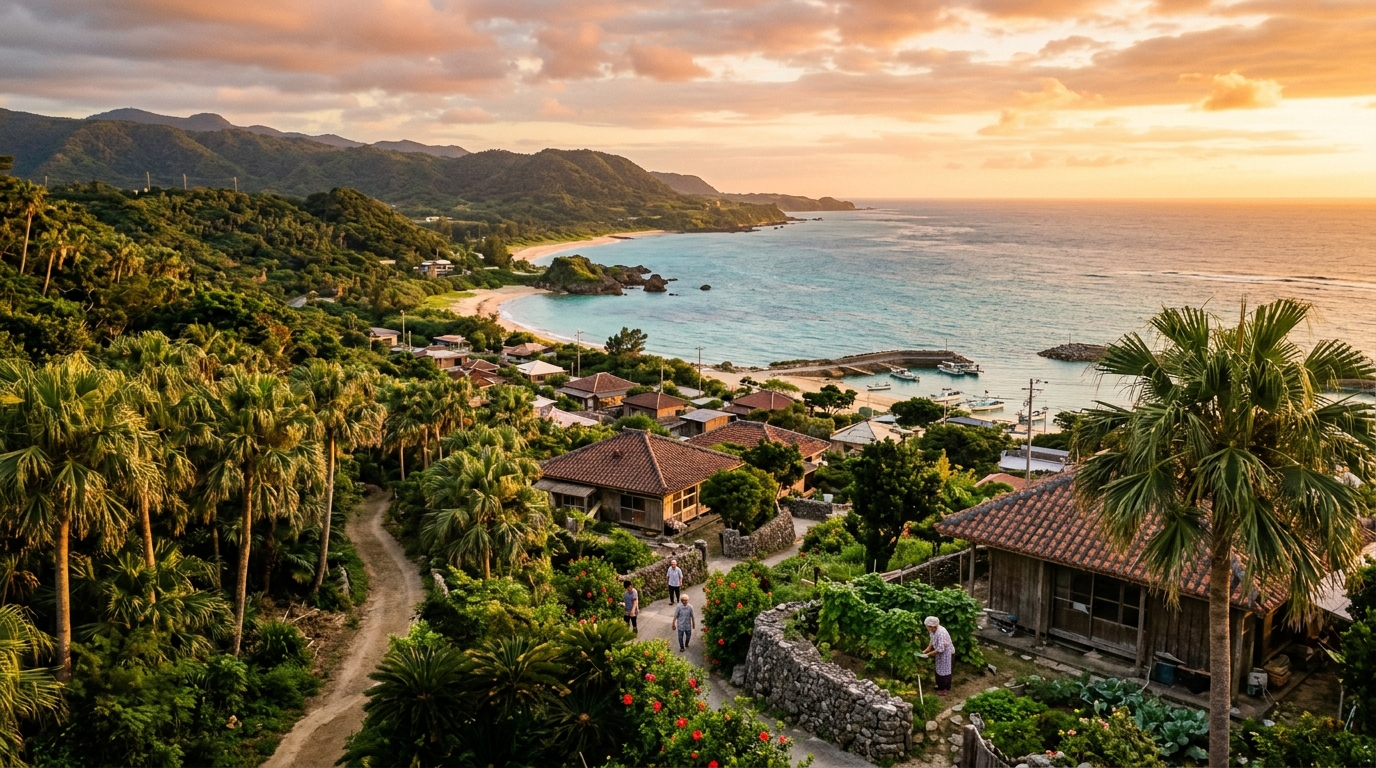
The Real Secret #5: Yui-Maru (Mutual Help)
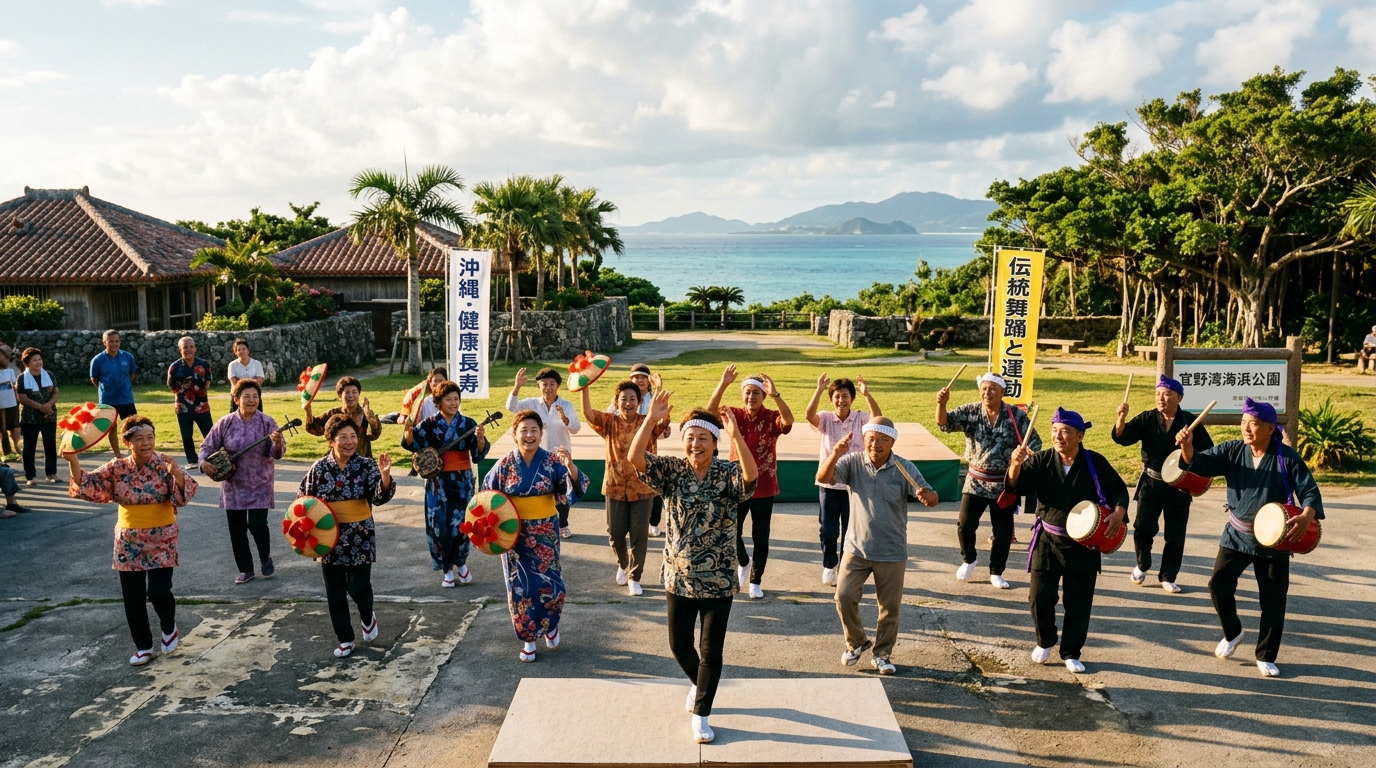
Okinawan villages practice "yui-maru" — mutual aid where neighbors help each other. This creates strong social bonds, which are now medically proven to be the #1 longevity factor.
You can eat goya for 50 years, but if you're isolated, you'll still die early.
What This Means for Your Life
You can't make yourself live to 100 by adding superfoods. But you can adopt the principles:
Food Principles:
- Eat until 80% full (not until you can't eat more)
- Make plates 70-80% plants (vegetables, beans, grains)
- Use fermented foods (miso, tofu, seaweed) regularly
- Choose slow-cooked over fast-fried
- Drink with friends and food, not alone
Life Principles:
- Cook with people you love
- Eat slowly, talk during meals
- Build close community
- Have a daily reason to engage with others
- Be useful to others into old age
The Bigger Truth
The Okinawan secret isn't food. It's food embedded in a way of life.
You can buy bitter melon at the supermarket. But unless you also slow down, build deep community, and eat at the table with people you love, the bitter melon won't extend your life.
This is the lesson Western diet books refuse to teach: longevity is a system, not a recipe.
When Okinawan elders lived to 100, they weren't following a "diet." They were living a culture — one that integrated food, community, purpose, and pace.
Want to live to 100? Don't change your diet. Change your life.
That's what Okinawa actually teaches us.