
J-Times Editorial
Food Desk
In 1908 a Japanese chemist leaned over a steaming bowl of kelp broth and asked a single curious question — and the world got a new word for flavor. Meet umami, the savory fifth taste, and the quiet magic of synergy that makes dashi sing.
Read this article to earn +5 MTC
What Is Umami? Japan's Fifth Taste, Explained
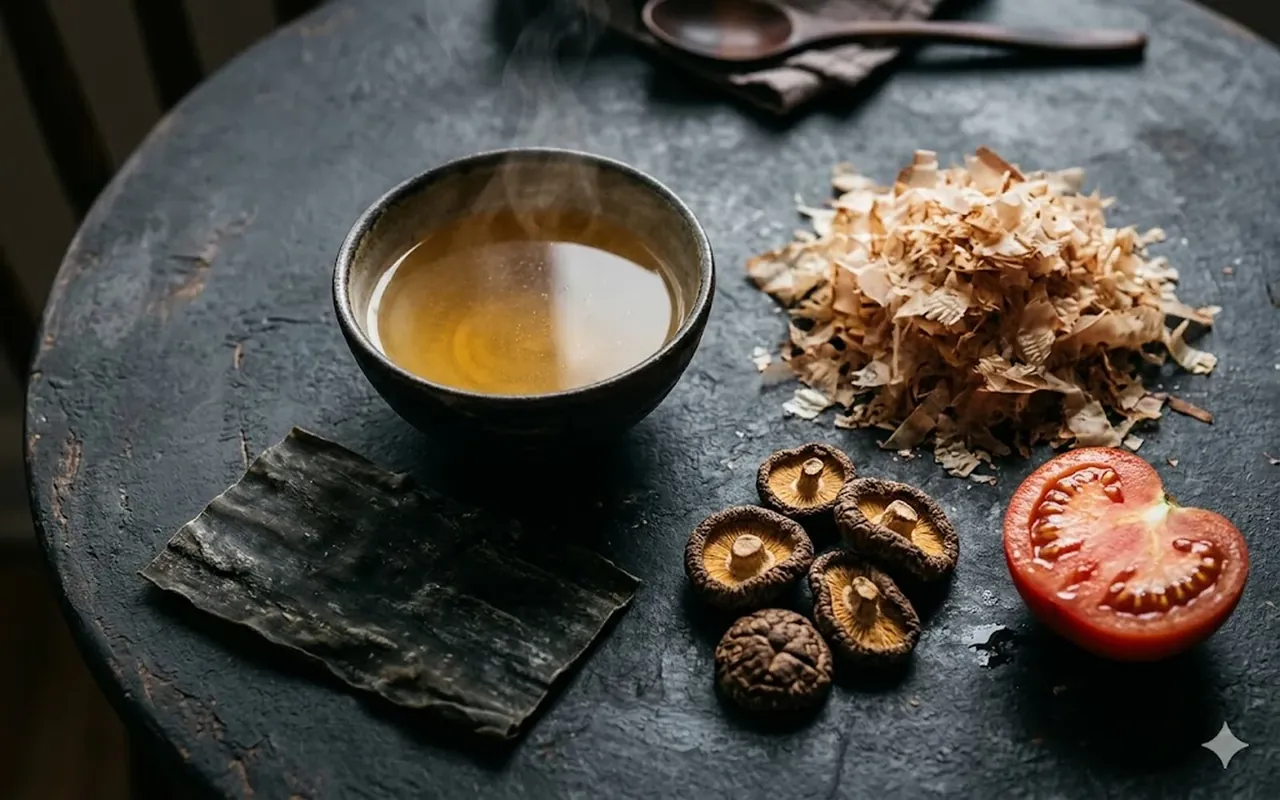
Picture a steaming bowl of dashi: a clear golden broth made from nothing but kelp and dried fish, yet so deep and satisfying it tastes like it took all day. For centuries, Japanese cooks made that broth and simply called it delicious. Then, in 1908, one chemist leaned over a bowl just like it and asked a question nobody had thought to ask — what, exactly, is this deliciousness? The answer gave the whole world a new word for flavor.
That word is umami (うま味 / 旨味), the fifth basic taste, sitting alongside sweet, sour, salty, and bitter. It's the deep, savory, mouth-filling quality you taste in dashi broth, aged cheese, ripe tomatoes, soy sauce, and cured meats — the flavor that makes food feel complete. The word, and the science behind it, is a quiet gift from Japan to the world's kitchens.
TL;DR
- Umami = savory "deliciousness," the fifth basic taste, triggered mainly by glutamate (an amino acid).
- It was isolated and named in 1908 by chemist Kikunae Ikeda from kombu (kelp) dashi.
- Different umami compounds multiply each other — that synergy is the secret of Japanese dashi.
なぜそうなったのか — How a taste got discovered and named
For centuries, Japanese cooking was built on dashi (出汁) — a clear stock from kelp and dried fish that makes food taste rich without ever feeling heavy. Generations of cooks knew it was delicious. What none of them had done was give a name to what that deliciousness actually was. It was hiding in plain sight, in every bowl.
In 1908, chemist Kikunae Ikeda (池田菊苗) at Tokyo Imperial University decided to find out. Patiently, he set about isolating the source of that savory quality in kombu (昆布, kelp) broth — and pulled from it glutamic acid (glutamate). His bold claim: this was not some blend of the four known tastes, but a fifth, distinct basic taste all its own. He named it from the Japanese word umai (旨い, "delicious"): umami.
The world did not rush to agree. The idea took decades to win acceptance, and for much of the 20th century umami remained a Japanese curiosity rather than a scientific fact. Then, around the turn of the 2000s, came the vindication: scientists identified taste receptors on the tongue that respond specifically to glutamate — confirming umami as a genuine, separate basic taste, exactly as Ikeda had argued nearly a century before. Aha — so that's why dashi tastes the way it does. One patient question had been right all along.
歴史 / From lab to global pantry
- 1908: Ikeda isolates glutamate from kombu and names umami.
- 1909: His discovery is commercialized as a seasoning (the birth of monosodium glutamate, MSG, sold as Ajinomoto).
- Early–mid 20th century: Other umami compounds are identified — inosinate in dried bonito (katsuobushi) and guanylate in dried shiitake mushrooms.
- ~2000: Researchers identify glutamate-sensing taste receptors, cementing umami's scientific status.
- Today: "Umami" is a loanword in kitchens worldwide; chefs everywhere chase it deliberately.
実際のところ — The science you can taste
The three key umami compounds:
- Glutamate — kombu (kelp), tomatoes, soy sauce, parmesan, mushrooms.
- Inosinate — katsuobushi (dried bonito), meat, fish.
- Guanylate — dried shiitake and other dried mushrooms.
The magic is synergy — and this is the part that makes it click. Combine a glutamate source with an inosinate or guanylate source, and the perceived umami doesn't just add up, it multiplies, far beyond what either ingredient could do alone. This is precisely why classic Japanese dashi pairs kombu + katsuobushi, and why a vegetarian dashi pairs kombu + dried shiitake: two humble dried ingredients, together, become something far greater than their sum. It's the secret the steaming bowl was keeping all along. And cooks the world over stumbled onto the same trick without knowing its name — tomato (glutamate) with parmesan and cured meat (inosinate) in a slow-simmered ragù, for example.
Why cooks love it:
- Umami adds depth and satisfaction, so dishes can taste rich with less salt and less fat.
- It rounds out and balances the other tastes, making food feel "complete."
ありがちな誤解 — Common misunderstandings
- "Umami just means MSG." MSG is one concentrated source of glutamate, but umami is a taste found naturally in many whole foods — kelp, tomatoes, cheese, mushrooms, cured fish.
- "It's a made-up marketing word." It's a scientifically recognized basic taste with identified tongue receptors.
- "Umami equals salty." They're different tastes; umami is savory depth, not saltiness — though they work well together.
- "Only Japanese food has umami." It's everywhere — Japanese cuisine simply named and studied it first.
FAQ
Q. What does umami taste like? A. Savory, brothy, mouth-filling, and lingering — the satisfying depth of a good stock, aged cheese, or a ripe tomato. It's distinct from salty, sweet, sour, and bitter.
Q. Who discovered umami? A. Japanese chemist Kikunae Ikeda, who isolated glutamate from kombu broth in 1908 and named the taste umami.
Q. What foods are highest in umami? A. Kombu (kelp), katsuobushi (dried bonito), dried shiitake, soy sauce and miso, ripe tomatoes, aged cheeses, and cured meats. Combining glutamate- and inosinate/guanylate-rich foods boosts it through synergy.
まとめ / Next reads
Umami is Japan's quiet gift to the world's kitchens — born not of boast but of patient curiosity and the long craft of dashi. It is the answer to why a bowl of broth can taste so good, found by one chemist humble enough to ask the question and careful enough to chase it. That, in the end, is the lovely thing about a name: once you can name it, you taste it everywhere.
- Related: Washoku: Why Japanese Cuisine Is a UNESCO Heritage
- Related: Japanese Dining Etiquette (Dos & Don'ts)
- Related: The Complete Guide to Japanese Etiquette (Dos & Don'ts)
Sources: history of Kikunae Ikeda's 1908 isolation of glutamate and the naming of umami; identification of inosinate and guanylate; early-2000s discovery of glutamate taste receptors; the kombu + katsuobushi dashi synergy. Verify dates and receptor details with scientific references before publishing.
Written by
J-Times Editorial
Food Desk