
J-Times Editorial
J-Times 編集部 / J-Times Editorial Team
A 2.5 km walk from Shibuya to Ebisu past four shrines: wolf guardians, a 1612 hall, an Edo sumo ground and Ebisu's own shrine. Route, distances and etiquette, as of 2 Oct 2026.
Read this article to earn +5 MTC
A shrine walk from Shibuya to Ebisu
Short answer (as of 2026-10-02): Four shrines sit on a 2.5 km line from Shibuya Station to Ebisu Station: Miyamasu Mitake Shrine, guarded by wolves; Konnō Hachimangū, with a hall from 1612; Shibuya Hikawa Shrine, with an Edo-era sumo ground; and the small Ebisu Shrine. The walking legs add up to about 35 minutes.
Disclosure: J-Times and Matsuri are both operated by Jon&Coo Inc. This guide mentions Matsuri's release event in Ebisu near the end. Everything about the shrines comes from the shrines' own pages, Shibuya City, the Tokyo Association of Shinto Shrines and the other sources listed at the end, checked on 2 October 2026.
Most visitors come to Shibuya for the crossing and to Ebisu for food and beer. Between the two stations, though, lies a part of Tokyo with a long memory. The Shibuya clan, who are said to have given the district its name, built their castle around Konnō Hachimangū. The old roads to Kamakura and to Mount Ōyama passed through, and Edo townspeople came out for cherry blossoms and sumo. The shrines are what remain of that world. This walk links four of them. You can do it in an afternoon without a ticket, a booking or much Japanese.
Which shrines are on the walk, and in what order?
Walk north to south: Miyamasu Mitake Shrine, Konnō Hachimangū, Shibuya Hikawa Shrine, then Ebisu Shrine, finishing at Ebisu Station. The order follows the land. You start on the slope above Shibuya Station, cross the valley to Konnō Hachimangū and finish on the flat ground by Ebisu Station.
We measured each leg on 2 October 2026 with an OpenStreetMap-based walking router. The figures are rounded route distances, not straight lines:
| Leg | Walking distance | Router's time |
|---|---|---|
| Shibuya Station (east side) → Miyamasu Mitake Shrine | 3 minutes, according to the Tokyo Association of Shinto Shrines | — |
| Miyamasu Mitake Shrine → Konnō Hachimangū | about 650 m | about 9 min |
| Konnō Hachimangū → Shibuya Hikawa Shrine | about 600 m | about 8 min |
| Shibuya Hikawa Shrine → Ebisu Shrine | about 1.1 km | about 15 min |
| Ebisu Shrine → Ebisu Station | about 150 m | about 2 min |
That makes about 2.5 km and 35 minutes of walking, plus the time you spend at each shrine. The streets are hilly between Konnō Hachimangū and Shibuya Hikawa Shrine, so allow more if you walk slowly.
Why does Miyamasu Mitake Shrine have wolves instead of lion-dogs?
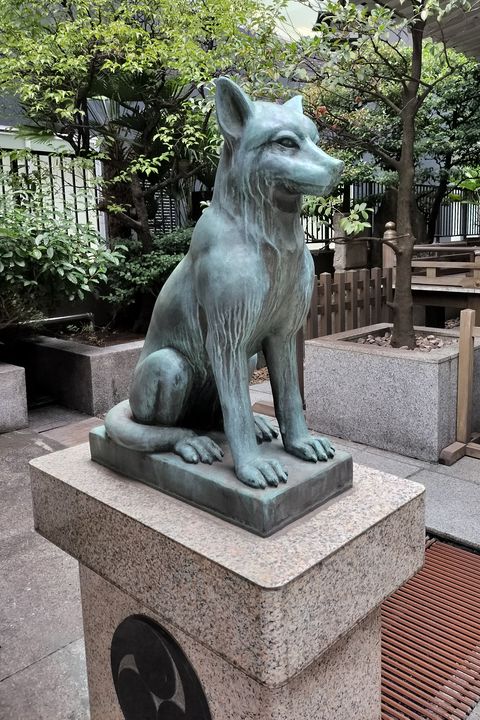
Its guardian statues are Japanese wolves, and the stone originals are thought to date from the 1670s. Most shrines are guarded by a pair of komainu, the lion-dogs you see at the gates. This shrine, about halfway up Miyamasu-zaka slope at 1-12-16 Shibuya, has wolves.
The Miyamasu shopping street association, whose site carries the shrine's notices, says the stone wolves are rare anywhere in Japan. They are believed to date from the Enpō era (1673–1681). The originals were badly damaged before the Second World War and are now kept in the shrine office. The pair in front of the hall today are bronze copies modelled on them. Time Out Tokyo also describes the guardians as Japanese wolves and notes that the species was officially declared extinct in 1905. The shrine enshrines the legendary prince Yamato Takeru, according to the Tokyo Association of Shinto Shrines.
The shrine is changing. In April 2025 the Tokyo Metropolitan Government approved a redevelopment association for the Miyamasu-zaka district. Work is scheduled to start in fiscal 2027 and the buildings are due for completion in fiscal 2031. Tokyu, one of the developers, says the plan includes rebuilding the Mitake shrine. As of 2 October 2026 the shrine was still in place and held its annual festival on 16 September 2026, so now is a good time to see it as it is.
What makes Konnō Hachimangū worth the walk?
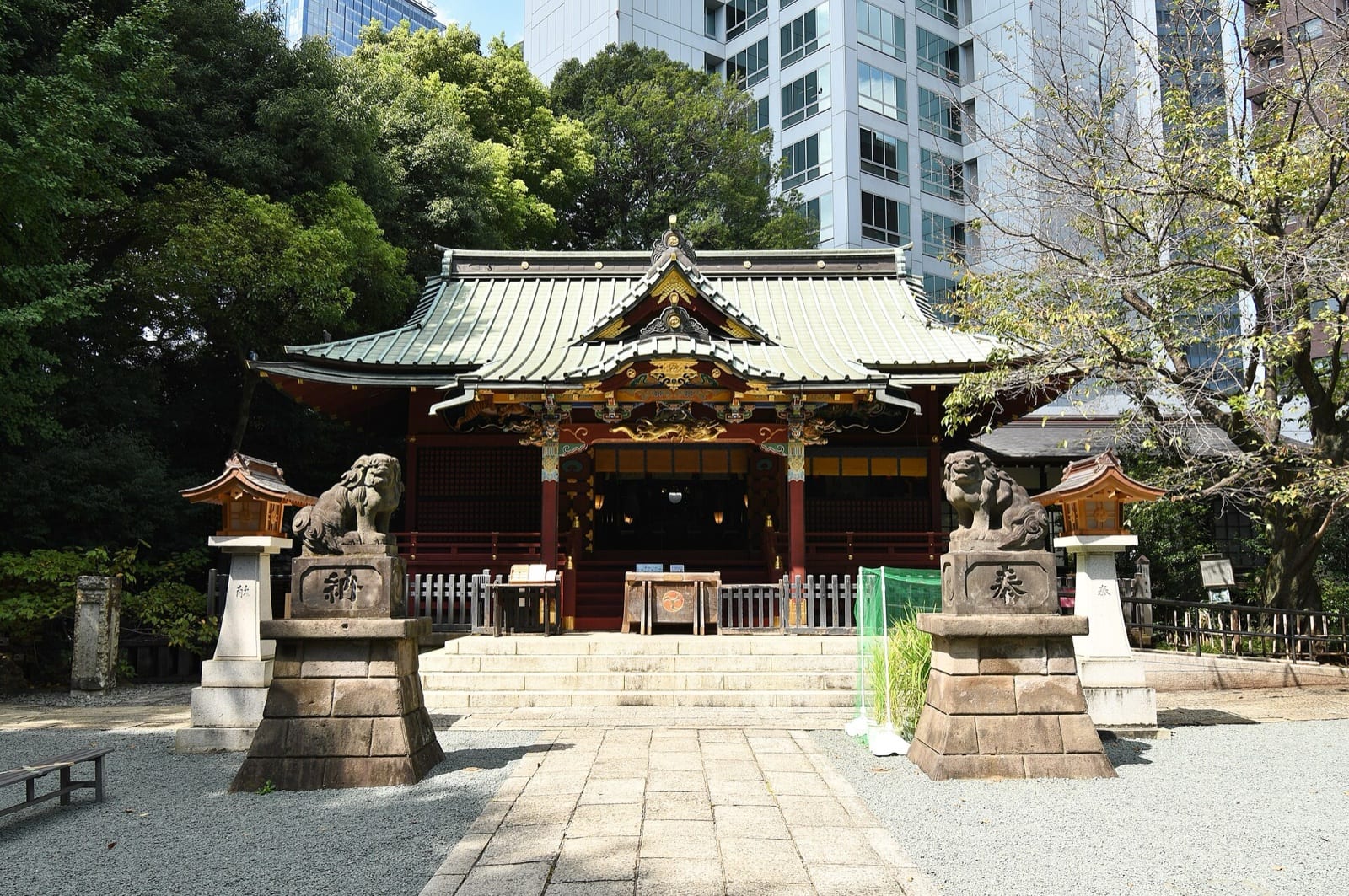
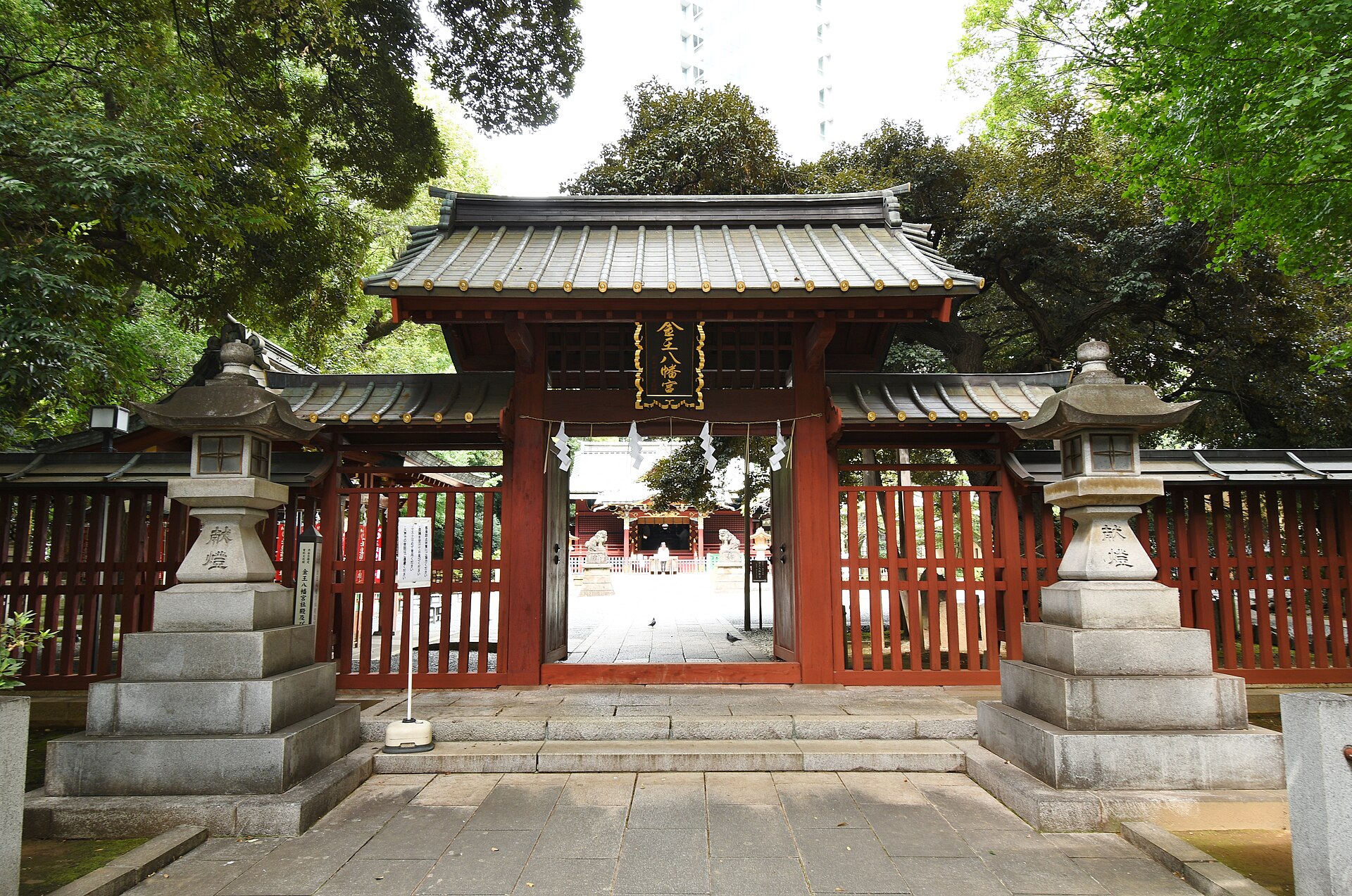
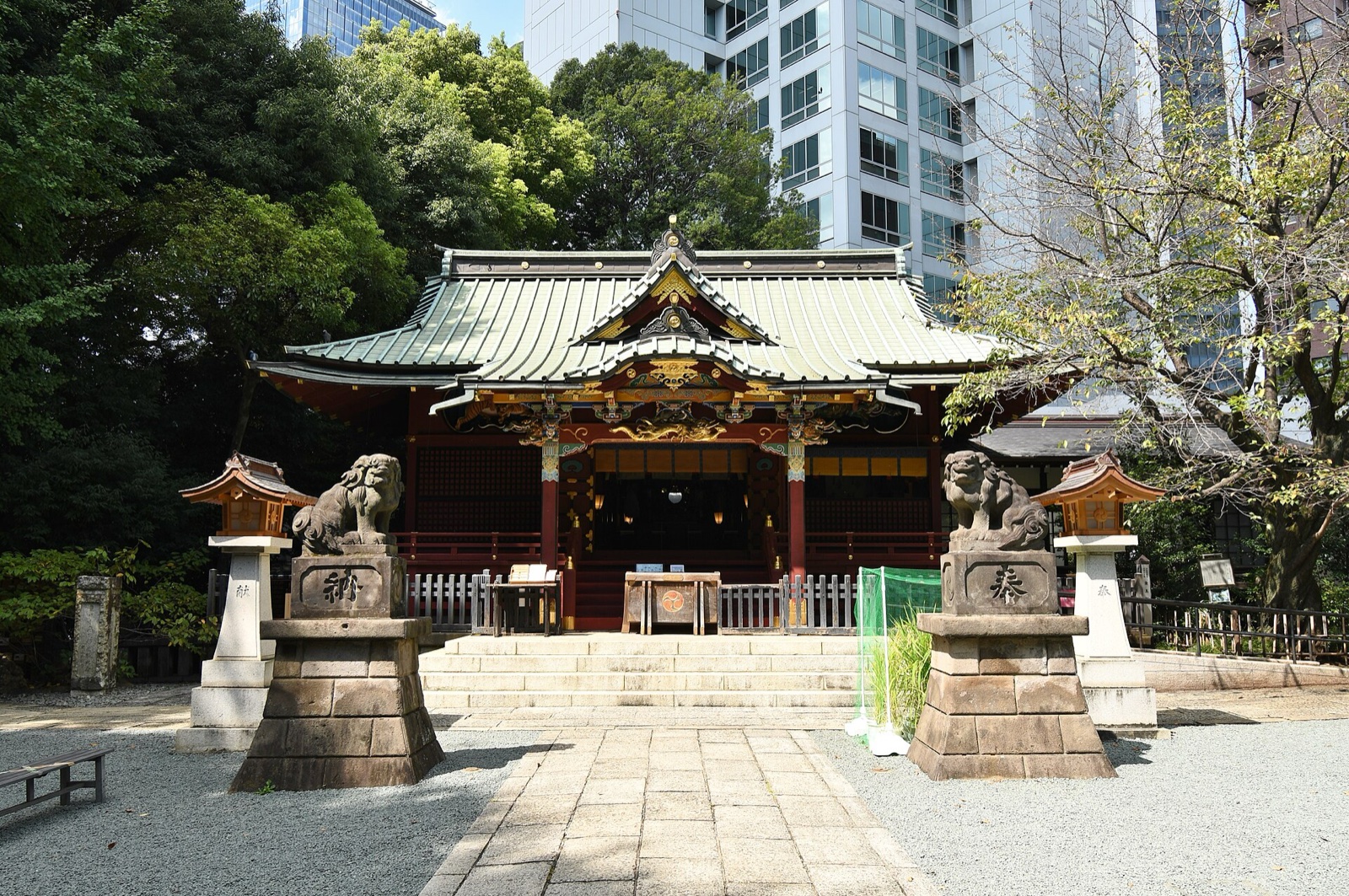
It is the shrine of the Shibuya clan, founded in 1092, and its hall, built in 1612, is one of the best-preserved early Edo-period shrine buildings in Tokyo. Shibuya City has designated the hall, the gate and the connecting corridor as tangible cultural properties.
The shrine's history says Kawasaki Motoie founded it in 1092. His son was granted the family name Shibuya, and the shrine's website and the Tokyo Association of Shinto Shrines both say this is one account of where the name of Shibuya comes from. The shrine takes its name from Shibuya Konnōmaru, a warrior of the clan who served the Minamoto family in the 12th century.
The present hall has a political backstory. In the years before 1612 it was unclear which of the second shogun's sons would become the third shogun. Aoyama Tadatoshi, guardian of the young Iemitsu, and Iemitsu's nurse Kasuga no Tsubone prayed here. When Iemitsu was confirmed as heir, they paid for the hall. Shibuya City describes it as a valuable building that keeps the styles of the early to mid Edo period. Look for the carved panels on the front of the worship hall. The shrine says they show a baku, a dream-eating beast that stands for peace, and a tiger, which stands for good government.
The shrine office takes phone calls from 9:00 to 17:00 (shrine website, checked 2026-10-02). It is about 5 minutes on foot from exit C1 of Shibuya Station, behind Shibuya Police Station. The shrine's daily morning service runs from 9:00 to 9:30, and the shrine says anyone may attend.
What is the Konnō cherry tree?
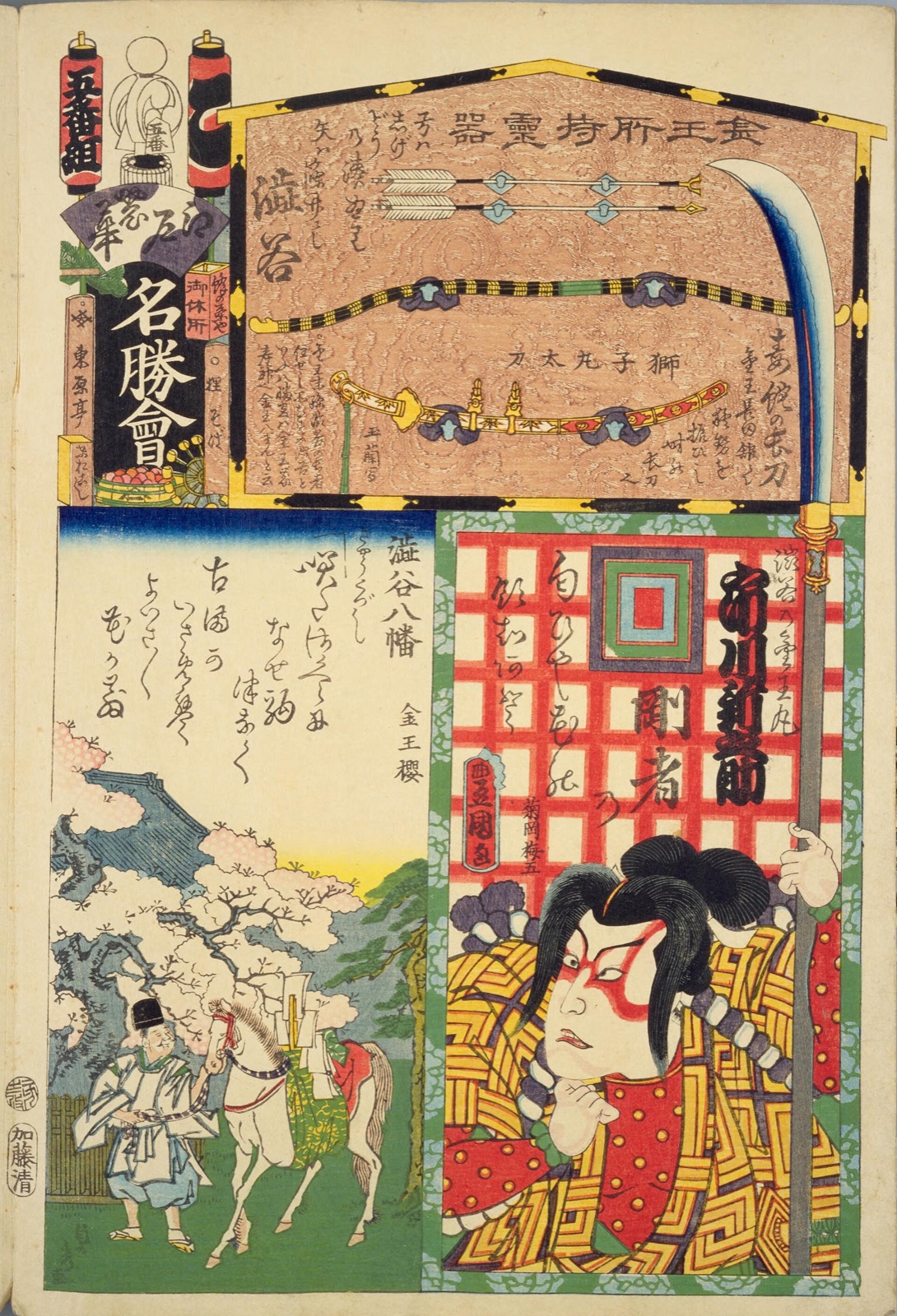
The Konnō-zakura is a Chōshū-hizakura cherry that carries single and double flowers on the same branch. Shibuya City has designated it a natural monument. According to the shrine, Minamoto no Yoritomo had the first tree moved here from his residence in Kamakura in 1189 to honour Konnōmaru. Shibuya City says it was counted among the three famous trees of Edo's outskirts. New trees are still grown from seed to keep the line pure. It flowers in spring. On other dates you will see only leaves or bare branches, but the tree is still worth finding.
The cherry was famous enough to appear in prints. The 1863 woodblock print below, from the series Edo no hana meishō-e, names "Shibuya Hachiman Konnō-zakura" and pairs the kabuki actor Ichikawa Shinnosuke with a scene under the blossoms.
One detail can confuse visitors. Konnō Hachimangū has its own small Mitake shrine inside its grounds, with ordinary lion-dog guardians. The wolf shrine is the separate one on Miyamasu-zaka. Both are looked after by Konnō Hachimangū's priests, according to the Tokyo Association of Shinto Shrines. So is the small Toyosaka Inari Shrine next door to Konnō Hachimangū.
Can you get a goshuin on this walk?
Yes, at Konnō Hachimangū, which announces its goshuin arrangements on its own website. A goshuin is a handwritten shrine seal, collected in a special book. For September 2026, the festival month, Konnō Hachimangū gave out only pre-written festival goshuin on paper, and it said the same applied to Toyosaka Inari Shrine. Check the shrine's notices before you go, because arrangements change around festivals.
We could not find an official statement on goshuin or office hours for Shibuya Hikawa Shrine, Miyamasu Mitake Shrine or Ebisu Shrine, so we do not give any here.
Why is Shibuya Hikawa Shrine called the oldest?
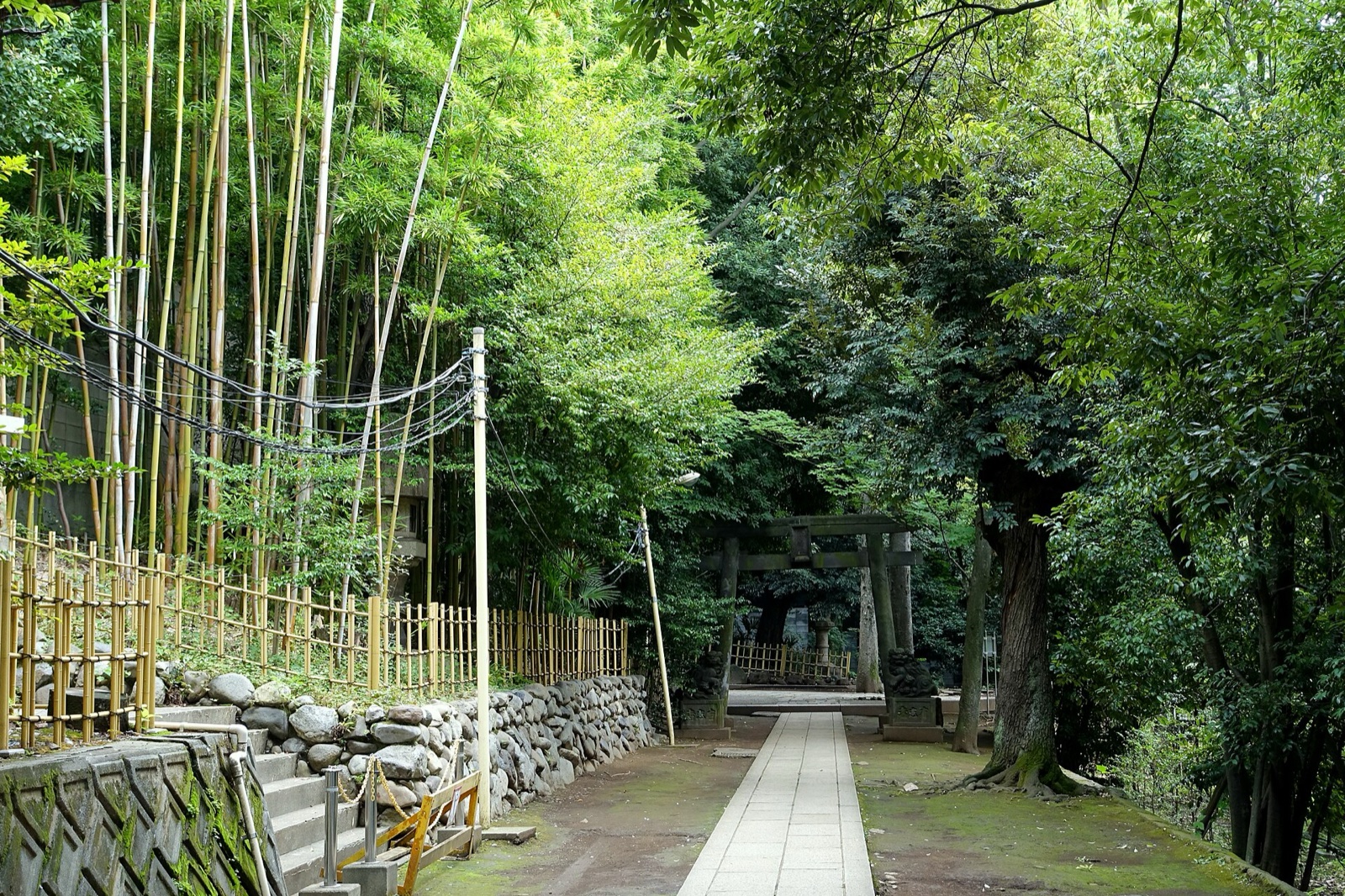
The Tokyo Association of Shinto Shrines calls it the oldest shrine in Shibuya, and Shibuya City says it is said to be among the oldest in the ward. It stands in a wooded compound at 2-5-6 Higashi. Its founding legend links it to the prince Yamato Takeru. This legend appears in an illustrated scroll of the shrine's origins dated 1605, which Shibuya City has designated a cultural property. The scroll is not on public display.
The grounds also hold the site of Konnō Sumo, the sumo ground that the city and the shrine association both count among the three great sumo venues on the outskirts of Edo. After the busy streets around Konnō Hachimangū, Hikawa is the quietest stop on the walk.
What is the story of Ebisu Shrine?
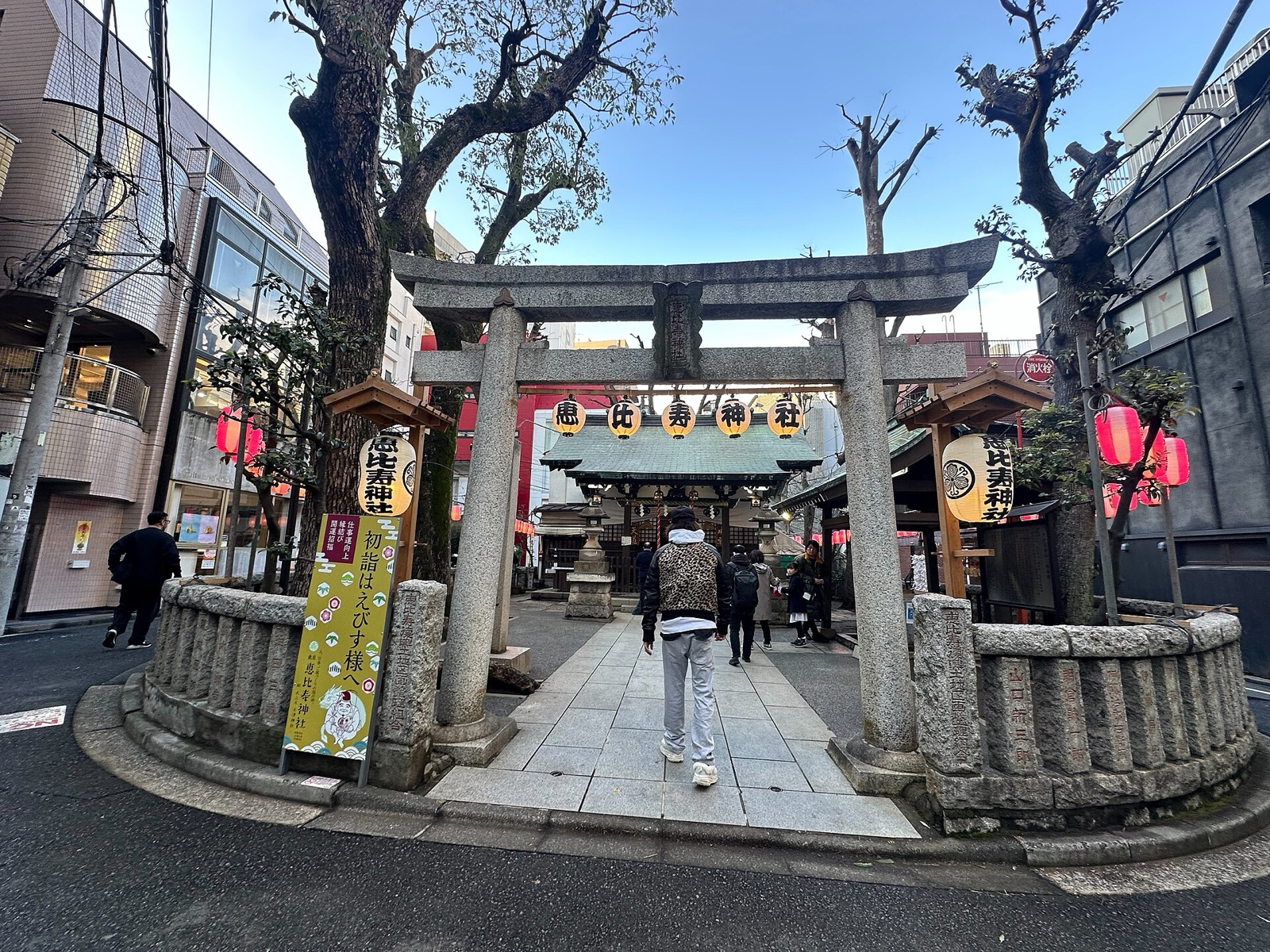
Ebisu Shrine, at 1-11-1 Ebisu-nishi just west of the station, was once called Amatsu Shrine. It took the name Ebisu when it moved to its present site during land readjustment in the 1950s. nippon.com gives the year as 1959; Rods Shinto, an English-language shrine guide, gives 1954. Both say Ebisu, the god of trade and good fortune, was enshrined there at that time. The Tokyo Association of Shinto Shrines lists it as one of the shrines looked after by Shibuya Hikawa Shrine.
The order here runs backwards from what most visitors expect. The district was not named after the god. Sapporo Breweries says its predecessor launched Yebisu beer in 1890 and that a freight station opened in 1901 to ship it, named after the beer. The area took the name later. Yebisu Garden Place, on the site of the old brewery, tells the same story. Our guide to why Ebisu is named after a beer has the full timeline.
How should you behave at these shrines?
Bow at the torii, walk to the side of the path, rinse your hands at the water basin, then bow twice, clap twice and bow once before the hall. This is the standard form taught by the Association of Shinto Shrines (Jinja Honchō) and the Tokyo Association of Shinto Shrines. Both note that some shrines have their own customs, so follow any local signs. Our step-by-step guide to visiting a Japanese shrine covers each step. If you are unsure how shrines differ from temples, see Shinto vs Buddhism.
Three points matter on this walk in particular:
- November is Shichi-Go-San season. Families bring children aged three, five and seven to be blessed, often in kimono. Konnō Hachimangū's notice for 2026 says it takes same-day Shichi-Go-San prayers as well as bookings. Do not photograph other people's children, and give families room in front of the hall.
- Photography. None of the four shrines publishes photography rules online, as far as we could find on 2 October 2026. Yoyogi Hachimangū (below) does: it allows professional photographers at Shichi-Go-San and similar ceremonies only for families who have booked a prayer. Treat that as a sensible guide anywhere. Take quiet photos of the buildings, and do not photograph inside a hall or during a ceremony.
- The shrines are places of worship in residential streets. Keep your voice low, especially early in the morning and when a prayer is under way.
For general manners on trains, in restaurants and at onsen, see our Japan etiquette guide.
Is there anything special in early November 2026?
Yes. Rooster-day markets (tori-no-ichi) are held in November, and the first rooster day of 2026 falls on Saturday 7 November. Rooster days come every 12 days. The Miyamasu shopping street published 12 and 24 November for 2025. Counting forward from those dates, the 2026 rooster days are 7 and 19 November. In 2025, Miyamasu Mitake Shrine held a market of lucky bamboo rakes on its rooster days, with stalls along Miyamasu-zaka, and the street listed hours of 10:00 to 23:00 on the first day. The 2026 hours had not been posted on 2 October 2026. Konnō Hachimangū also holds a festival for its in-grounds Mitake shrine on the first rooster day, at 9:30, according to its annual calendar.
Can you do the walk before the Matsuri event in Ebisu?
Yes. Matsuri, a J-Times sister service, will hold its release event in Ebisu on Sunday 8 November 2026, from 16:00 to 22:00, and this walk ends at Ebisu Station. Matsuri (matsuri.group) is a site for finding guided tours, meetups, events and classes in Japan. Details of the event will be on the Matsuri event page; until then, our Matsuri hub article explains the service.
Plan around the light. The National Astronomical Observatory of Japan gives sunset in Tokyo on 8 November 2026 as 16:40. If you leave Shibuya around 14:00, you will see the shrines in daylight and reach Ebisu in good time.
If you have more time, where else can you go?
Yoyogi Hachimangū, north-west of Shibuya near Yoyogi Park, is the best addition. It was founded in 1212, according to the Tokyo Association of Shinto Shrines. Its grounds contain the Yoyogi Hachiman site, which Shibuya City has designated a historic site. Excavations in 1950 found a dwelling the city dates to about 4,500 years ago, and a reconstructed pit dwelling stands there now. The shrine office is open from 9:00 to 17:00, according to the shrine's website (checked 2026-10-02). The nearest stations are Yoyogi-Hachiman on the Odakyu Line and Yoyogi-Kōen on the Chiyoda Line.
The Matsuri feature
- What is Matsuri? — the hub: what the site offers and how to read it
- Why is Ebisu named after a beer? — the neighbourhood around the release event
Sources and dates checked
- Konnō Hachimangū official website: home, history and buildings, access, annual events, notices (September 2026 goshuin, Shichi-Go-San 2026) — https://www.konno-hachimangu.jp/index.html / https://www.konno-hachimangu.jp/yuisho.html / https://www.konno-hachimangu.jp/guidance.html / https://www.konno-hachimangu.jp/nenkangyouzi.html / https://www.konno-hachimangu.jp/news/view/63 / https://www.konno-hachimangu.jp/news/view/33 / English: https://www.konno-hachimangu.jp/index_en.html — checked 2026-10-02
- Shibuya City, "Ward-designated cultural properties" (Japanese; Konnō Hachimangū hall and gate, Konnō-zakura, Hikawa scroll, Yoyogi Hachiman site) — https://www.city.shibuya.tokyo.jp/bunka/bunkazai/bunkazai/kubunka.html — checked 2026-10-02
- Shibuya City, "Famous places and historic sites" (Japanese; Konnō Sumo site) — https://www.city.shibuya.tokyo.jp/bunka/bunkazai/bunkazai/meisho.html — checked 2026-10-02
- Tokyo Association of Shinto Shrines (Tokyo-to Jinjachō), shrine pages: Konnō Hachimangū, Mitake Shrine (Miyamasu), Hikawa Shrine (Shibuya), Yoyogi Hachimangū — http://www.tokyo-jinjacho.or.jp/shibuya/200222 / http://www.tokyo-jinjacho.or.jp/shibuya/2071 / http://www.tokyo-jinjacho.or.jp/shibuya/3272 / http://www.tokyo-jinjacho.or.jp/shibuya/2070 — checked 2026-10-02
- Tokyo Association of Shinto Shrines, "How to worship" — http://www.tokyo-jinjacho.or.jp/sanpai/ — checked 2026-10-02
- Association of Shinto Shrines (Jinja Honchō), "How to worship" (Japanese) — https://www.jinjahoncho.or.jp/omairi/sanpai/ — checked 2026-10-02
- Shibuya Miyamasu Shopping Street Association, "Miyamasu Mitake Shrine" (wolf guardians, 2025 rooster-day market) and 2026 festival notice — https://shibuyamiyamasu.jp/?page_id=396 / https://shibuyamiyamasu.jp/?p=5316 — checked 2026-10-02
- Time Out Tokyo, "Tori no Ichi (Miyamasu Mitake Jinja Shrine, Shibuya)" — https://www.timeout.com/tokyo/things-to-do/tori-no-ichi-miyamasu-mitake-jinja-shrine-shibuya — checked 2026-10-02
- Tokyo Metropolitan Government press release, Miyamasu-zaka district redevelopment association (28 April 2025) — https://www.metro.tokyo.lg.jp/information/press/2025/04/2025042802 — checked 2026-10-02
- Tokyu Corporation news release on the Miyamasu-zaka redevelopment — https://www.tokyu.co.jp/company/news/detail/56286.html — checked 2026-10-02
- Sapporo Breweries, YEBISU brand history (Japanese) — https://www.sapporobeer.jp/yebisu/brand/history/ — checked 2026-10-02
- Yebisu Garden Place, "About" (history of the Ebisu name) — https://gardenplace.jp/about/ — checked 2026-10-02
- nippon.com, history of the Ebisu name and its two Ebisu shrines (Japanese) — https://www.nippon.com/ja/japan-topics/c13308/ — checked 2026-10-02
- Rods Shinto, "Ebisu Jinja" — https://www.rodsshinto.com/13-113-01 — checked 2026-10-02
- Yoyogi Hachimangū official website (office hours, photography rule) — https://www.yoyogihachimangu.or.jp/ — checked 2026-10-02
- National Astronomical Observatory of Japan, sunrise and sunset in Tokyo, November 2026 (Japanese) — https://eco.mtk.nao.ac.jp/koyomi/dni/2026/s1311.html — checked 2026-10-02
- Walking distances: computed by J-Times on 2026-10-02 with the OSRM foot router at routing.openstreetmap.de on OpenStreetMap data (© OpenStreetMap contributors, https://www.openstreetmap.org/copyright)
Featured image: Saigen Jiro / Wikimedia Commons / CC0 1.0 (https://commons.wikimedia.org/wiki/File:Konno-hachimangu,_haiden-1.jpg)
Written by
J-Times Editorial
J-Times 編集部 / J-Times Editorial Team