J-Times Editorial
J-Times 編集部 / J-Times Editorial Team
Ebisu is named after Yebisu beer: a 1901 freight station built to ship it took the beer's name, and the district followed. Dates, the brewery site, the station jingle and how to explore.
Read this article to earn +5 MTC
Why is Ebisu in Tokyo named after a beer?
Short answer (as of 2026-10-02): Ebisu is named after Yebisu beer. In 1901 a freight station was built next to the brewery to ship the beer, and it was called Ebisu after the product. A passenger station followed in 1906, and the name spread to the streets around it.
Disclosure: J-Times and Matsuri are both operated by Jon&Coo Inc. The last part of this guide mentions Matsuri's release event in Ebisu. Everything else comes from Sapporo Breweries' own history pages, Yebisu Garden Place and the other sources listed at the end, checked on 2 October 2026.
Ebisu is one stop south of Shibuya on the JR Yamanote Line. It is known today for good restaurants, small bars and the open plazas of Yebisu Garden Place. The name sounds old, because Ebisu is one of Japan's oldest gods of good fortune. But there was no place called Ebisu here until the twentieth century. The neighbourhood took its name from a beer label, and the beer had taken its name from the god. nippon.com calls a product name that became a station name and then a place name "very rare". Sapporo Breweries still makes the beer. Here is how it happened, what you can still see, and how to spend an afternoon there.
Was Ebisu named after the beer or after the god?
After the beer. The beer was named after the god first, in 1890, and the area took the beer's name later.
The order of events matters because many people assume the opposite. According to Sapporo Breweries' official history, the Japan Beer Brewery Company, a forerunner of today's Sapporo Breweries, was founded in September 1887 by business owners from Tokyo and Yokohama. It chose a site in Mita village, Ebara district, then farmland and woods, and finished a German-style brick brewery there in October 1889. Brewing began that December. The beer, sold as Ebisu Beer, went on sale on 25 February 1890.
At that point there was no "Ebisu" on the map. Yebisu Garden Place's own history page says the land between Ebisu and Shibuya was quiet farmland until the middle of the Meiji era, and that the name Ebisu did not exist. nippon.com, in its 2024 series on Yamanote Line station names, makes the same point: the place took the name of the product, not the other way round.
The beer label today is written YEBISU, while the district is spelled Ebisu. Both refer to the same name.
Who is Ebisu, and why was a beer named after him?
Ebisu is a god of good fortune and business prosperity, counted among the Seven Lucky Gods (Shichifukujin). The brewery picked him after its first choice of name was already taken.
Nishinomiya Shrine in Hyogo Prefecture, which calls itself the head shrine of all Ebisu shrines, describes Ebisu as a god of good fortune, also counted as one of the Seven Lucky Gods. nippon.com calls him the god of business prosperity, which made him a lucky name for a new product.
Sapporo's official history explains the choice. The company first wanted to name the beer after Daikoku, another of the Seven Lucky Gods. That name was already registered as a trademark, so it switched to Ebisu. The beer quickly sold well. At the Third National Industrial Exhibition, which opened in Ueno in April 1890, it was rated "best" among 83 beers, and by 1896 it was the largest-selling beer by production volume, according to the same history.
If you are new to Japanese gods and shrines, our guide to Shinto and Buddhism in Japan gives the background.
When did Ebisu Station open, and how did the district get its name?
A beer-only freight station called Ebisu opened in February 1901. A passenger station opened nearby in 1906, and in 1928 the name became an official street and place name, Ebisu-dori.
As sales grew, the brewery was shipping beer by ox cart and horse cart. Sapporo's history says the company asked Nippon Railway, which ran the line next to the factory (today's Yamanote Line), for a freight station. In February 1901 a loading yard for the brewery's products opened beside the factory and was named Ebisu. Sapporo calls this the starting point for the area being called Ebisu. nippon.com gives the exact opening date as 25 February 1901 and notes that the land was then part of Shimo-Shibuya in Shibuya village, so the station was the only Ebisu around.
As the area filled with houses and small factories, a passenger station was needed. Sapporo's history says the station moved towards Shibuya and opened to passengers in 1906; nippon.com and the magazine @DIME both put the move at about 300 metres. nippon.com adds that the station became part of the Yamanote Line in 1909.
The name then spread. In 1928 the area around the station was renamed Ebisu-dori, according to both Sapporo's history and nippon.com, and Ebisu numbered districts later spread around it. That is why the station sign, the district and the beer share one name.
What happened to the brewery?
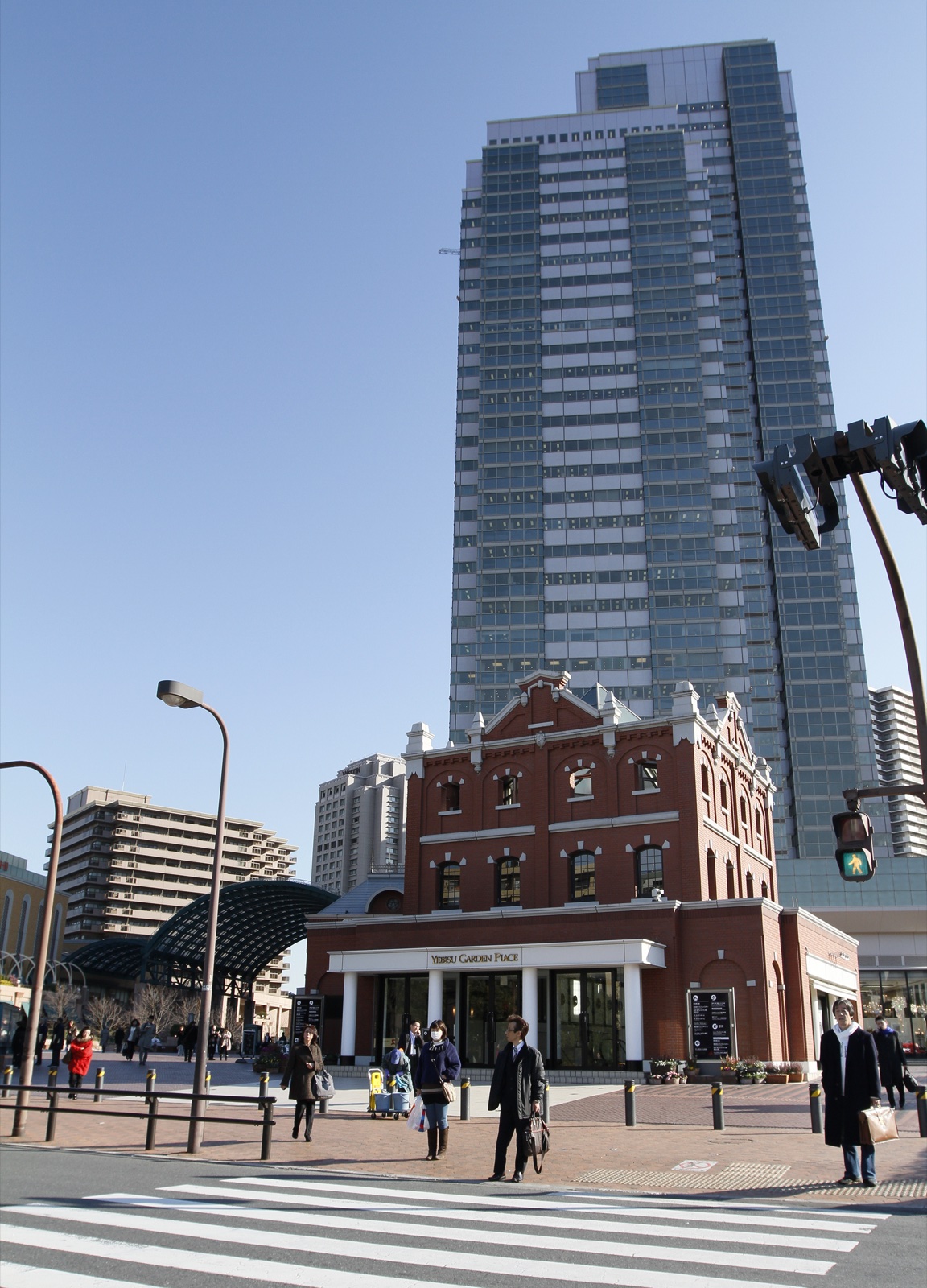
It closed after about 100 years, when production moved to Chiba in 1988. Yebisu Garden Place opened on the site on 8 October 1994.
Sapporo's history says the Ebisu brewery had no room left to expand as the city grew around it. Its production moved to a new brewery in Funabashi, Chiba, completed in 1988. The company then developed the site as Yebisu Garden Place, a mixed complex of homes, a hotel, shops, restaurants and cultural spaces, with about 60 percent of the land kept as open space. It opened on 8 October 1994 on a site of 83,000 square metres. About 150,000 people came on opening day, according to Sapporo. Yebisu Garden Place's own site also gives October 1994 as its opening.
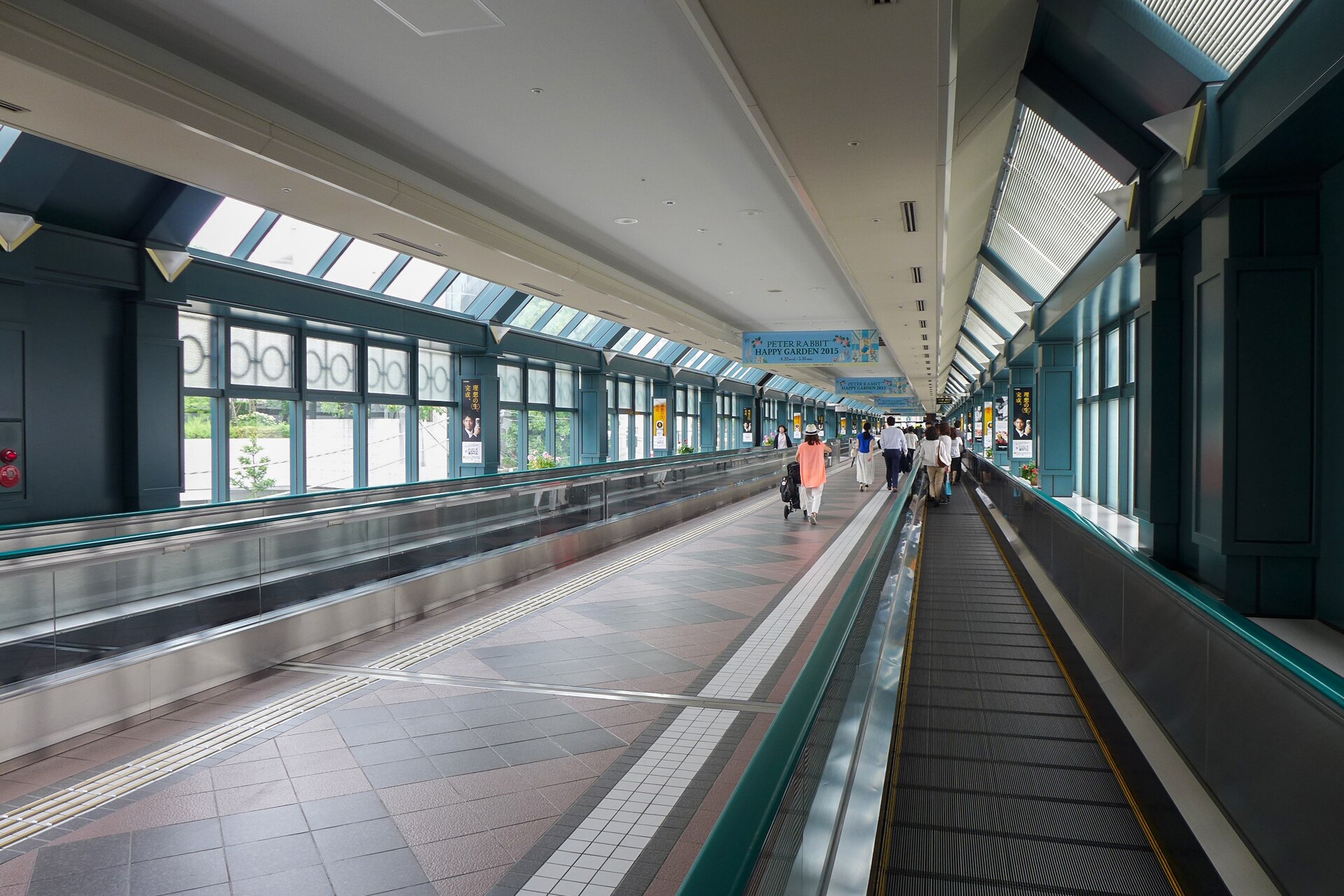
Today the complex includes the Tokyo Photographic Art Museum and the Westin Tokyo hotel, according to GO TOKYO, Tokyo's official travel site. From Ebisu Station's east exit, a covered moving walkway called the Yebisu Skywalk takes you most of the way.
Can you still visit the Museum of Yebisu Beer?
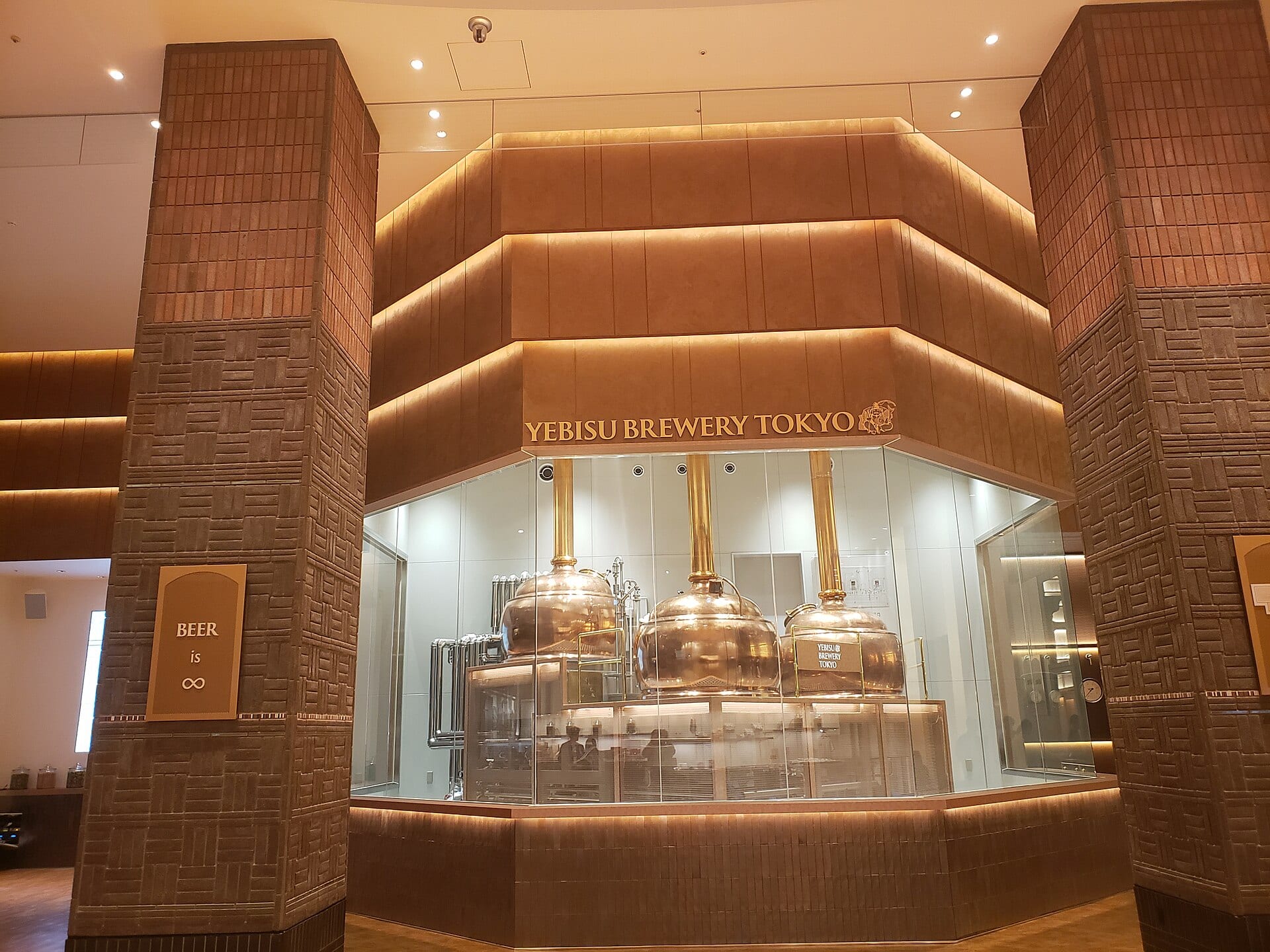
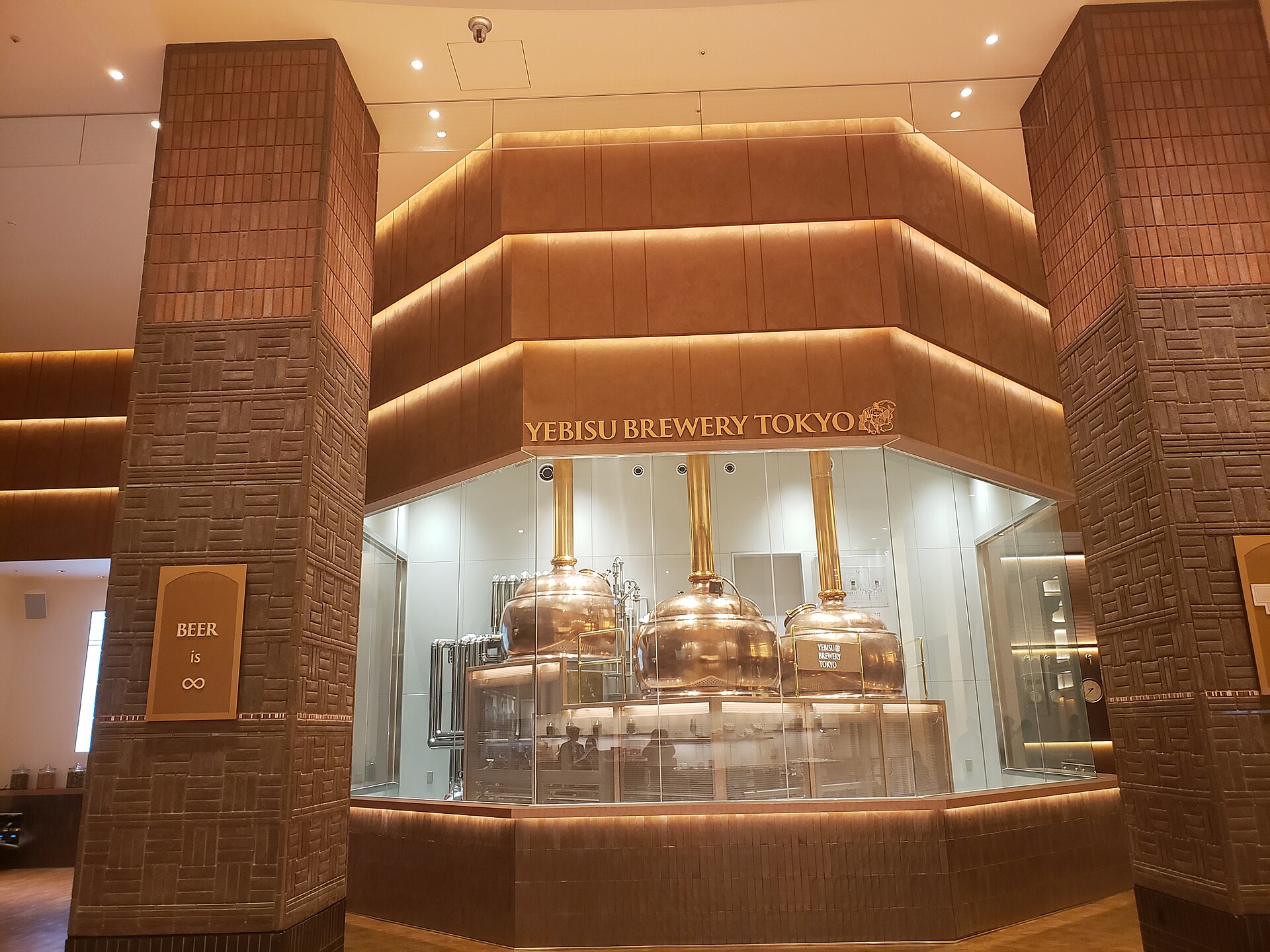
The old museum has been replaced by YEBISU BREWERY TOKYO, which opened on 3 April 2024 in the same place. Its museum area is free to enter.
Older guides, including some official ones, still mention the "Museum of Yebisu Beer". In 2024 Sapporo reopened that space as YEBISU BREWERY TOKYO: a museum, a small working brewery and a taproom. Sapporo's history lists it as the brand's experience centre in the beer's birthplace, and Impress Gourmet Watch reported that it brought brewing back to Ebisu for the first time in 35 years, since the old brewery stopped in 1988.
Opening hours, fees and closing days below come from the official Japanese and English pages, checked on 2 October 2026:
| Details (as of 2026-10-02) | |
|---|---|
| Opening hours | Weekdays 12:00–20:00 (last entry 19:30); weekends and holidays 11:00–19:00 (last entry 18:30) |
| Closed | Tuesdays (Wednesday if Tuesday is a holiday), New Year holidays, and temporary closing days |
| Self-guided museum visit | Free, about 20 minutes, no booking |
| Audio guide (English and Korean available) | 700 yen, or 1,800 yen with one glass of Yebisu ∞; rented at the gift shop on the day |
| YEBISU the JOURNEY guided tour | Japanese only, about 45 minutes, booking and card payment required online; adults 2,000 yen, junior-high age to under 20 1,000 yen, primary-school age and under free |
| Address | Yebisu Garden Place, 4-20-1 Ebisu, Shibuya-ku |
The museum takes no cash. Cards, e-money and QR-code payments are accepted. The drinking age in Japan is 20, and staff may ask for ID. The tour shows part of the brewery through glass; it is not a factory tour.
Hours change around events. The official notice says the facility closes on Thursday 19 November 2026 and keeps shorter hours on 18, 20 and 21 November for a collaboration event. Check the official page before you go.
What is the song that plays at Ebisu Station?
It is the theme from the 1949 film The Third Man, best known in Japan from Yebisu beer's TV adverts.
The tune you hear before trains leave the JR platforms is an arrangement of the theme from The Third Man. The writer Takashi Noda, in a 2023 column for All About, says it was adopted after local requests because of the well-liked Yebisu commercials that used it. Time Out Tokyo described the same jingle in 2015. Neither JR East nor Sapporo has a page about the jingle that we could find, so we rely on those reports. We have not confirmed that it is still playing in October 2026.
Is there an Ebisu shrine in Ebisu?
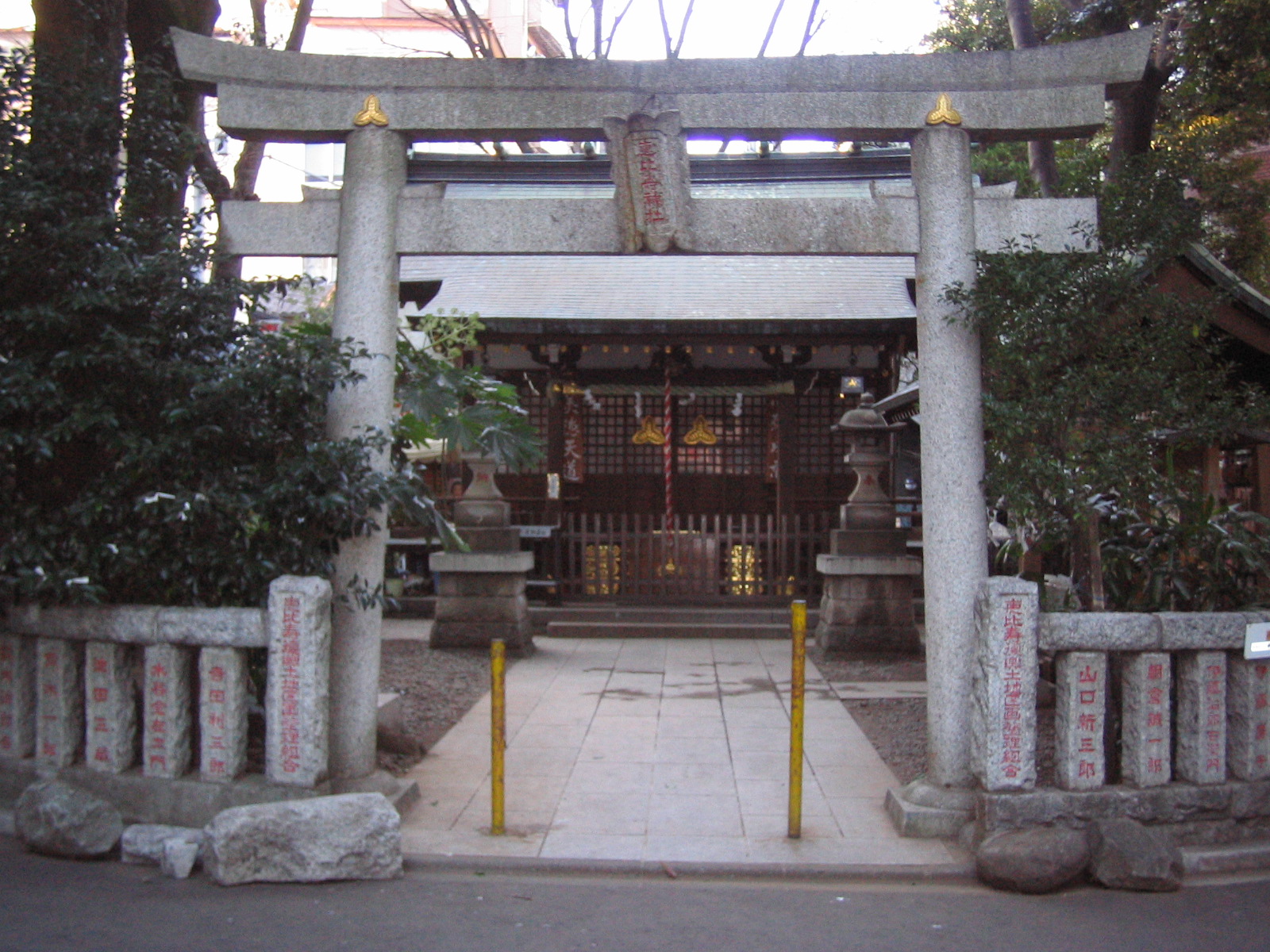
Yes, two, and both are linked to the beer. One is at Yebisu Garden Place; the other is a small shrine just west of the station, at 1-11-1 Ebisu-nishi.
The shrine west of the station was originally called Amatsu Shrine. When it was moved to its present site during postwar land readjustment, Ebisu was enshrined there as well, and it was renamed Ebisu Shrine. nippon.com and Rod Lucas's English-language shrine guide Rods Shinto both describe this change. They give different years for the move (1959 and 1954), so we leave the date open. Rods Shinto adds that the Ebisu enshrined there was brought in from Nishinomiya Shrine.
nippon.com also reports a second Ebisu shrine beside Sapporo's head office at Yebisu Garden Place, set up by the brewery in 1893, three years after the beer went on sale, with the god brought from Nishinomiya Shrine. We could not find a second source for this one, so treat the date as nippon.com's.
Both are working shrines. A short bow and a quiet visit are enough; our step-by-step guide to visiting a Japanese shrine covers the basics.
Where do people eat and drink in Ebisu?
For a casual evening, try Ebisu Yokocho, an alley of about 20 small bars and eateries near the station's east exit. For a formal dinner, Yebisu Garden Place has the restaurants.
A yokocho is a narrow alley lined with tiny bars and restaurants. Ebisu Yokocho opened in 2008 inside a former shopping arcade, the Yamashita Shopping Center, according to its official site and an ASCII interview with its producer, Yoshinobu Hamakura. Toyo Keizai and Bunshun Online both put the number of shops at about 20, and Toyo Keizai notes that the seats are so close together that strangers often end up talking. The official site lists grills, Kyoto-style oden, kushiage, seafood, horse meat and more. It asks guests to contact each shop directly about hours and reservations, because there are no shared hours.
GO TOKYO also notes that the Shibuya side of the station has inexpensive bars and restaurants, while Yebisu Garden Place has formal dining, including the château-style Joël Robuchon restaurant. If a crowded counter is new to you, our guide to dining manners in Japan covers ordering and paying. For another alley of tiny bars, see Shinjuku Golden Gai for first-timers.
How do you see Ebisu's story in one afternoon?
Start at Ebisu Shrine on the west side, take the Skywalk to Yebisu Garden Place, visit YEBISU BREWERY TOKYO, then come back to the station for Ebisu Yokocho.
- Ebisu Station. Listen for The Third Man on the JR platform.
- Ebisu Shrine (west side). A short walk from the station. The shrine is small, so a visit takes only a few minutes.
- Yebisu Skywalk to Garden Place (east exit). The official access page says the moving walkway takes about 5 minutes, then about 3 minutes on foot.
- YEBISU BREWERY TOKYO. Allow 20 minutes for the free museum, or book the Japanese-language tour. Remember it closes on Tuesdays.
- Ebisu Yokocho. Back near the station for dinner. Each shop sets its own hours, so check the shop you want.
What is happening in Ebisu on 8 November 2026?
Matsuri, a J-Times sister service, will hold its release event in Ebisu on Sunday 8 November 2026, from 16:00 to 22:00.
Matsuri (matsuri.group) is a site for finding guided tours, meetups, events and classes in Japan. Details of the event will be on the Matsuri event page. Until then, the Matsuri hub article explains what the service does. If you are in Tokyo to meet people, our guide to language exchanges in Tokyo may also help.
The Matsuri feature
- What is Matsuri?: the hub, covering what the site offers and how to read it
- How to join a language exchange in Tokyo: formats, safety and etiquette
- Shinjuku Golden Gai for first-timers: another of Tokyo's small-bar alleys
Sources and dates checked
- Sapporo Breweries, corporate history timeline (1887 founding, 1889 brewery, 1890 launch, 1901 freight station, 1906 passenger station, 1994 Yebisu Garden Place, 2024 YEBISU BREWERY TOKYO) — https://www.sapporobreweries.com/who-we-are/history/ (English: https://www.sapporobreweries.com/en/who-we-are/history/) — checked 2026-10-02
- Sapporo Breweries, "150 years" history, part 2 (Daikoku trademark, Ebisu Station, Ebisu-dori 1928) — https://www.sapporobreweries.com/who-we-are/history/history-01/ — checked 2026-10-02
- Sapporo Breweries, "150 years" history, later parts (Ebisu brewery closure, move to Chiba 1988, Yebisu Garden Place opening 8 October 1994) — https://www.sapporobreweries.com/who-we-are/history/history-03/ — checked 2026-10-02
- Sapporo Breweries, YEBISU BREWERY TOKYO official pages: guide and fees, access, November 2026 notice (Japanese); English guide — https://www.sapporobeer.jp/brewery/y_museum/kengaku/ ; https://www.sapporobeer.jp/brewery/y_museum/access/ ; https://www.sapporobeer.jp/brewery/y_museum/event/20261001_18809/ ; https://www.sapporobeer.jp/english/brewery/y_museum/ — checked 2026-10-02
- Yebisu Garden Place, "About" (history of the name, opening October 1994) — https://gardenplace.jp/about/ — checked 2026-10-02
- nippon.com, "Ebisu (JY21)" in the Yamanote Line station-name series, 27 June 2024 (Japanese) — https://www.nippon.com/ja/japan-topics/c13308/ — checked 2026-10-02
- @DIME, on the opening of YEBISU BREWERY TOKYO (station history, 300 m move) — https://dime.jp/genre/1743206/ — checked 2026-10-02
- Impress Gourmet Watch, YEBISU BREWERY TOKYO opening on 3 April 2024 and brewing back in Ebisu after 35 years (Japanese) — https://gourmet.watch.impress.co.jp/docs/news/1581285.html ; https://gourmet.watch.impress.co.jp/docs/news/1560296.html — checked 2026-10-02
- GO TOKYO (Tokyo Convention & Visitors Bureau), Yebisu Garden Place and the Ebisu area guide — https://www.gotokyo.org/en/spot/49/index.html ; https://www.gotokyo.org/en/destinations/southern-tokyo/ebisu/index.html — checked 2026-10-02
- Nishinomiya Shrine, "About Nishinomiya Shrine" (Japanese) — https://nishinomiya-ebisu.com/about/ — checked 2026-10-02
- Takashi Noda, All About, 13 July 2023 (Japanese; Ebisu Station jingle) — https://news.allabout.co.jp/articles/o/63941/?page=2 — checked 2026-10-02
- Time Out Tokyo, "Tokyo's train stations use theme songs", 2015 — https://www.timeout.com/tokyo/blog/tokyos-train-stations-use-theme-songs-to-put-a-jingle-in-your-squashed-journey-081815 — checked 2026-10-02
- Rods Shinto, Ebisu Jinja — https://www.rodsshinto.com/05-05 — checked 2026-10-02
- Ebisu Yokocho official site (Japanese) — https://ebisu-yokocho.com/ — checked 2026-10-02
- ASCII, interview with Yoshinobu Hamakura (Ebisu Yokocho opened 2008) — https://ascii.jp/elem/000/004/051/4051859/ — checked 2026-10-02
- Toyo Keizai Online, on Tokyo's yokocho boom (Ebisu Yokocho, about 20 shops) — https://toyokeizai.net/articles/-/192110 — checked 2026-10-02
- Bunshun Online, on Ebisu Yokocho (20 shops, former public market) — https://bunshun.jp/articles/-/4364 — checked 2026-10-02
- Matsuri public API (no listing for the release event yet) — checked 2026-10-02
Featured image: 特急東海 (Tokkyu Tokai) / Wikimedia Commons / CC0 1.0 (https://commons.wikimedia.org/wiki/File:YEBISU_BREWERY_TOKYO.jpg)
Written by
J-Times Editorial
J-Times 編集部 / J-Times Editorial Team