Ikigai, Wabi-sabi, Shinrin-yoku, Kaizen, Oubaitori, Mono no Aware, and Ma. Seven Japanese philosophies the world is obsessing over, explained with scientific evidence.
Read this article to earn +5 MTC
Why the World Can't Get Enough of Japanese Philosophy
Search "ikigai" on Google and you'll find over a million monthly queries worldwide. Amazon's self-help bestseller lists consistently feature books on Japanese philosophy. On TikTok, videos tagged #wabisabi have accumulated hundreds of millions of views.
This isn't a passing trend. A world exhausted by perfectionism, hustle culture, and the comparison trap of social media is genuinely seeking salvation in the wisdom that Japan has been refining for thousands of years.
What's fascinating is that most Japanese people don't realize how extraordinary their everyday wisdom is. Hidden in the words and habits they take for granted are philosophies that the rest of the world is desperately hungry for.
Here are seven Japanese philosophies that are reshaping how the world thinks about living well. By the end, you might just see your own life — and Japan — in an entirely new light.
Ikigai — The Science of Having a Reason to Live
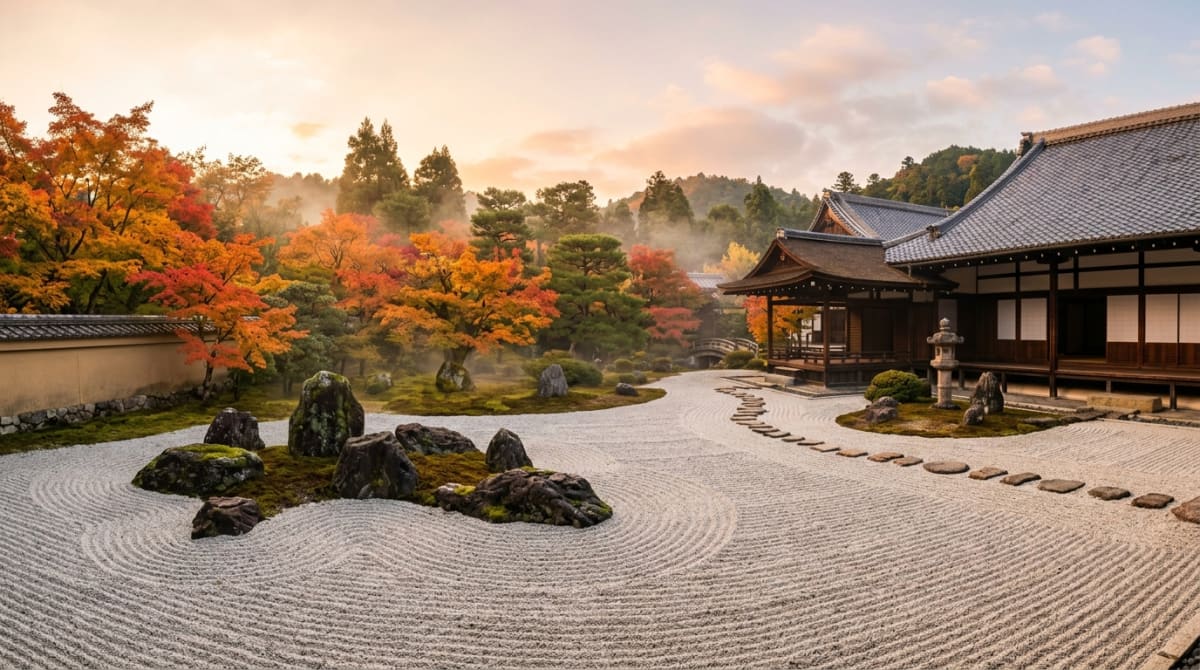
Okinawa is one of the world's five Blue Zones — regions with the highest concentration of centenarians on the planet. When researchers set out to discover the secret of Okinawan longevity, they kept encountering one word: ikigai.
The Okinawa Centenarian Study, with findings published in 2025, surveyed 224 robust centenarians and found that those with a strong sense of ikigai had significantly lower rates of cognitive decline and chronic disease. Separate international research has shown that people with a clear sense of purpose live 7 to 8 years longer on average — an effect comparable to quitting smoking.
The "ikigai diagram" popular in the West (the intersection of what you love, what you're good at, what the world needs, and what you can be paid for) is actually a Western reinterpretation. In its original Japanese sense, ikigai is far simpler: the reason you get up in the morning, a small daily joy, the feeling of being useful to someone.
The key insight is that ikigai isn't something you "find" — it's something you feel. For Okinawan centenarians, it lives in a morning bowl of miso soup, tending a garden, or a conversation with grandchildren.
Wabi-sabi — The Ultimate Antidote to Perfectionism
Instagram feeds. Filtered photos. Influencers curating the "ideal life." We are living in the most perfection-obsessed era in human history.
The polar opposite of all this is wabi-sabi.
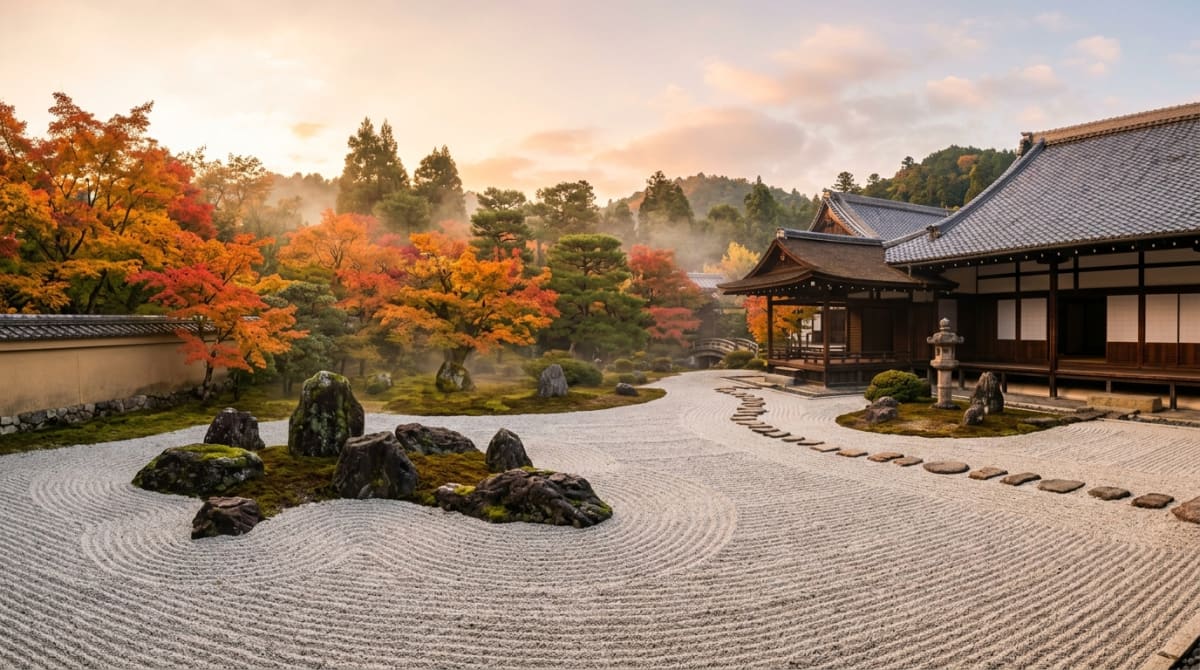
Wabi-sabi is the uniquely Japanese aesthetic of finding beauty in imperfection, impermanence, and incompleteness. Kintsugi — the art of repairing broken pottery with gold — is its purest expression. Instead of hiding cracks, kintsugi highlights them, transforming damage into something uniquely beautiful.
From a psychological perspective, wabi-sabi resonates deeply with the concept of self-compassion. Research by Dr. Kristin Neff at the University of Texas has shown that people who accept their imperfections have better mental health and higher levels of happiness than those who pursue perfection.
The Japanese have known this truth for over a millennium. The irregular shapes of raku tea bowls used in the tea ceremony, moss-covered stones in gardens, the patina of aged wooden architecture — all communicate a single message: imperfection is where true beauty lives.
Shinrin-yoku — The Science of Resetting Your Brain
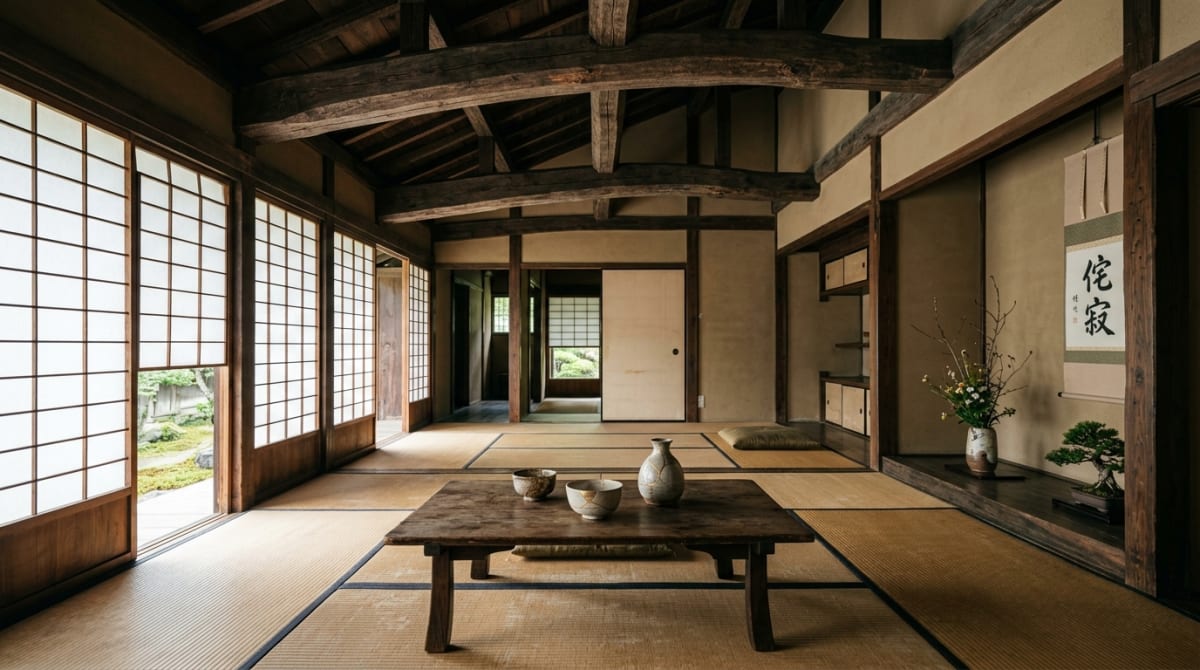
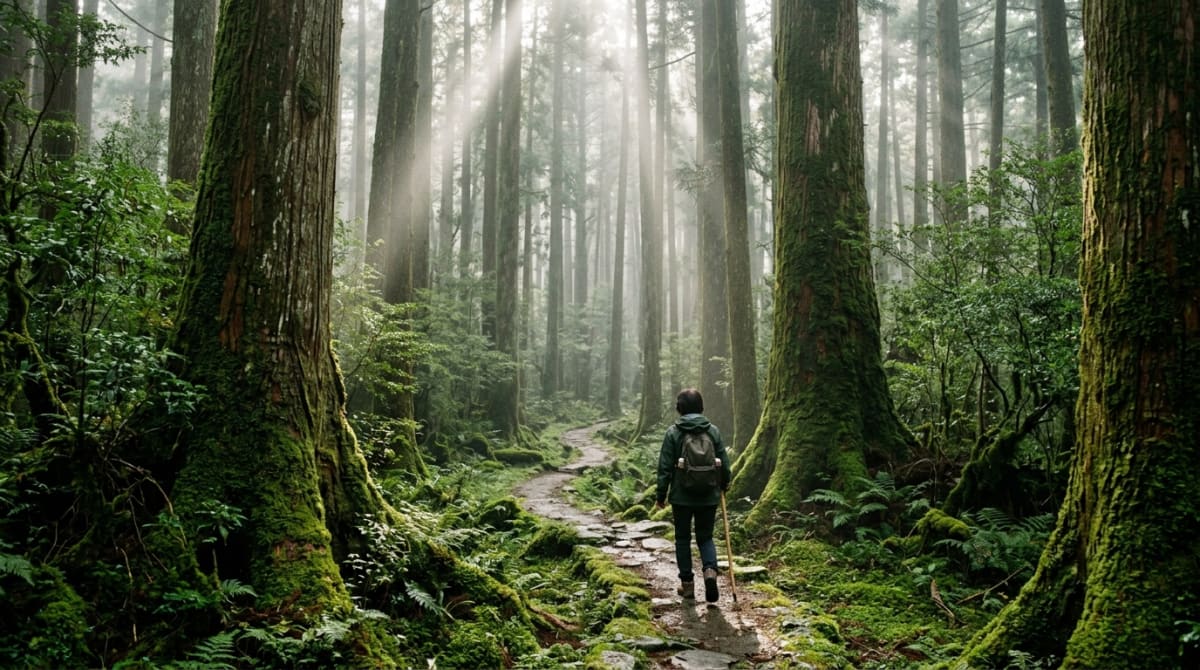
In 1982, Japan's Ministry of Agriculture, Forestry and Fisheries coined the term "shinrin-yoku" — forest bathing. It was originally a campaign to reconnect an increasingly urbanized population with nature. Four decades later, it has become the subject of rigorous medical research worldwide.
A comprehensive review published in February 2026 systematically documented the effects of forest bathing. Spending time in forest environments significantly reduces cortisol (the stress hormone) and increases NK (Natural Killer) cell activity. NK cells are immune cells that attack cancer cells, and remarkably, this boost persists for seven days after a single forest bathing session.
Even more striking is the effect of phytoncides — volatile organic compounds released by trees. Simply walking through a cedar or cypress forest increases the expression of anti-cancer proteins such as perforin and granulysin.
Japan has certified approximately 60 "Forest Therapy Roads" nationwide, where evidence-based forest bathing is practiced as a medical prescription. This is no longer a "pleasant walk in the woods." It is the most natural and most powerful health intervention that science has validated.
Kaizen — How 1% Daily Improvement Transforms Your Life in a Year
The world knows "kaizen" through the Toyota Production System. But the essence of this philosophy has nothing to do with factory efficiency.
Kaizen means making small, continuous improvements. Rather than seeking dramatic transformation, it aims for just 1% better each day. Mathematically, improving 1% daily for a year yields a 37.8x improvement (1.01 to the power of 365). Conversely, declining 1% daily leaves you at just 0.03 of where you started.
This aligns perfectly with psychologist BJ Fogg's "Tiny Habits" framework. The human brain resists big changes but readily accepts small ones. You can't sustain 100 push-ups a day, but you can do one. And the act of sustaining it triggers the brain's reward system, naturally expanding the habit over time.
When Japanese craftspeople speak of "a lifetime of training," they don't mean suffering. They mean finding joy in the daily accumulation of getting slightly better. Kaizen is a philosophy that locates happiness not in results, but in the process itself.
Oubaitori — Why "Don't Compare" Is the Most Powerful Strategy
The greatest poison of the social media age is comparison. Follower counts, salaries, body types, lifestyles — we unconsciously measure ourselves against others and suffer for it.
Japanese has a word for the antidote: oubaitori. Written with the characters for cherry blossom, plum, peach, and apricot, it means that each flower blooms in its own way, in its own time. A cherry blossom doesn't need to become a plum. A peach doesn't need to envy an apricot.
This concept is a powerful counter to social comparison theory, proposed by Leon Festinger in 1954, which demonstrated our instinctive tendency to measure ourselves against others. Recent research confirms that upward comparison — measuring yourself against those who seem "better" — consistently reduces happiness and erodes self-esteem.
What oubaitori teaches is disarmingly simple: bloom at your own pace, in your own way. This isn't gentle consolation — it's the most rational and sustainable growth strategy there is.
Mono no Aware — Finding Happiness in What Doesn't Last
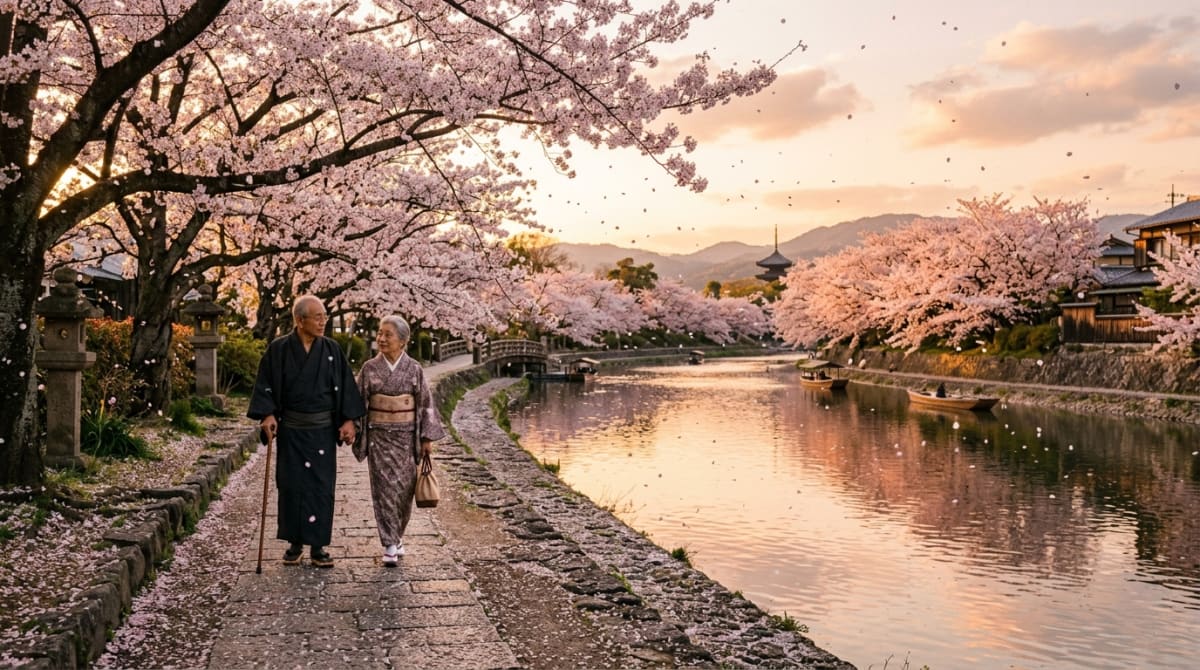
Cherry blossoms are beautiful because they fall.
This intuitive understanding lies at the heart of mono no aware — literally "the pathos of things." It's the bittersweet emotion that arises from a deep awareness that everything is transient, and that this very transience is what makes each moment precious.
This resonates with Western mindfulness, but mono no aware adds a deeper layer. While mindfulness aims to focus on the present, mono no aware says: "Because I know this moment won't last forever, it becomes infinitely dear."
Psychologist Robert Emmons has demonstrated that practicing gratitude can increase happiness by 25%. Mono no aware is essentially a built-in gratitude practice. Hanami — cherry blossom viewing — is special precisely because everyone knows the blossoms will last only a week.
The Japanese read life's deepest truths in the rhythm of the seasons. Spring cherry blossoms, summer fireflies, autumn foliage, winter snow — each appears for a brief moment and vanishes. Rather than mourning their passing, the Japanese love them for their very fleetingness. This is the secret to Japanese happiness.
Ma — Why Empty Space Is the Greatest Luxury
Modern humanity's greatest affliction might be "horror vacui" — the fear of empty space. Smartphone notifications, social media feeds, podcasts, news — we fill every gap with information and dread "doing nothing."
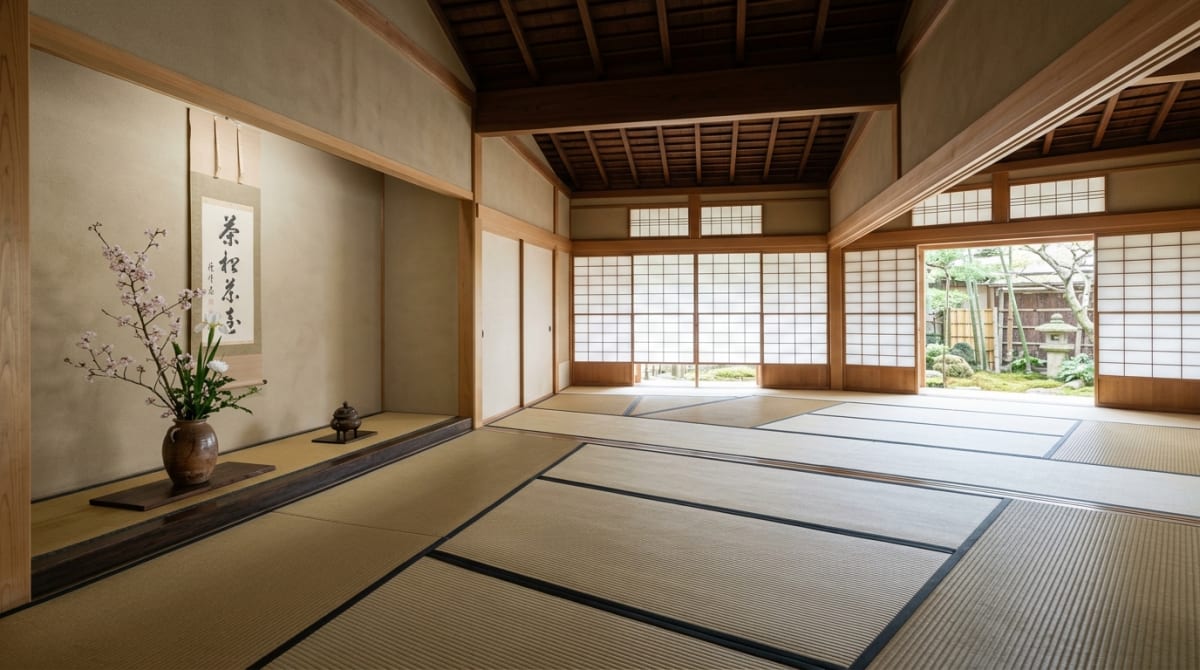
The Japanese aesthetic concept of ma proposes the exact opposite. Ma is the emptiness in space, the silence in time, the deliberate pause in conversation. It isn't "nothing" — it's the state where "nothing creates something."
Consider the design of a tea room: minimal decoration, expansive empty space, a single flower arrangement. That emptiness creates space in the visitor's mind, fostering creativity and introspection. The same principle applies to music: in shakuhachi flute performance, the silence between notes speaks more eloquently than the notes themselves.
Neuroscience provides the explanation. "Doing nothing" activates the brain's Default Mode Network (DMN) — the network responsible for self-reflection, creative thinking, and memory consolidation. The DMN cannot activate when you're constantly consuming information.
In other words, ma is a prerequisite for your brain's most creative work. The Japanese have intuitively understood this and designed ma into everything — architecture, music, conversation, gardens.
The Common Thread: What All 7 Philosophies Teach About a Good Life
If you've read this far, you may have noticed something. All seven philosophies share a single, quiet message:
Less is more.
Ikigai isn't grand ambition — it's small daily joys. Wabi-sabi isn't perfection — it's the beauty of imperfection. Shinrin-yoku isn't the gym — it's simply walking in a forest. Kaizen isn't revolution — it's 1% at a time. Oubaitori isn't winning — it's blooming at your own pace. Mono no aware isn't forever — it's the brilliance of a single moment. Ma isn't filling — it's emptying.
In a world that constantly demands "more, more, more," Japanese philosophy speaks softly but powerfully: "You already have enough."
This isn't an endorsement of laziness. It's the most refined framework for focusing on what truly matters. As the world turns to Japan for answers, perhaps it's time for the Japanese themselves to look at the treasure sleeping right beneath their feet.