J-Times Editorial
J-Times 編集部 / J-Times Editorial Team
Yoichi Hatta (1886-1942), a Kanazawa-born engineer, built Taiwan's Wushantou Dam and Chianan Canal in 1920-1930 under Japanese rule. Why Taiwan still honours him.
Read this article to earn +5 MTC
Who was Yoichi Hatta? The engineer behind Taiwan's Wushantou Dam and Chianan Canal
Short answer (as of 2026-10-25): Yoichi Hatta (八田與一, 1886-1942) was a Japanese civil engineer from Kanazawa who planned and led the building of the Wushantou Dam and the Chianan irrigation system in southern Taiwan between 1920 and 1930, while Taiwan was under Japanese rule. Farmers have gathered at his grave beside the dam every 8 May since 1946.
This article is about the engineer who died in 1942. It is not about anyone of the same name who has appeared in recent news.
In Taiwan, the President laid flowers at his statue on 8 May 2026, the 84th anniversary of his death. This biography follows his life from Kanazawa to the Chianan Plain, looks at what the dam did and whom it served, and asks why a colonial-era engineer is still remembered with affection.
What did Yoichi Hatta do?
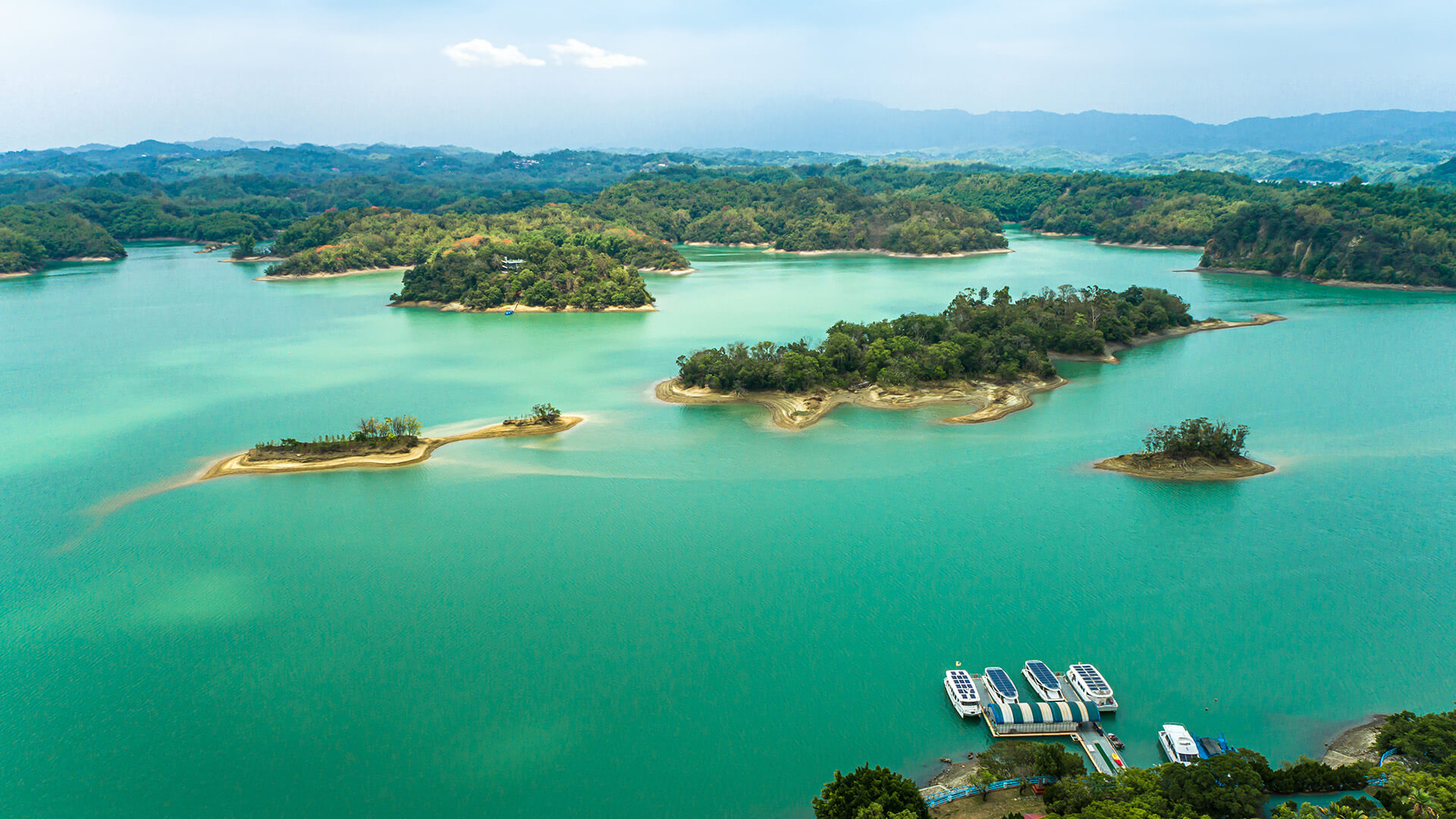
Yoichi Hatta designed the Wushantou Dam and the Chianan Canal, an irrigation network of about 16,000 km that brought water to roughly 150,000 hectares of the Chianan Plain in south-western Taiwan. Construction ran from 1920 to 1930.
The Great People of Kanazawa Memorial Museum, run by Kanazawa's cultural foundation, describes the dam as having a crest length of 1,273 m, "the largest in the East at the time", and says the waterways turned the plain into Taiwan's leading rice-growing area. Taiwan's Ministry of Agriculture gives the same picture in its own journal: a project started in 1920, finished in 1930, with waterways of more than 16,000 km serving 150,000 hectares. In Taiwan he is often called "the father of the Chianan Canal".
| Born | 21 February 1886, Imamachi, Kanazawa, Ishikawa Prefecture |
| Education | Fourth Higher School (Kanazawa); Tokyo Imperial University, civil engineering (entered 1907) |
| To Taiwan | 1910, aged 24, as an assistant engineer of the Government-General of Taiwan |
| Main work | Wushantou Dam and Chianan Canal, 1920-1930 |
| Died | 8 May 1942, aged 56, when the Taiyō Maru was sunk by a US submarine |
| Buried | Beside the Wushantou Dam, Tainan, with his wife Toyoki |
Sources: Kanazawa museum chronology; Taiwan Ministry of Agriculture, 2023 and 2024.
Where did he come from?
Hatta was born on 21 February 1886 in Imamachi, now part of Kanazawa, the fifth son of Shirobē Hatta, according to the Kanazawa museum's chronology.
He went through the local schools, the Ishikawa Prefectural First Middle School and, from 1904, the Fourth Higher School, the elite prep school in Kanazawa. In 1907 he entered the civil engineering course of Tokyo Imperial University. In 1910, at 24, he took a post as an assistant engineer (gishu) in the civil engineering section of the Government-General of Taiwan. Taiwan's Ministry of Agriculture gives the same year and the same post.
His birthplace still stands. The museum says the house is a registered tangible cultural property of Japan, with a monument in its front garden, and that the primary school opposite has a bronze bust of him donated to the city by a Taiwanese businessman.
How did a Kanazawa engineer end up building a dam in Taiwan?
Taiwan was under Japanese rule from 1895 to 1945, and Hatta went there as a government engineer. He spent several years surveying the island, proposed an irrigation plan for the Chianan Plain in 1917-18, and from 1920 led its construction for a water-users' association.
The Chianan Plain is broad and fertile, but, as the Tokyo Metropolitan Board of Education's 2017 teaching material on Hatta explains, rain fell mostly between May and October and drainage was poor, so fields suffered both floods and drought. Taiwan's Ministry of Agriculture calls such land "fields that look to the sky" (kantian tian), says Hatta judged that irrigation could change this, and says he submitted the Kantenkei irrigation plan in 1917.
When the work was approved, Hatta left his government post and became the engineer of the new irrigation association, set up in 1920, which the Kanazawa chronology names as the Kantenkei irrigation association; it later became the Chianan Canal Association. In 1922 he travelled to the United States, Canada and Mexico to study methods and buy machinery, and moved with his family to the dam site to run the Wushantou field office. Main work on the dam embankment began in 1926 and the reservoir was completed in 1930.
How big are the Wushantou Dam and the Chianan Canal?
The Wushantou Dam is 1,273 m long and 56 m high, and its reservoir was built to hold about 150 million cubic metres. The canals fed by it and by a river intake further north totalled about 16,000 km.
| Item | Figure | Source |
|---|---|---|
| Dam crest length | 1,273 m | Kanazawa museum; nippon.com |
| Dam height | 56 m | Kanazawa museum; Executive Yuan Gazette, 2022 |
| Base width / crest width | 303 m / 9 m | nippon.com |
| Storage | about 150 million m³ (original); total capacity 154.15 million m³ in Taiwan's 2022 reservoir classification table | Kanazawa museum; Executive Yuan Gazette |
| Irrigated area | about 150,000 ha | Taiwan MOA, 2024; Tokyo board material |
| Waterways | about 16,000 km | Kanazawa museum; Taiwan MOA, 2024 |
| Water source | Zengwen River water brought through a tunnel under the Wushanling ridge | Taiwan MOA, 2011; nippon.com |
The Ministry of Agriculture's journal says the system was, when finished, the largest irrigation work in Asia and the third largest in the world. It was a single programme with two water sources: the Wushantou reservoir in the south and a direct intake on the Zhuoshui River in the north, as the nippon.com series sets out.
Figures for today's network vary. At the 2026 memorial, President Lai Ching-te put the canal at 8,810 km and the reservoir at more than 70 million tonnes. These appear to count the present network and usable storage, not the 1930 design; we could not confirm exactly what each figure measures.
What is the semi-hydraulic fill method?
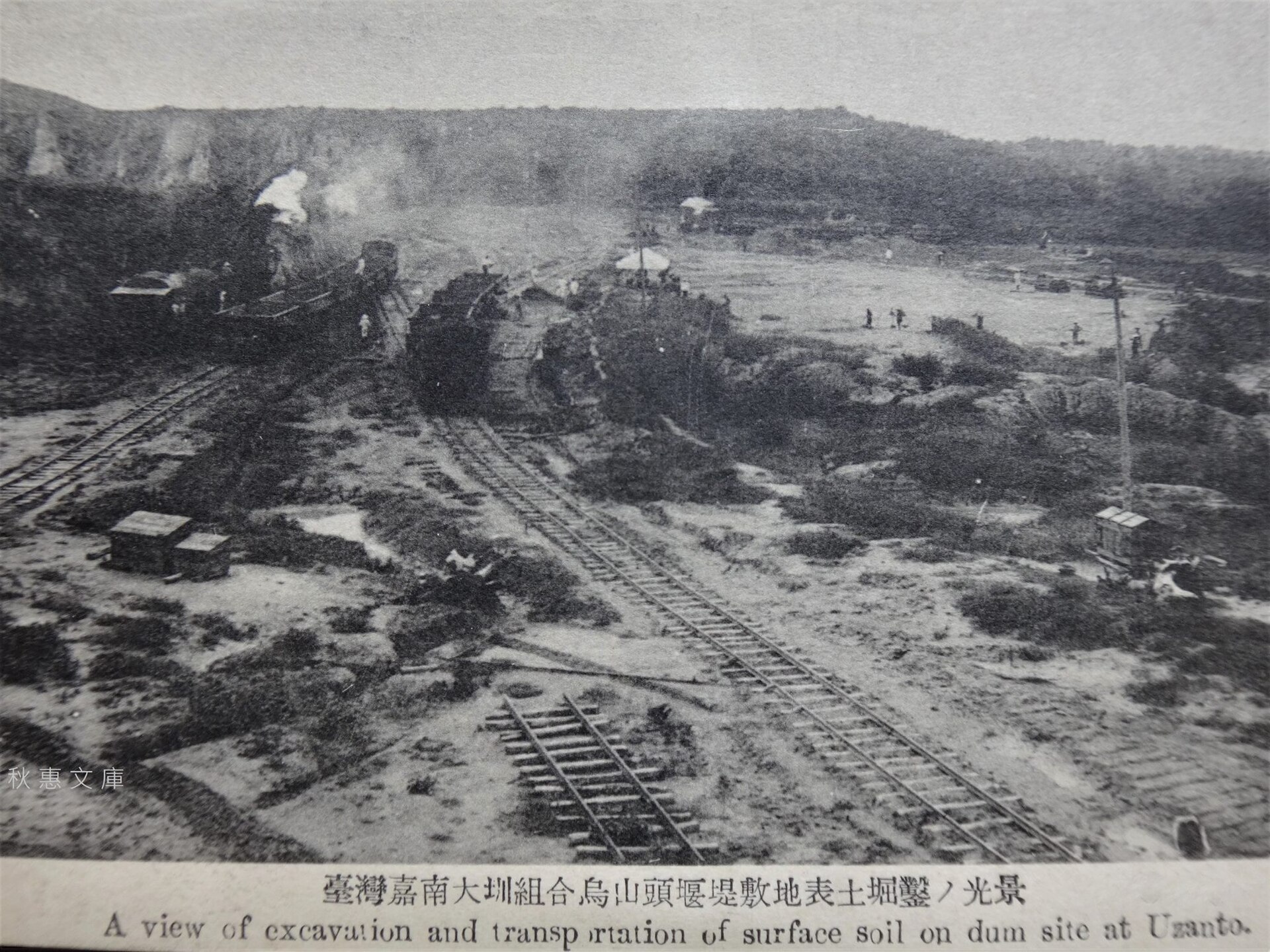
The semi-hydraulic fill method builds an earth dam by piling mixed soil and stone on both sides and washing the finer material inward with jets of water, so that a watertight clay core settles in the middle. At Wushantou concrete made up only about 0.5% of the dam.
The Kanazawa museum lists three things that were new at Wushantou. The first was the method itself, which it calls the best option at the time for earthquake-prone Taiwan. A concrete core wall was used only at the centre and base; earth was heaped on top, and water was used to settle the clay and fine soil. The Tokyo board material describes the sequence: boulders, cobbles, gravel, sand and clay are piled on both sides; water is sprayed towards the centre; the boulders stay put, while the finer material is carried inward in order of size, until clay forms an impermeable layer around the concrete core. Taiwan's Ministry of Agriculture also names the method (半水力填築式 / semi-hydraulic fill) in its 2011 and 2024 articles.
The second was machinery. The museum says Hatta brought in 47 kinds of large machines, including steam shovels and air-dump cars, then rarely used. The third was a town for the workers, which comes next.
How did Hatta treat the people who built the dam?
Japanese and Taiwanese accounts agree that Hatta built a whole town at the site so workers could live with their families, and that the memorial to those who died lists Japanese and Taiwanese names together in order of death. Most of these stories come from biographies and commemorative material, not from wage records.
- A town at the dam. Hatta's stated view, quoted by the Kanazawa museum, nippon.com and the Tokyo board, was that "good work comes from a place where people can work without worry". He built housing, a school, a hospital, shops, a bathhouse, a pool and tennis courts. nippon.com counts 68 buildings with more than 200 rooms, about 1,000 residents and nearly 2,000 people including commuters. Hatta and his family lived there throughout.
- Accidents. A gas explosion in the tunnel under Wushanling in December 1922 killed and injured dozens of workers. nippon.com gives "more than 50 killed or injured"; the Tokyo material says 50 dead and over 100 injured.
- The 1923 layoffs. After the Great Kanto Earthquake, subsidies were cut and Hatta had to let many workers go: about half, says nippon.com; down to about a third of the workforce, says the Tokyo material. Both tell the same story: he released the most capable first, reasoning that they could find other work, helped them look for jobs, and promised to rehire them when funding returned. The Tokyo material says this is still told in the Chianan area.
- The memorial to the dead. nippon.com says 134 people, including family members, died at the site over the ten years, and that Hatta built a memorial below the dam listing them all, Japanese and Taiwanese alike, in order of death. Taiwanese news site NOWnews reports the same number and arrangement.
We found no primary record comparing pay or conditions for Japanese and Taiwanese workers, so this article makes no claim about it.
Did the Chianan Canal serve Taiwan's farmers or the empire?
Both, and historians still weigh the balance. The canal greatly raised harvests and, by one economic study, farmers' incomes. It was also part of a colonial plan to produce rice and sugar for Japan, and farmers paid heavy water fees and lost the free choice of what to plant.
The heart of the debate is the three-year rotation. The reservoir could not water the whole plain every year, so the irrigated land was divided into three blocks that took turns: one year rice (watered), one year sugarcane (watered only at planting), one year other crops (not watered). The Tokyo material presents this as Hatta's way to share scarce water, and Taiwan's Ministry of Agriculture says it tripled the number of farmers who received irrigation water. Within seven years of completion, the Tokyo material adds, rice output in value was about 11 times the pre-canal level, and the produce was exported to Japan.
Critics read the same system differently:
- At the time. The Japanese economist Tadao Yanaihara argued in Taiwan under Imperialism (1929) that the rotation and the canal served the interests of Japanese sugar capital, as summarised in a 2006 study by Taiwanese economists and in a 2017 essay by the Taiwanese writer Chiang Ping-lun.
- Water fees. Chiang's essay, published by Thinking Taiwan and reprinted by Storm Media, describes heavy water fees, a protest by about 1,000 farmers in 1930, and land auctioned when owners could not pay. Japanese historian Misato Shimizu's 2024 paper finds that the conflict between rice and sugar did arise inside the canal area, among three parties: the colonial engineers and the canal association, the sugar companies, and Taiwanese elites.
- The economic measurement. Economists at National Taiwan University (Koo Hui-wen, Wu Tsong-min and colleagues, Taiwan Economic Review, 2006) ran a cost-benefit analysis and concluded that the canal "actually enhanced the farmer's income significantly", while its effect on sugar company profits was marginal.
After the statue attack in 2017 the argument became public. A commentary in the China Times argued that the rice Hatta's canal grew was not meant for Taiwanese tables. An essay in The News Lens answered that the statue is not idol worship or a product of colonialism but an expression of Taiwanese warmth towards a person. Both sides use the same facts; the question is which ones weigh more.
How did Yoichi Hatta die?
Hatta died on 8 May 1942, aged 56, when the ship Taiyō Maru, carrying him to the Philippines, was torpedoed by a US submarine in the East China Sea.
The Kanazawa chronology says he had been sent as one of the civilian specialists for the "southern development" of territories Japan had occupied. Taiwan's Ministry of Agriculture says he was going to survey irrigation for cotton fields in the Philippines. nippon.com writes that about 1,000 engineers and specialists died with the ship.
What happened to his wife, Toyoki?
Hatta's wife Toyoki (外代樹) took her own life at the Wushantou Dam on 1 September 1945, about two weeks after Japan's surrender, aged 45. She is buried with him beside the dam.
Toyoki, from Kanazawa, married Hatta in 1917 and raised their children at the dam town. nippon.com and a 2007 article in the journal of the Japan Construction Machinery and Construction Association both give 1 September 1945 and say she threw herself into the dam's outflow. Taiwan's Ministry of Agriculture gives August 1945 and quotes her farewell note as saying she wished to follow her husband. nippon.com notes that her death was long told as an act of devotion to her husband, and its writer thinks it was more likely the result of deep distress at the end of the war. We leave it there, with respect.
Why is Yoichi Hatta respected in Taiwan?
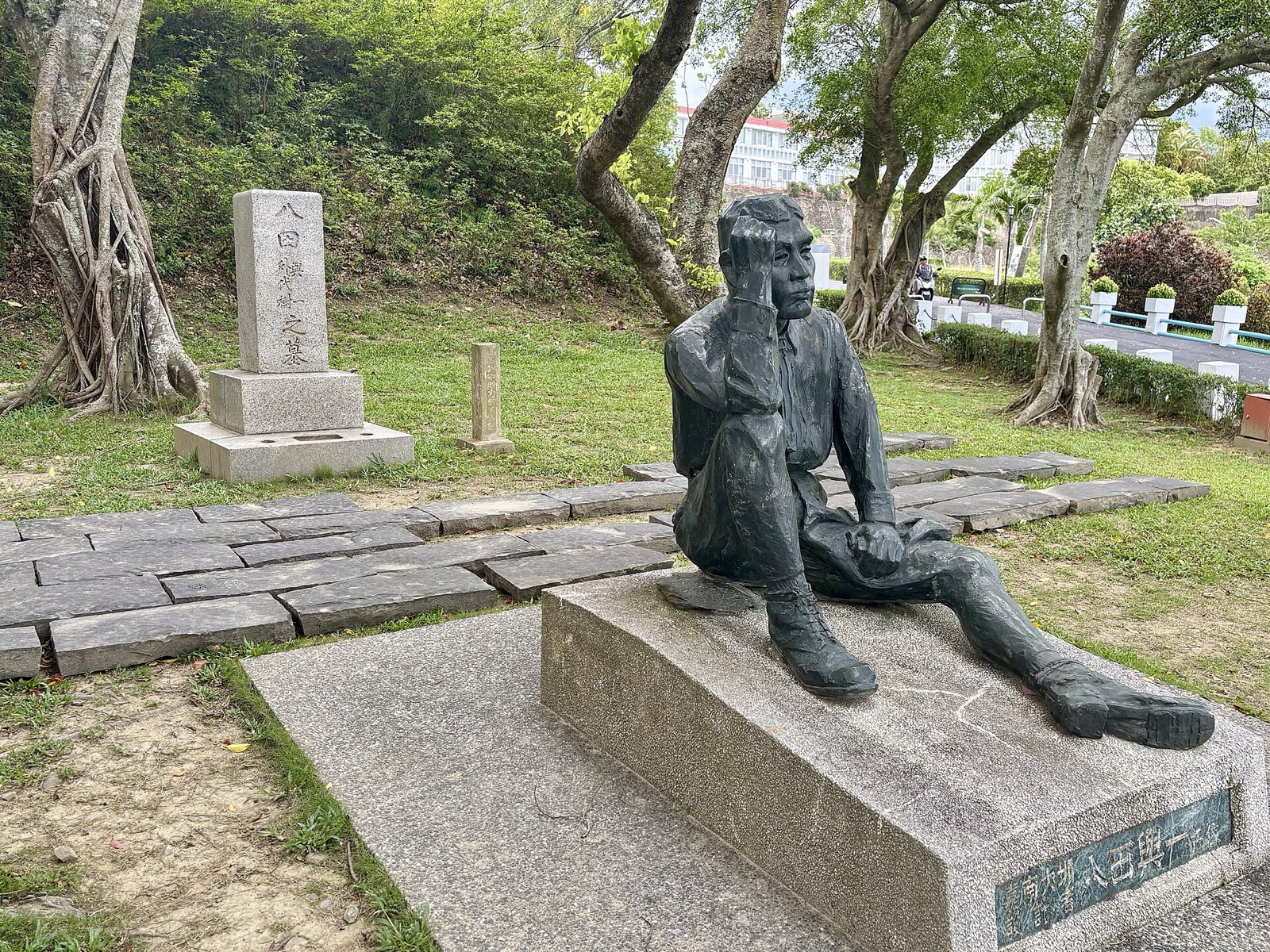
Because the water still flows. The canal he designed has irrigated the Chianan Plain for nearly a century, and the people who farmed it built his grave in 1946, hid his statue through the war years and have held a memorial every 8 May since.
- The grave (1946). The Tokyo board material says people of the Chianan area built a Japanese-style grave for the couple behind the statue in 1946. nippon.com dates it to 15 December 1946 and notes that the inscription uses the Republic of China calendar.
- The statue (1931, hidden, returned in 1981). The seated bronze was unveiled in 1931, during Hatta's life. The Tokyo material says the pose, a hand in his hair, was his habit when thinking. According to the same material, it was taken for wartime metal collection; after the war local people found it and kept it hidden, because statues of Japanese were then not allowed, and in 1981 it was put back on a new pedestal. nippon.com tells the same story and says the irrigation association kept it in a basement for more than 30 years.
- The memorial on 8 May. Taiwan's Ministry of Agriculture writes that farmers have held a service at the grave every year since 1946; that the Chianan Irrigation Association held it at the statue every year from 1981; and that since the irrigation associations became a government agency in October 2020, the Irrigation Agency has hosted it.
- At the highest level. On 8 May 2026, the 84th anniversary, President Lai Ching-te led the service. United Daily News counted more than 280 Japanese guests, including the mayor of Kanazawa and Hatta's grandson, and over 100 Taiwanese officials. The President said that people "all regard Hatta as one of their own", and that the water "flows through the fields and also into people's hearts".
Respect is not unanimous, and the next section shows how sharp the disagreement can be. But the steady care of farmers, irrigation staff and local officials over 80 years is why Taiwanese and Japanese guests still meet at this grave.
What happened to the Hatta statue in 2017?
Early on 15 April 2017, the head of the Hatta statue at Wushantou was sawn off. It was never recovered. A new head was cast from an identical statue at the Chimei Museum, and the repaired statue was unveiled again on 7 May, the day before the 75th memorial.
Taiwan's public broadcaster PTS reported in June 2017 that prosecutors had charged a former Taipei city councillor and a friend with criminal damage; the head was found missing on 16 April. The Taipei Times reported that the man told investigators he objected to Hatta's historical status, that divers searched the reservoir without finding the head, and that the Chia-Nan Irrigation Association and the Chimei Museum repaired the statue. Tainan's then mayor, Lai Ching-te, apologised to Hatta's family for the city's failure to protect it, and the family thanked the city and said Japan-Taiwan ties would not be affected.
What is the Yoichi Hatta Memorial Park?
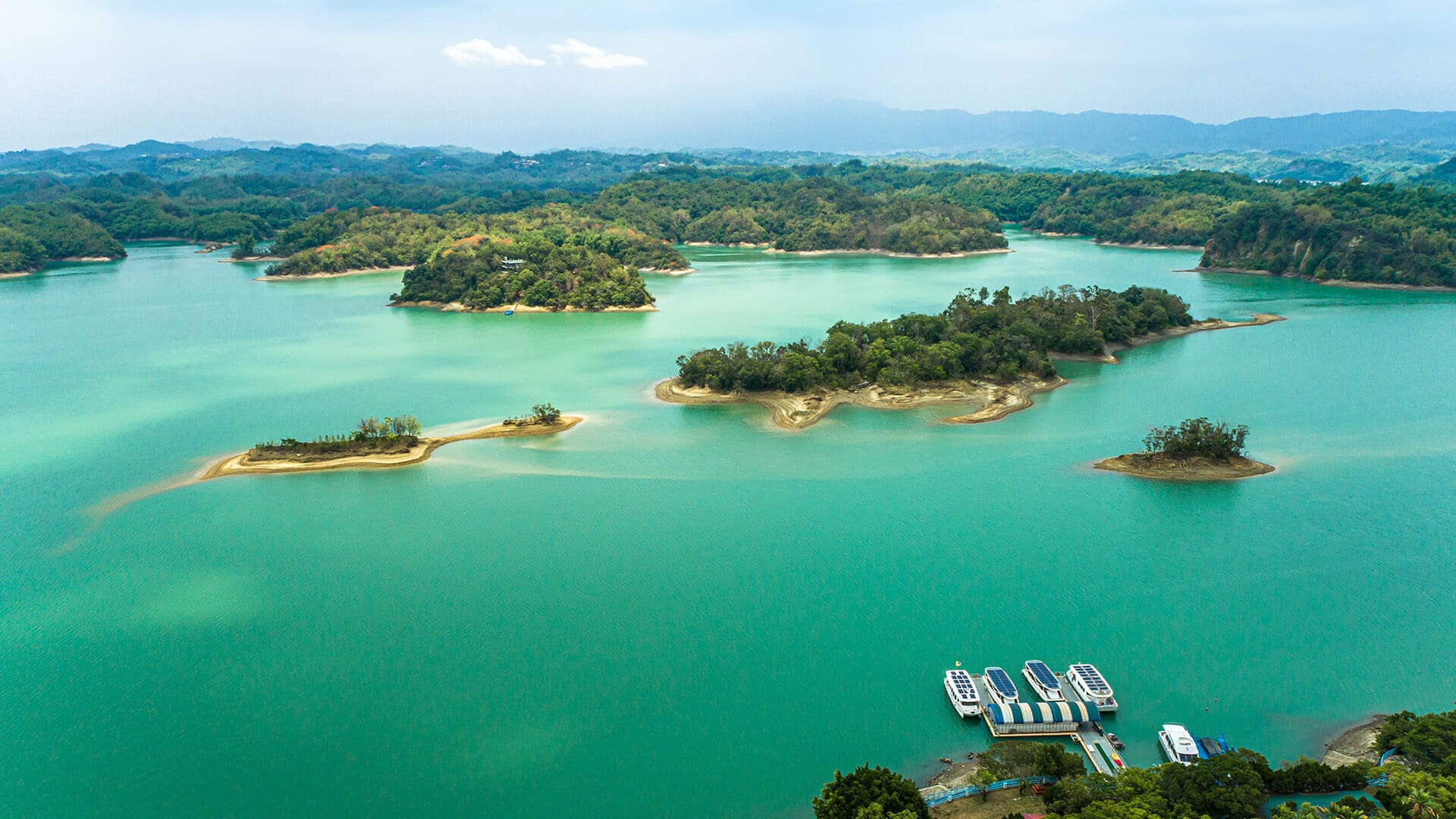
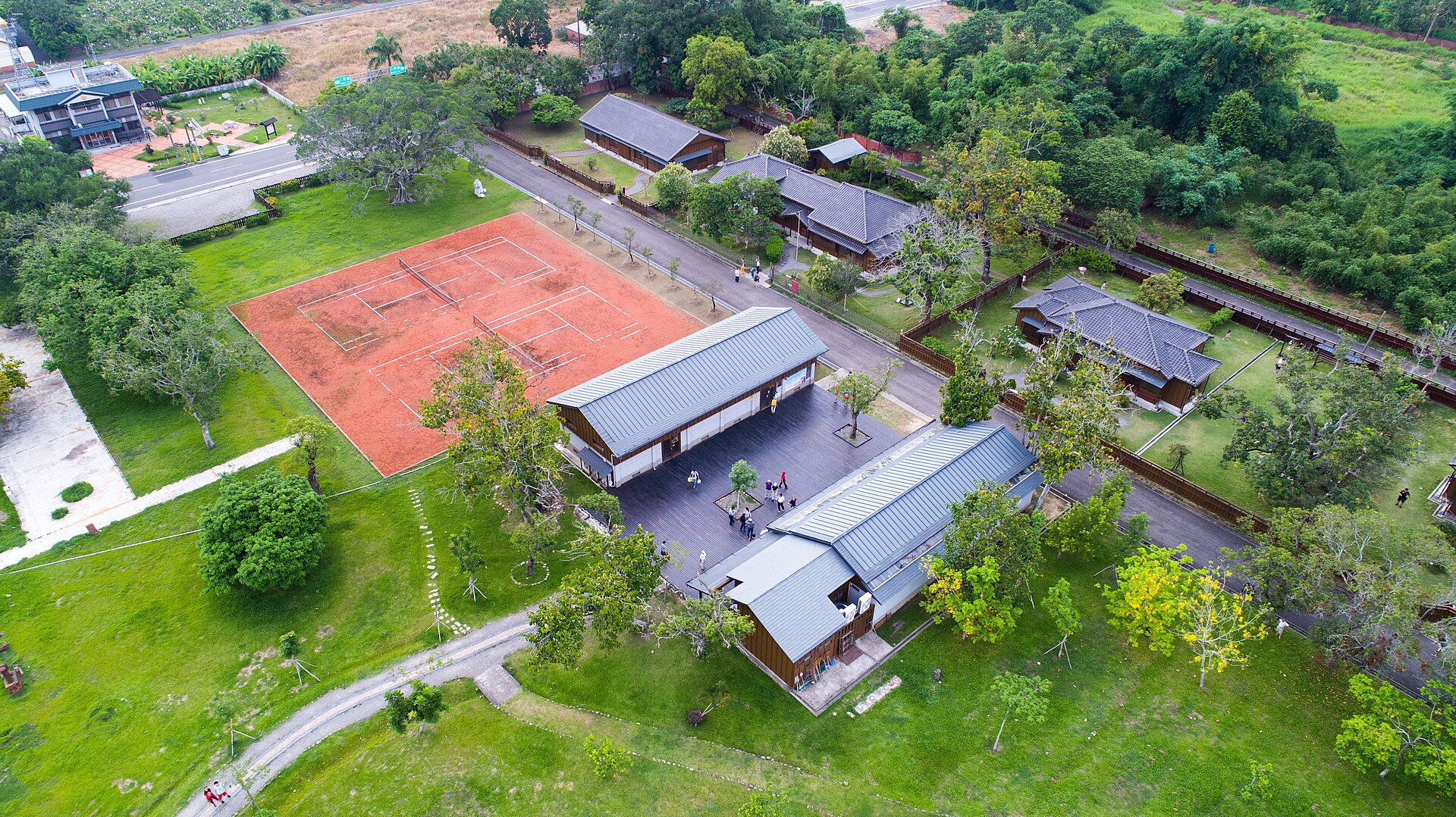
The Yoichi Hatta Memorial Park is a group of restored Japanese-era staff houses on the north side of the Wushantou Reservoir, including the Hatta family home, opened on 8 May 2011.
Taiwan's Ministry of Agriculture says the park recreates the dormitories built for the engineers and their families, with four restored houses: the Hatta house, the Ichikawa-Tanaka house, the Akabori house and the Abe house. Tainan City's Tourism Bureau says the restoration took two years from 2009; the builders visited Hatta's birthplace in Ishikawa for reference and used Japanese carpentry methods.
How do you get to the Wushantou Dam?
The nearest station is Longtian (隆田) on the Taiwan Railway western line, about 8 km by road from the memorial park, roughly 10 minutes by taxi. The dam and the park are in Guantian District, Tainan City.
| Wushantou Reservoir Scenic Area | Yoichi Hatta Memorial Park | |
|---|---|---|
| Address | 68-2 Jianan, Wushantou Village, Guantian District, Tainan | Guantian District, Tainan (north shore of the reservoir) |
| Hours (as published) | 8:00-17:30 | 9:00-17:00, closed Wednesdays |
| Admission (as published) | NT$200 full; NT$120 half; NT$40 / NT$60 concessions | Same as the reservoir |
| Phone | +886-6-6982103 | +886-6-6982103 |
Hours, prices and phone from Tainan City Government Tourism Bureau pages, checked on 25 October 2026.
- By train and taxi. From Tainan or Chiayi, take a Taiwan Railway local train to Longtian. The OpenStreetMap car router (routing.openstreetmap.de) gives 8.2 km and about 10 minutes from Longtian station to the park, and 7.6 km by bicycle.
- On 8 May. The memorial is an official service hosted by Taiwan's Irrigation Agency with invited guests from Taiwan and Japan; in 2026 it was held in the afternoon.
- In Kanazawa. The Great People of Kanazawa Memorial Museum has a permanent display on Hatta, and his birthplace in Imamachi stands opposite Hanazono Primary School.
Check the official pages before going: hours and prices change, and we found no current bus timetable from Longtian.
What ties Japan and Taiwan through Hatta today?
Kanazawa and Tainan, the cities at each end of Hatta's life, signed an agreement on tourism and cultural exchange on 7 May 2026, the day before the 84th memorial, and became friendship cities.
Taiwan's government news service, Taiwan Today, reported the agreement on 20 August 2026 and noted that the two cities had long been in contact because of Hatta. Tainan's mayor mentioned it at the 2026 ceremony. Kanazawa's mayor attended the memorial in 2023 and 2026; Taiwan's Ministry of Agriculture recorded the 2023 visit. In Kanazawa, the museum's exhibit and the school's "Hanazono great people room" keep his story in front of local children.
For another person who linked Japan and the wider world, see our biography of William Adams (Miura Anjin) and the ships he built in Ito.
What can we learn from Hatta's story?
The facts point two ways at once: a colonial project built for an empire's needs, and an engineer whose work and graveside are still cared for by the people who live off its water. Holding both, without deleting either, may be the most honest way to remember him.
A few questions to take away:
- When a public work outlives the state that built it, who does it belong to? At Wushantou, Taiwanese farmers, a Taiwanese agency and Taiwanese officials have looked after the grave for 80 years.
- Can we thank an engineer without excusing the system he worked in, or criticise the system without erasing the people? The Taiwanese economists who measured farmers' incomes and the critics who recorded water-fee protests are both part of the record.
- Japan-Taiwan friendship is often told through Hatta. What would it add to tell it through the farmers and the 134 people on the memorial too?
At its best, remembering Hatta is less about one nation's pride than about many people, in Kanazawa and in Tainan, who keep meeting each May beside the same water.
Sources and dates checked (all checked on 2026-10-25)
- Great People of Kanazawa Memorial Museum (Kanazawa Cultural Promotion Foundation), "Hatta Yoichi" — achievements, birthplace, places, bibliography — https://www.kanazawa-museum.jp/ijin/exhibit/05hatta.html (primary)
- Same museum, "Hatta Yoichi: chronology" (birth 21 Feb 1886, schools, 1910 post, 1917 marriage, 1920 association, 1922 field office and overseas trip, 1926 main works, 1930 completion, 1931 statue, 1942 death on the Taiyō Maru) — https://www.kanazawa-museum.jp/ijin/exhibit/05hatta_history.html (primary)
- Taiwan Ministry of Agriculture, Agriculture Policy & Review no. 384 (June 2024), "82nd anniversary memorial" (1886 Kanazawa, 1910, 1917 plan, 1920-1930, semi-hydraulic fill, 150,000 ha, over 16,000 km, largest in Asia and third in the world) — https://www.moa.gov.tw/ws.php?id=2515533 (primary)
- Taiwan Ministry of Agriculture, Agriculture Policy & Review (2023), "81st anniversary memorial" (farmers' memorial since 1946, association since 1981, Irrigation Agency since October 2020, Taiyō Maru, Toyoki "August 1945") — https://www.moa.gov.tw/ws.php?id=2514213 (primary)
- Taiwan Ministry of Agriculture, "Strolling through Wushantou" (July 2014; memorial park opened 8 May 2011; four restored houses) — https://www.moa.gov.tw/ws.php?id=2501494 (primary)
- Taiwan Ministry of Agriculture, "2011 Taiwan World Heritage potential site: Chianan Irrigation System" (October 2011; semi-hydraulic fill, three-year rotation tripling irrigated farmers) — https://www.moa.gov.tw/ws.php?id=24244 (primary)
- Executive Yuan Gazette, vol. 28 no. 181 (23 September 2022), Taiwan reservoir classification table (Wushantou: Chianan Management Office, total capacity 15,415 ten-thousand m³, dam height 56.0 m) — https://gazette2.nat.gov.tw/EG_FileManager/eguploadpub/eg028181/ch04/type2/gov31/num12/images/Eg01.pdf (primary)
- Tainan City Government Tourism Bureau, "Yoichi Hatta Memorial Park" and "Wushantou Reservoir Scenic Area" (restoration 2009-2011, hours, prices, address, phone) — https://twtainan.net/en/attractions/detail/4590 , https://twtainan.net/en/attractions/detail/4597 (primary)
- Tokyo Metropolitan Board of Education, traditional culture teaching material no. 28, "Hatta Yoichi, a bridge between Japan and Taiwan" (2017) — https://www.kyoiku.metro.tokyo.lg.jp/documents/d/kyoiku/dentou_suishinsiryo028 (public body)
- nippon.com, "Japanese who changed Taiwan: Hatta Yoichi" parts 2 and 3 (23 September and 18 November 2018) — https://www.nippon.com/ja/column/g00570/ , https://www.nippon.com/ja/column/g00614/
- Japan Construction Machinery and Construction Association journal (2007), article on Hatta and Toyoki — https://jcmanet.or.jp/bunken/kikanshi/2007/02/058.pdf
- Koo Hui-wen, Wu Tsong-min et al., "A Cost-and-Benefit Analysis of Chia-Nan Channels", Taiwan Economic Review 34(3), 2006, DOI 10.6277/ter.2006.343.4 — https://scholars.lib.ntu.edu.tw/entities/publication/73bd007f-10c7-4604-979d-382fb0a0c79c
- Misato Shimizu, "The conflict of three forces in colonial Taiwanese agriculture" (Meio University, 2024) — https://meio-u.repo.nii.ac.jp/records/2000073
- Chiang Ping-lun, essay on how to view Hatta and the Chianan Canal (Thinking Taiwan, reprinted by Storm Media, 18 April 2017) — https://www.storm.mg/lifestyle/252233
- China Times, commentary "The rice Hatta grew was not for Taiwanese" (17 April 2017) — https://www.chinatimes.com/realtimenews/20170417004493-260405
- The News Lens, "The Hatta statue is not idol worship or a product of colonialism, but Taiwanese warmth" (2017) — https://www.thenewslens.com/article/66097
- PTS News (Taiwan), indictment in the statue case (27 June 2017) — https://news.pts.org.tw/article/362899
- Taipei Times via Liberty Times, statue repair and unveiling (May 2017) — https://news.ltn.com.tw/news/focus/breakingnews/2058511 , https://news.ltn.com.tw/news/focus/breakingnews/2060142
- Newtalk, unveiling on 7 May 2017 and 75th memorial — https://newtalk.tw/news/view/2017-05-07/86121 , https://newtalk.tw/news/view/2017-05-08/86197
- NOWnews, 134 workers and the memorial order — https://www.nownews.com/news/6156928
- Newtalk, 84th memorial, 8 May 2026 (President Lai, 8,810 km, Tainan-Kanazawa agreement) — https://newtalk.tw/news/view/2026-05-08/1034104
- United Daily News, 84th memorial, 8 May 2026 — https://udn.com/news/story/7326/9491120
- Taiwan Today via Taipei Economic and Cultural Representative Office in Japan, Kanazawa joins Tainan's partner-city scheme (20 August 2026; 7 May 2026 agreement) — https://www.roc-taiwan.org/jp_ja/post/117473.html
- Route distance: routing.openstreetmap.de (OSRM), Longtian station to the memorial park, car and bicycle profiles, queried 2026-10-25
- Images: Wikimedia Commons file pages (licences checked) — https://commons.wikimedia.org/wiki/File:Siraya_National_Scenic_Area,_Tourism_Administration_1.jpg , https://commons.wikimedia.org/wiki/File:Construction_of_Wushantou_Dam.jpg , https://commons.wikimedia.org/wiki/File:2025%E5%B9%B4%E5%85%AB%E7%94%B0%E8%88%87%E4%B8%80%E9%8A%85%E5%83%8F%E5%85%AC%E5%9C%9201.jpg , https://commons.wikimedia.org/wiki/File:%E5%85%AB%E7%94%B0%E8%88%87%E4%B8%80%E7%B4%80%E5%BF%B5%E5%9C%92%E5%8D%80.jpg
By J-Times Editorial (information as of 2026-10-25)
Written by
J-Times Editorial
J-Times 編集部 / J-Times Editorial Team