Your complete guide to spring in Japan 2026: cherry blossom forecasts, 5 hidden hanami spots, spring festival calendar, seasonal food guide, and practical travel tips.
Read this article to earn +5 MTC
Why Spring in Japan?
Many places around the world offer beautiful springs. The chestnuts of Paris, the tulip fields of Holland, the Potomac shoreline in Washington, D.C. But spring in Japan carries something that exists nowhere else: an overwhelming beauty wrapped in silence.
Cherry blossoms reach full bloom and scatter within a single week. It is precisely this transience that makes Japanese people stop in their tracks each spring, look up at the sky, and simply watch the petals dance in the wind. There is something almost Zen-like about it — a complete immersion in the present moment.
If you find yourself in Japan this spring of 2026 — or are just beginning to plan — let this guide be your compass. From the latest sakura forecasts to hidden spots only locals know, from ancient festivals to the flavors that define the season, everything is here.
The 2026 Cherry Blossom Front — When and Where
According to the Japan Meteorological Corporation's latest forecast (March 2026), this year's cherry blossoms are expected to bloom around average timing or slightly earlier nationwide.
Key Cities: Bloom and Peak Forecast
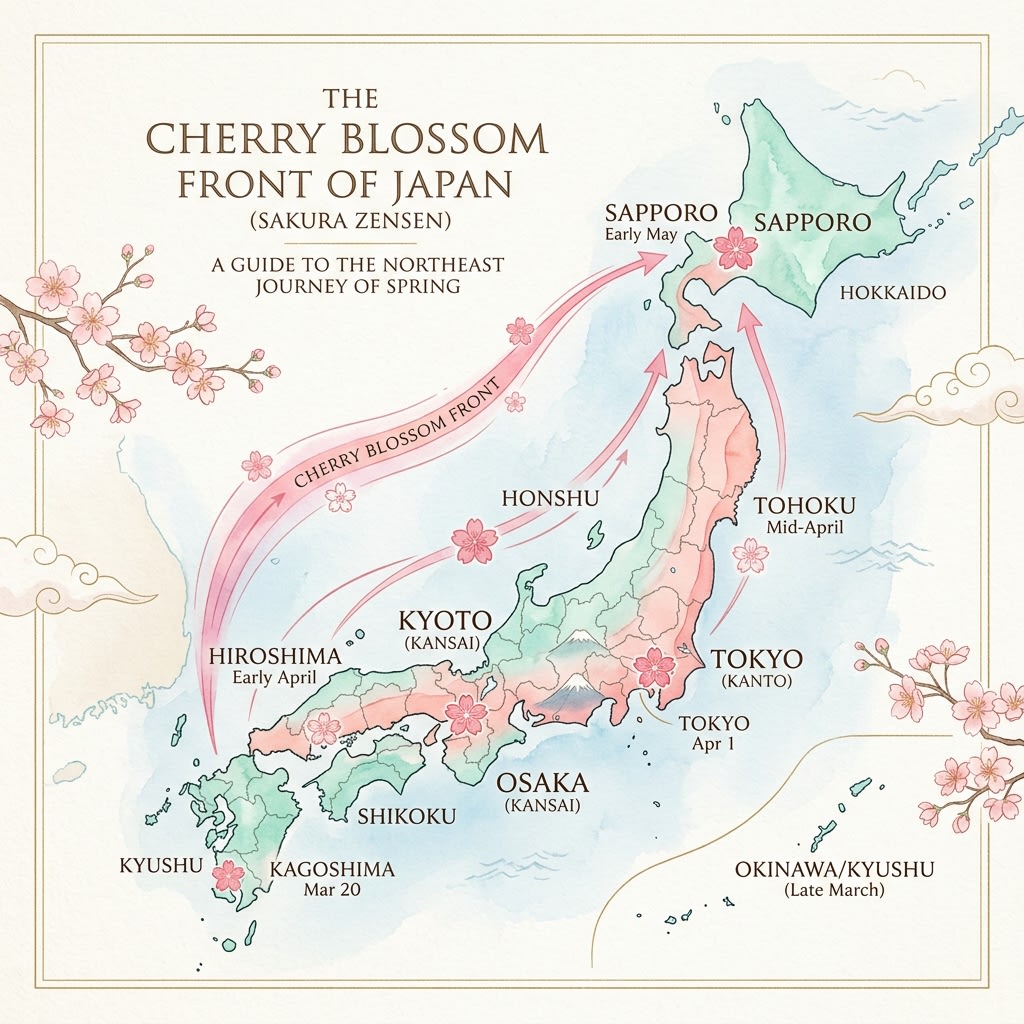
| City | First Bloom | Full Bloom | Best Window | |------|------------|------------|-------------| | Tokyo | Mar 20 | Mar 28 | Late March – Early April | | Nagoya | Mar 17 | Mar 27 | Late March | | Kyoto | Mar 23 | Apr 1 | Late March – Early April | | Osaka | Mar 22 | Mar 30 | Late March – Early April | | Fukuoka | Mar 20 | Mar 29 | Late March | | Sendai | Apr 5 | Apr 10 | Early – Mid April | | Sapporo | Apr 25 | Apr 28 | Late April – Early May |
The sakura front begins in Kyushu and takes roughly two months to reach Hokkaido. An increasing number of travelers are planning "chase the sakura front" itineraries.
Five Hidden Hanami Spots — Escaping the Crowds
Ueno Park and Shinjuku Gyoen are beautiful, no question. But during peak bloom, they can feel less like flower viewing and more like crowd viewing.
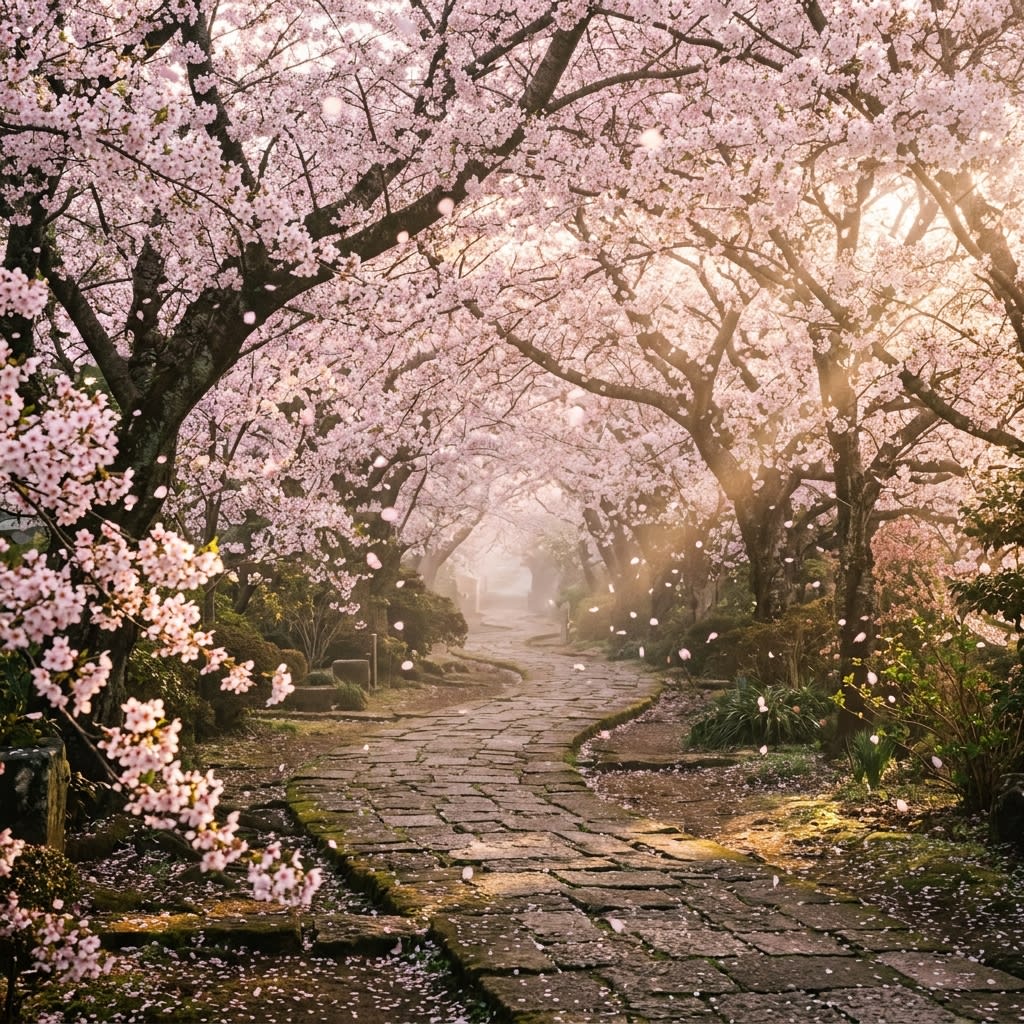
1. Sewari-tei (Yawata, Kyoto Prefecture) Where the Kizu and Uji rivers meet, a 1.4-kilometer tunnel of cherry trees stretches along the embankment. Just 30 minutes from central Kyoto by train.
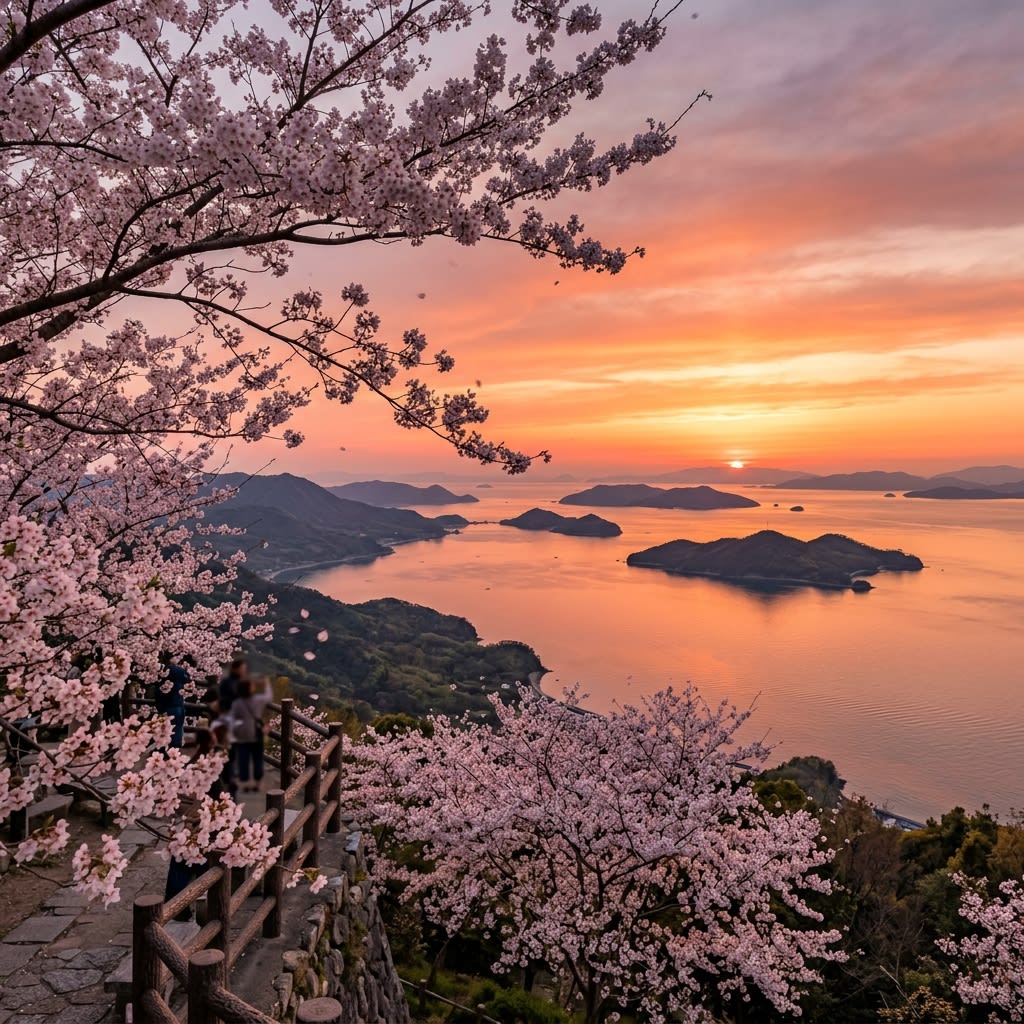
2. Mount Shiude (Mitoyo, Kagawa Prefecture) From the 352-meter summit, a panorama of the Seto Inland Sea framed by roughly 1,000 cherry trees. At sunset, visitors describe it as a ukiyo-e painting come to life.
3. Matsumae Park (Matsumae, Hokkaido) With approximately 250 varieties and 10,000 cherry trees, Japan's most diverse sakura destination. Blooming from late April to early May.
4. Shizumine Furusato Park (Naka, Ibaraki Prefecture) Around 2,000 double-petaled yaezakura trees create a tunnel of vivid pink. Mid-April is prime time.
5. Mount Yoshino (Yoshino, Nara Prefecture) Approximately 30,000 cherry trees blanket the entire mountain, blooming over a full month. The view "hitome senbon" is an unforgettable symbol of spring in Japan.
Spring Festival Calendar — Experiencing Japan's Living Prayers
Japanese spring is not only about cherry blossoms. Across the country, festivals celebrate the return of life after winter.
March – April
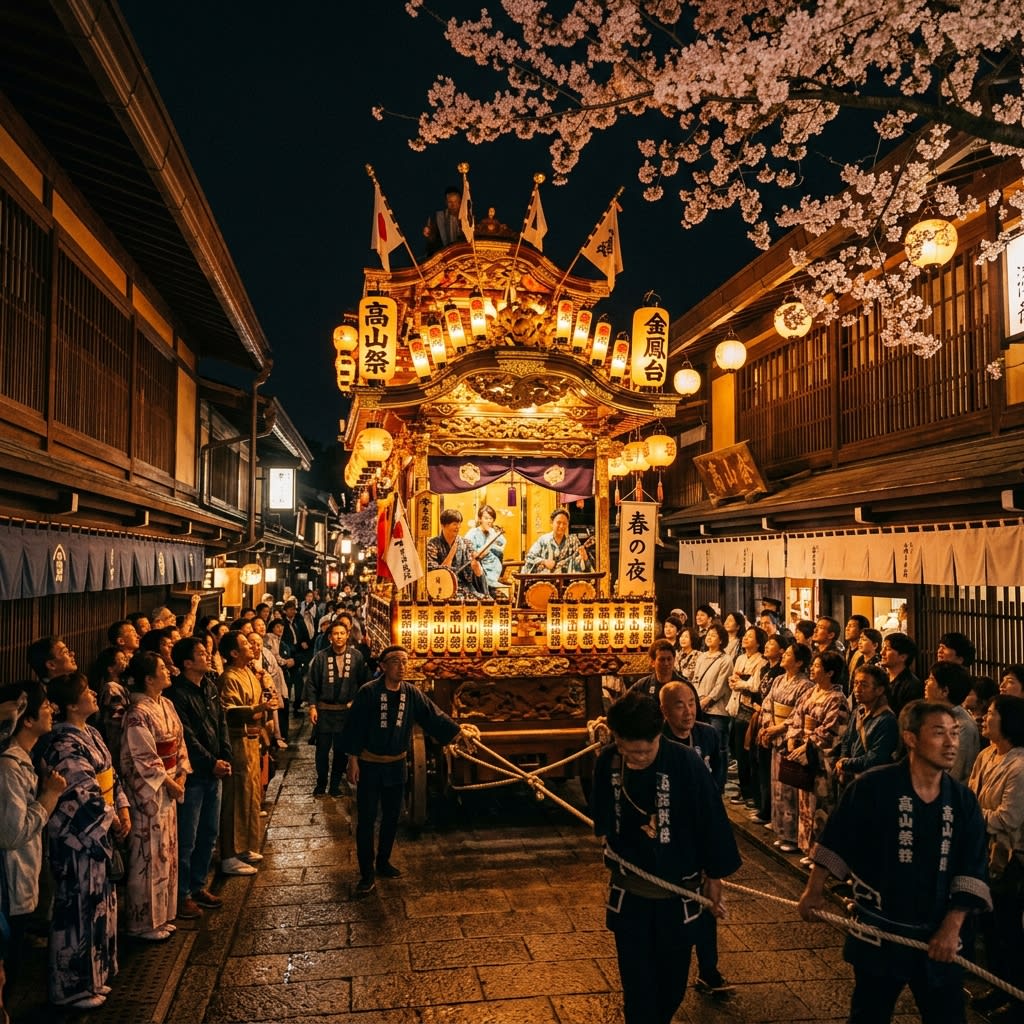
Takayama Festival (Gifu, April 14–15) — Ornate floats parade through Hida-Takayama. UNESCO Intangible Cultural Heritage.
Yayoi Matsuri in Nikko (Tochigi, April 13–17) — Flower-themed floats process around Nikko Toshogu Shrine.
Miyako Odori (Kyoto, April 1–30) — Traditional dance by Gion's geiko and maiko. Spring in Kyoto defined.
May
Aoi Matsuri (Kyoto, May 15) — One of Kyoto's three great festivals. 500 participants in Heian-period costume.
Sanja Matsuri (Tokyo, around May 17) — Over 100 portable shrines surge through Asakusa. Tokyo's most electrifying festival.
Hakata Dontaku (Fukuoka, May 3–4) — Over two million visitors. Japan's largest citizen-participation festival.
Spring Flavors — The Art of Eating the Season
The essence of Japanese cuisine lies in "shun" — the peak of seasonal flavor. Spring brings tastes that exist only in spring.
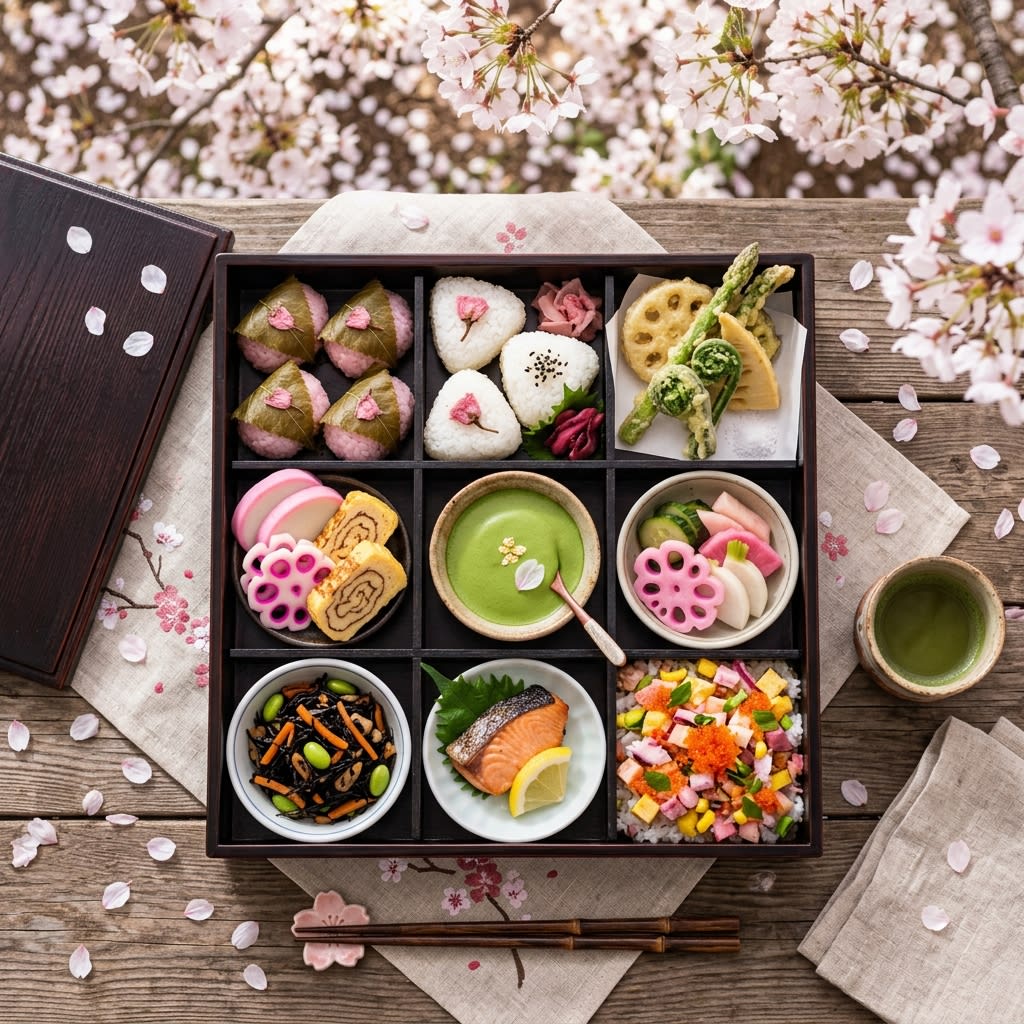
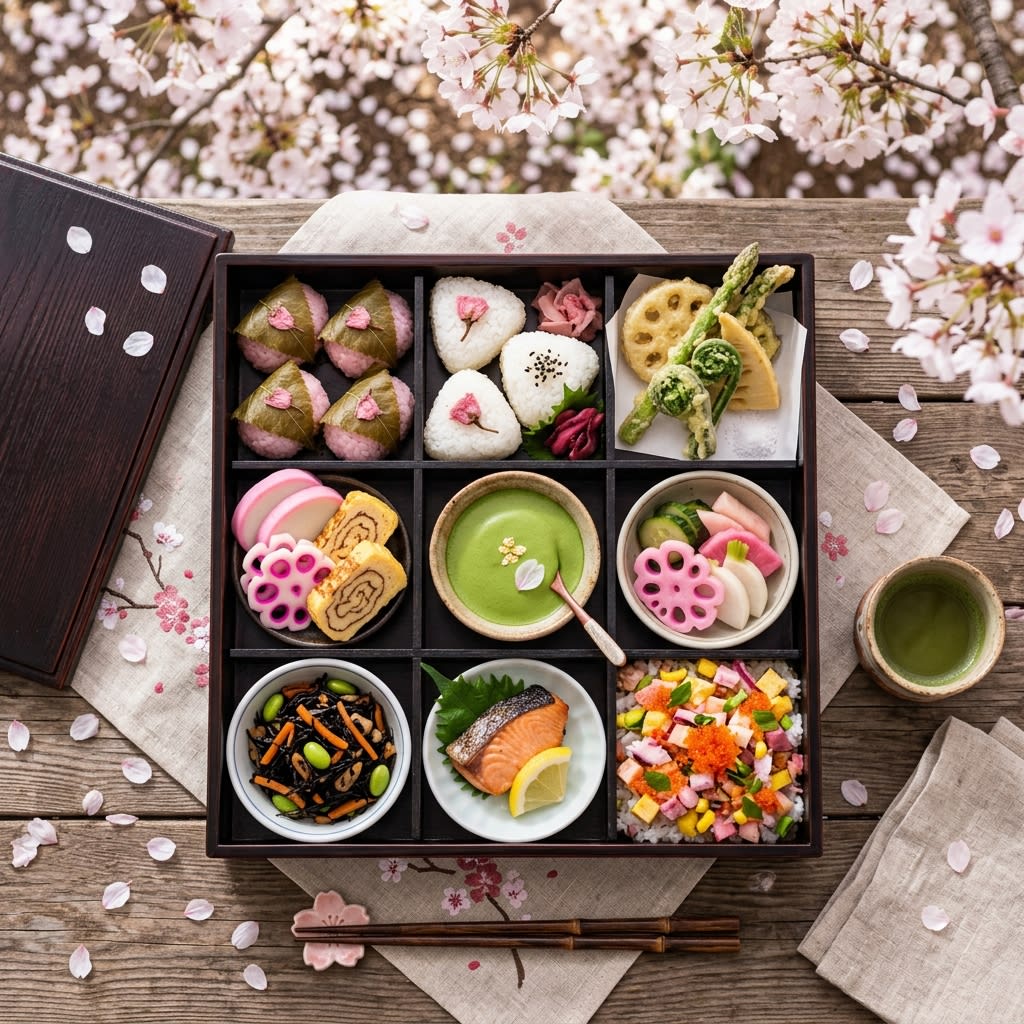
Hanami Bento A bento box opened beneath the cherry trees is one of the greatest pleasures of Japanese spring. Rice balls topped with salt-pickled cherry blossoms, tempura of spring vegetables, pink kamaboko — the moment you lift the lid, spring greets you.
Sakura Mochi A rice cake wrapped in a salted cherry leaf. The balance of salty leaf and sweet bean paste surprises many first-time tasters from abroad.
Seasonal Specialties Bamboo shoots simmered in bonito broth, blanched nanohana greens, firefly squid with vinegar-miso, sakura-dai sashimi — order with "shun" in mind.
Spring-Limited Matcha Sweets Centered on Kyoto, spring-exclusive matcha-meets-sakura sweets appear everywhere — uniquely Japanese.
Practical Tips for a Comfortable Spring Trip
What to Wear Late March through April brings daytime highs of 15–20°C and mornings around 10°C. Layers work best. By Golden Week, temperatures can approach 25°C.
Getting Around The Japan Rail Pass is essential for long-distance travel. In Kyoto during cherry blossom season, the subway plus walking is the smarter choice.
Accommodation Hotels in Kyoto and Tokyo during sakura season are often booked a year in advance. Rural kominka stays and glamping offer a more refined spring experience.
Etiquette Take your trash with you. Do not sit on others' reserved tarps. Never break a cherry tree branch.
Why Spring in Japan Stays With You
Cherry blossoms are beautiful precisely because they are not forever. The brilliance of full bloom, the bittersweet beauty of falling petals, the quiet dignity of green leaves that follow — all leave their mark on your memory.
Spring in Japan is not something you see. It is something you feel. The moment you take a deep breath beneath the cherry trees, the moment a festival drum reverberates through your chest, the moment you open a hanami bento and spring rises to meet you — each becomes a travel memory that lasts a lifetime.
This spring of 2026, we hope you find your own "spring moment" in Japan.