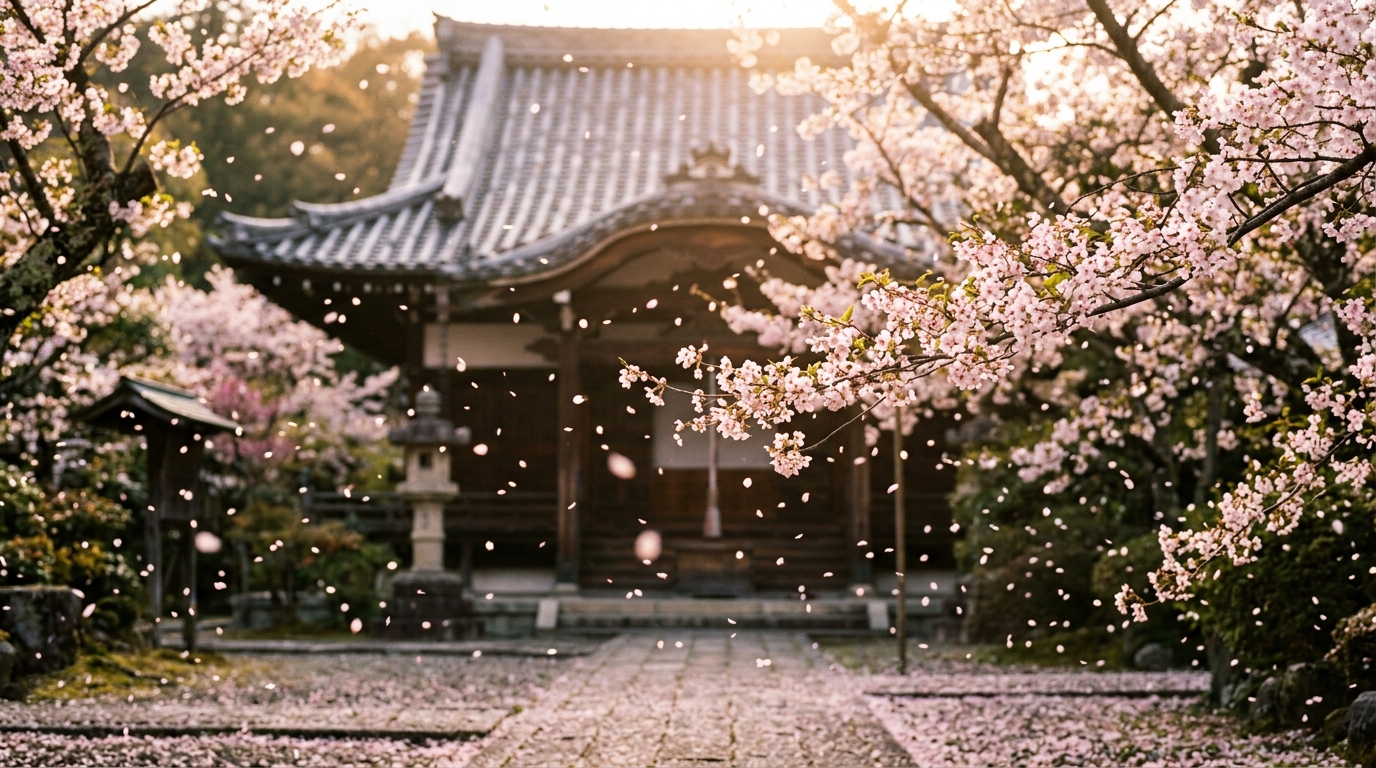
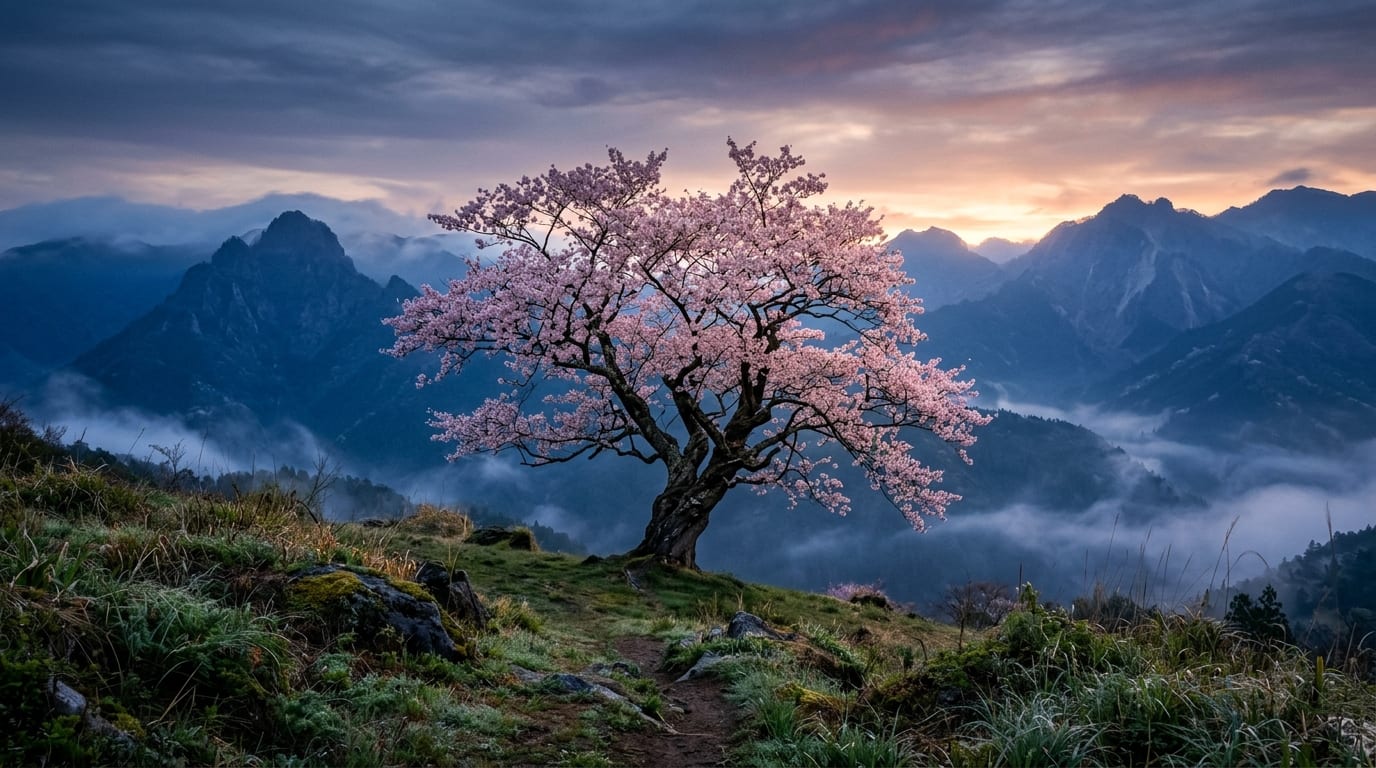
60 million photos of Japan's cherry blossoms get uploaded every spring. Almost every tree is a genetic clone of one tree from 1850s Edo. A 2024 DNA study confirmed it. They're now hitting their 60–80 year lifespan limit, all at once.
Read this article to earn +5 MTC
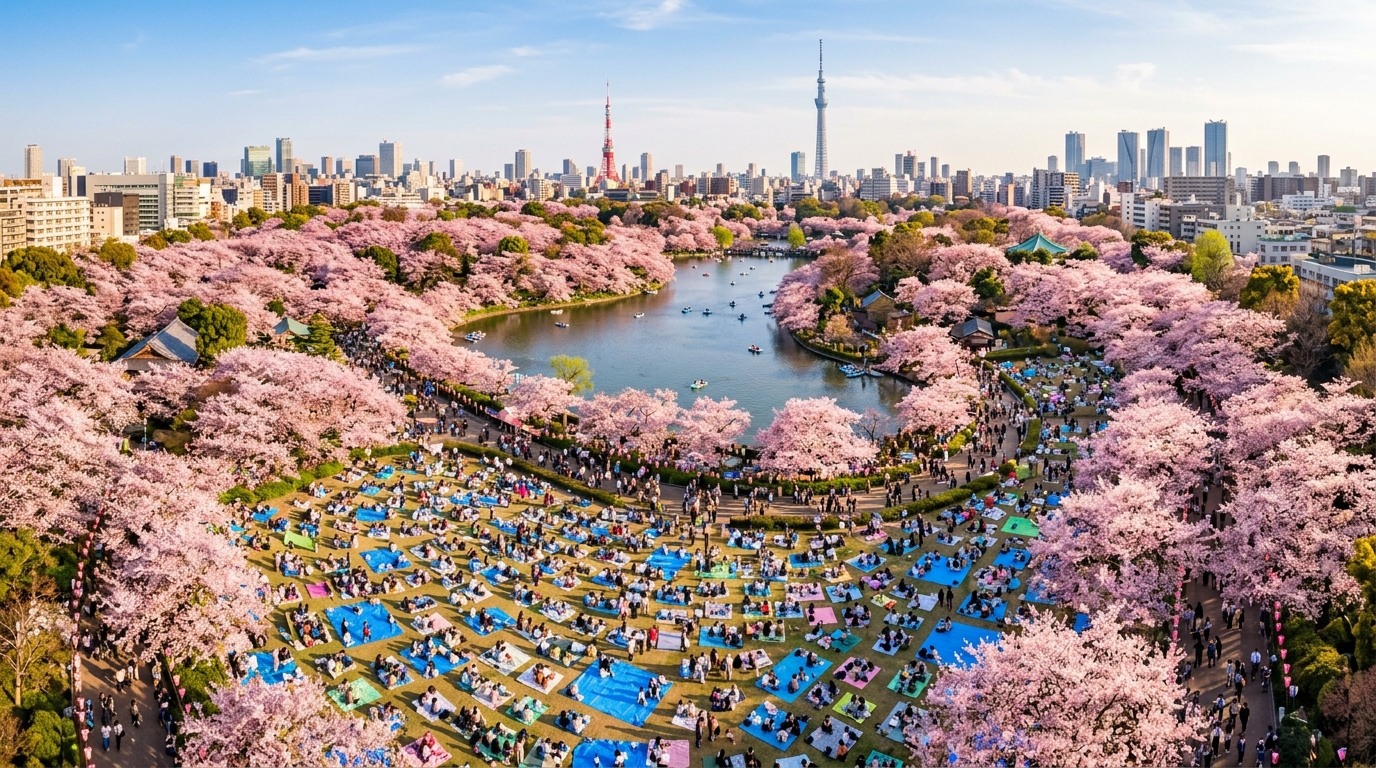
In April every year, more than 60 million photographs of Japan's cherry blossoms are uploaded to Instagram. They look like a million different trees.
They are not.
Almost every Yoshino cherry tree blooming across Japan today is a genetic clone of one tree from the 1850s. They share the same DNA. They bloom on the same day. They will all die at roughly the same time.
And we are watching them die.
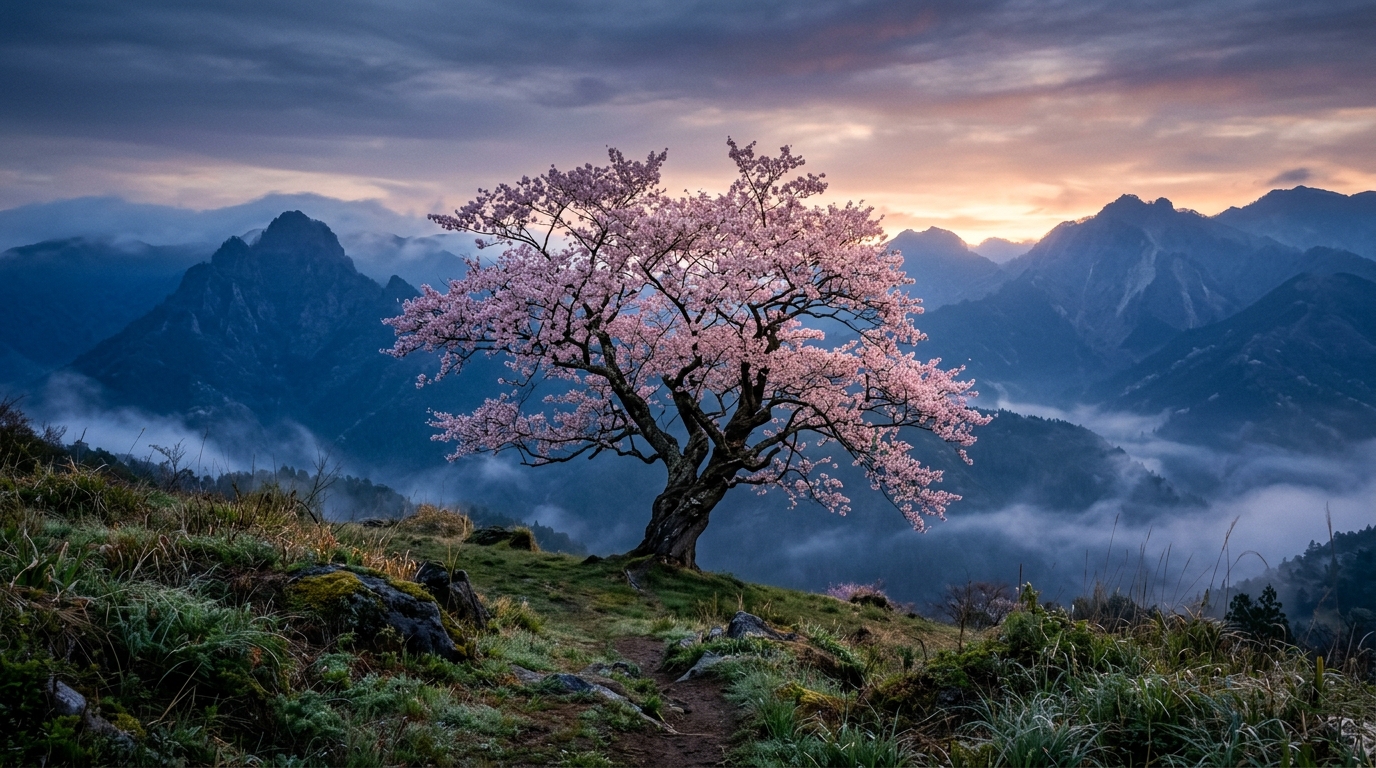
The Tree That Became a Country
The story begins in a small Edo-era village called Somei, in what is now Toshima-ku, Tokyo. Sometime in the mid-1800s, a gardener — name lost to history — accidentally created a hybrid by crossing two wild cherry varieties: the Edo Higan (which blooms early) and the Ōshima Zakura (which has large flowers).
The result was extraordinary. The new tree bloomed before its leaves emerged, producing pure clouds of pale pink against bare branches. It was beautiful in a way no wild cherry had ever been.
It was also completely sterile.
The hybrid couldn't reproduce sexually — its seeds, when produced, didn't grow true to type. The only way to make more was grafting: cutting a branch from the original tree and attaching it to a different rootstock. Every "new" Yoshino was, biologically, the same tree.
The Meiji government loved it. As Japan modernized in the late 1800s, planting Somei Yoshino became a kind of patriotic infrastructure project — the same tree, same color, same bloom date, blanketing the country. Schools planted them. Parks planted them. The 1912 gift of 3,000 cherry trees to Washington, D.C. was made of grafts from this lineage.
By the 1950s, postwar Japan had standardized the Yoshino as the cherry blossom. The Japan Meteorological Agency's official "cherry blossom front" — the famous sakura zensen — tracks Yoshino specifically. When weather forecasters say "the sakura have opened in Tokyo," they mean one tree's clones, planted in millions of locations.
What the DNA Confirmed in 2024
For decades, this clone hypothesis was theory. In 2024, a team led by Japanese geneticists published a study in DNA Research that ended the debate.
They sequenced the genomes of 46 Yoshino cherry trees sampled from across Japan and from the U.S. (including one descended from the 1912 D.C. gift). The result was unequivocal: every tree shared the same genetic lineage, descended from a single individual through grafting.
The variations they found weren't from different parents. They were from somatic mutations — small DNA changes accumulated in branch tips over decades, the way a single human develops freckles. Different surfaces of the same body.
The Yoshino is, in a real biological sense, one tree planted millions of times.
The Quiet Crisis
This is where the trouble starts.
A genetic monoculture is a textbook vulnerability in agriculture. The Irish Potato Famine. The Gros Michel banana, wiped out by a single fungus in the 1950s. Once a disease finds a way through one individual's defenses, it can rip through every clone of it on Earth.
Japan's Yoshino are now confronting their version of this.
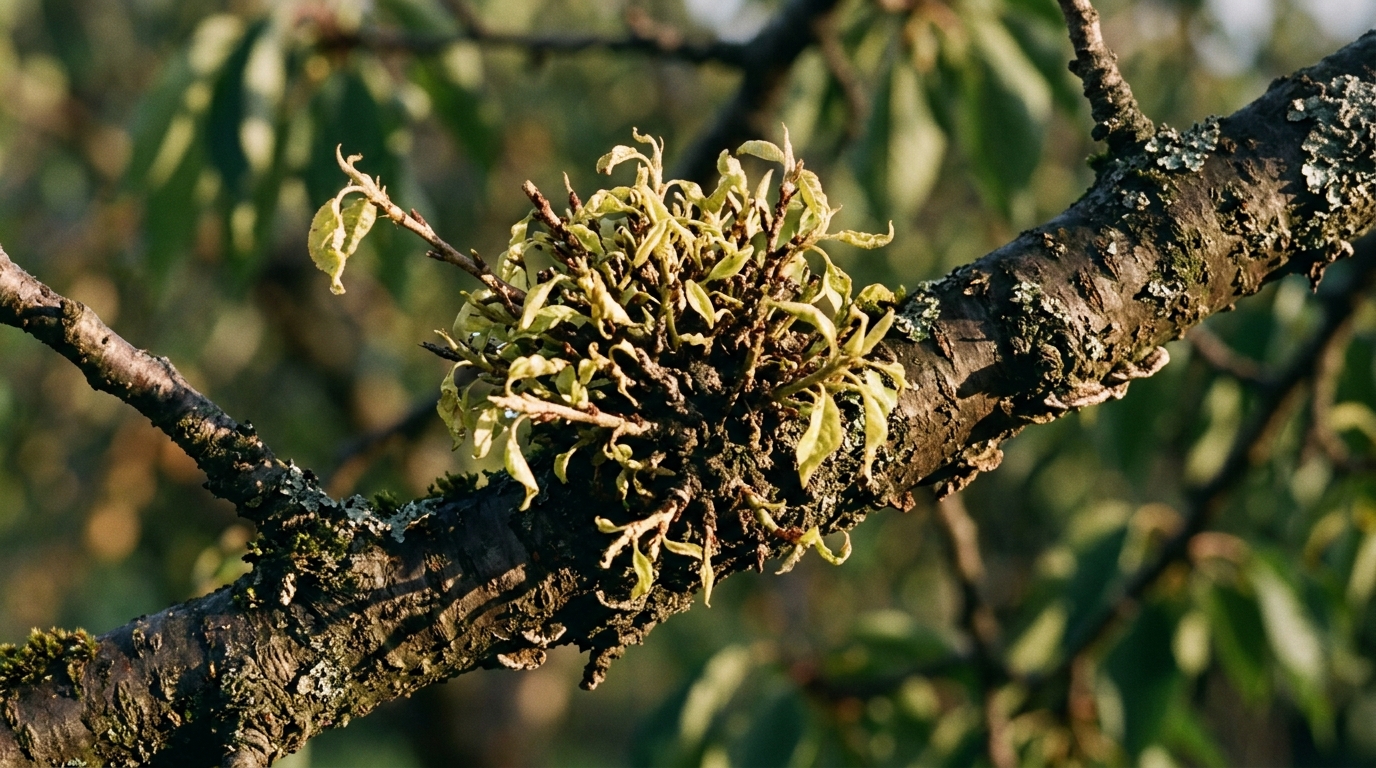
The most visible threat is Tengu-su byō (天狗巣病) — "witch's broom disease," caused by a fungal pathogen Taphrina wiesneri. Infected branches produce dense, malformed clusters of small twigs that look exactly like a witch's broom. The infected branch produces leaves but not flowers. Left untreated, the disease spreads through the whole tree. The standard prescription is amputation: arborists cut off entire infected branches and burn them.
Witch's broom has been spreading through Japan's Yoshino population for decades. It is incurable. And because every tree is genetically identical, no Yoshino is naturally resistant.
There is also the simpler problem of age.
Wild Japanese mountain cherries (Yamazakura) live 300–500 years. Some live more than 1,000. The famous Jindai-zakura in Yamanashi is estimated to be 2,000 years old.
Yoshino cherries — for reasons not fully understood, possibly related to their hybrid origin and shallow root systems — typically live only 60 to 80 years.
Most of Japan's Yoshino were planted in two waves: the late Meiji period (1880s–1900s, now well past their lifespan), and the postwar reconstruction era (late 1940s through the 1960s). Those postwar trees are now 70 to 80 years old. Many are in visible decline. Some Tokyo parks have already lost a third of their cherry canopy in the past decade.
The Cherry Blossoms of 2050
Japan is not waiting passively for the Yoshino to die.
The leading replacement candidate is the Jindai Akebono — a slightly later-blooming, slightly pinker cultivar developed in California from Yoshino stock and reintroduced to Japan. It is more disease-resistant. Tokyo's parks departments and the Japan Flower Association are already planting Jindai Akebono in spots where Yoshino are failing.
There is also a renewed interest in Yamazakura — the wild, genetically diverse mountain cherries that bloomed in Japan for centuries before the Yoshino was invented. They flower with their leaves (a different aesthetic), bloom over a longer window, and live for hundreds of years. They are also genetically diverse, so a single disease cannot wipe them all out.
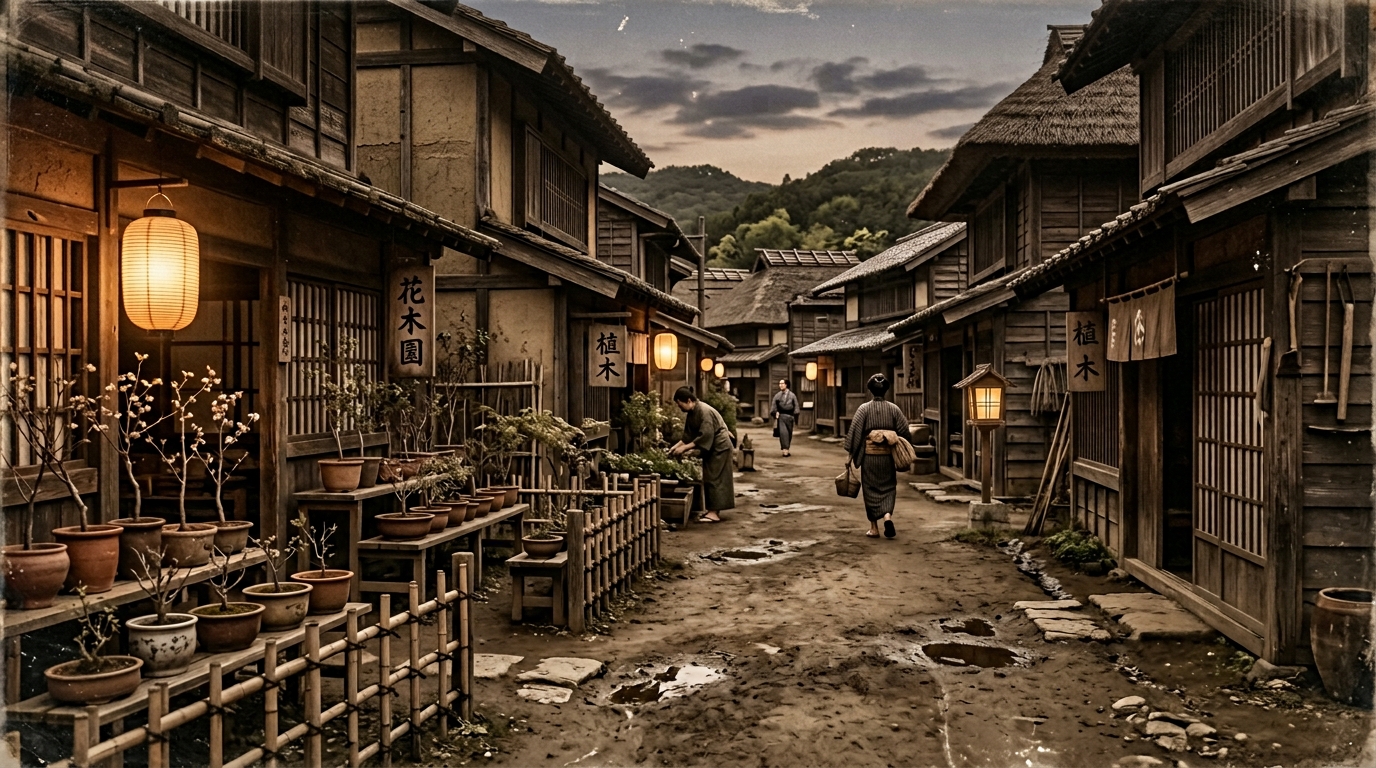
By the 2050s, the cherry blossoms in Japan will probably look subtly different. Slightly later. Slightly more variation in pink. Leaves visible alongside flowers.
For the average viewer, the difference will be invisible. For Japan, it will be a quiet ending of one of the most successful pieces of national branding in history.
What This Knowledge Changes
The strange beauty of the Yoshino — its uniformity, its synchronized bloom, its seven-day window of perfection — was never a natural phenomenon. It was engineering, performed by an unknown gardener in Edo Japan and scaled by 150 years of grafting.
The poetry attached to it — the impermanence, the sudden beauty, the just-as-sudden fall — is real. But it is poetry written about a single tree, photocopied across an archipelago.
The next time you see a Yoshino in full bloom, look closer. Compare it to the tree beside it. They are not just similar. They are identical. The same individual, stretched across Japan in a way no living thing was ever supposed to be.
It is one of the most beautiful — and most fragile — sights on Earth.
And like all clones, it has an expiration date.