Same night in Tokyo: sleep for $5 (manga cafe) or $5,000 (top ryokan). The 6-tier accommodation ecosystem with 1000x price range and 5 booking hacks.
Read this article to earn +5 MTC
Why Japanese Hotels Cost $5 to $5,000 — The Most Bizarre Hotel System in the World
A Country Where the Same City Has 1000x Price Range
In Tokyo tonight, you can sleep:
- For $5 in a manga cafe
- For $25 in a capsule hotel
- For $80 in a business hotel
- For $200 in a Western chain
- For $800 in a luxury hotel
- For $5,000 in a top ryokan suite
Same city. Same night. 1,000x price difference. No other country offers this range.
This isn't accident — it's the most sophisticated hotel ecosystem on Earth, designed for radically different needs.
The 6 Tiers of Japanese Accommodation
Tier 1: Manga Cafe / Internet Cafe ($5-15/night)
Yes, you can sleep in a manga cafe. Many Tokyo manga cafes have private booths with reclining chairs, free unlimited drinks, showers, and breakfast — all for ¥1,500-3,000 ($10-20).
Who uses them: Salarymen who missed the last train, young people on tight budgets, foreign backpackers in the know.
Notable chains: Customa Cafe, Manboo, Aprecio.
Tier 2: Capsule Hotel ($25-50/night)
Invented in Osaka 1979. Each guest gets a small fiberglass pod (about 2m × 1m × 1m) with bed, light, TV, charging.
Modern capsule hotels (especially "First Cabin" chain) feel almost luxurious — clean, well-designed, with full bathrooms, lounges, and saunas.
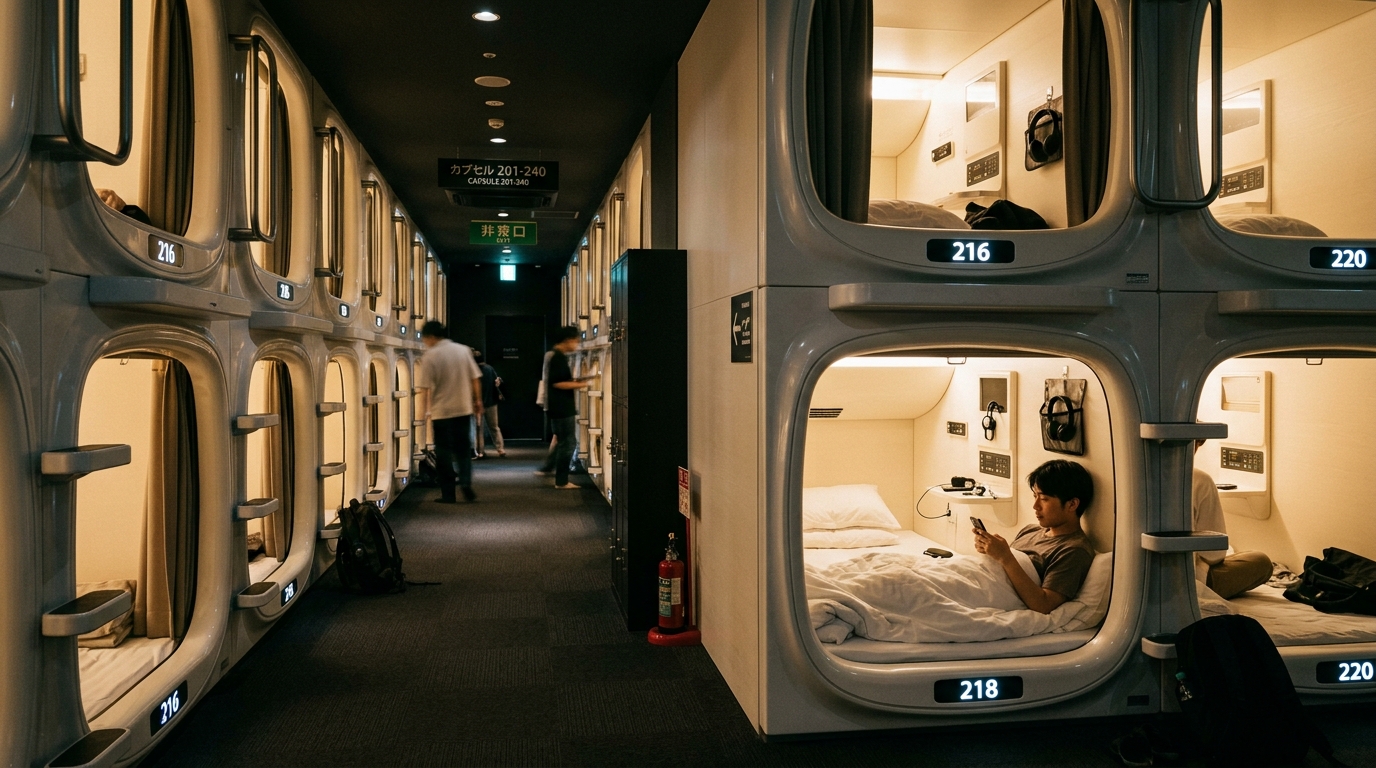
Who uses them: Travelers, salarymen, women (women-only floors common). 30% of capsule hotel users in 2025 are now international tourists.
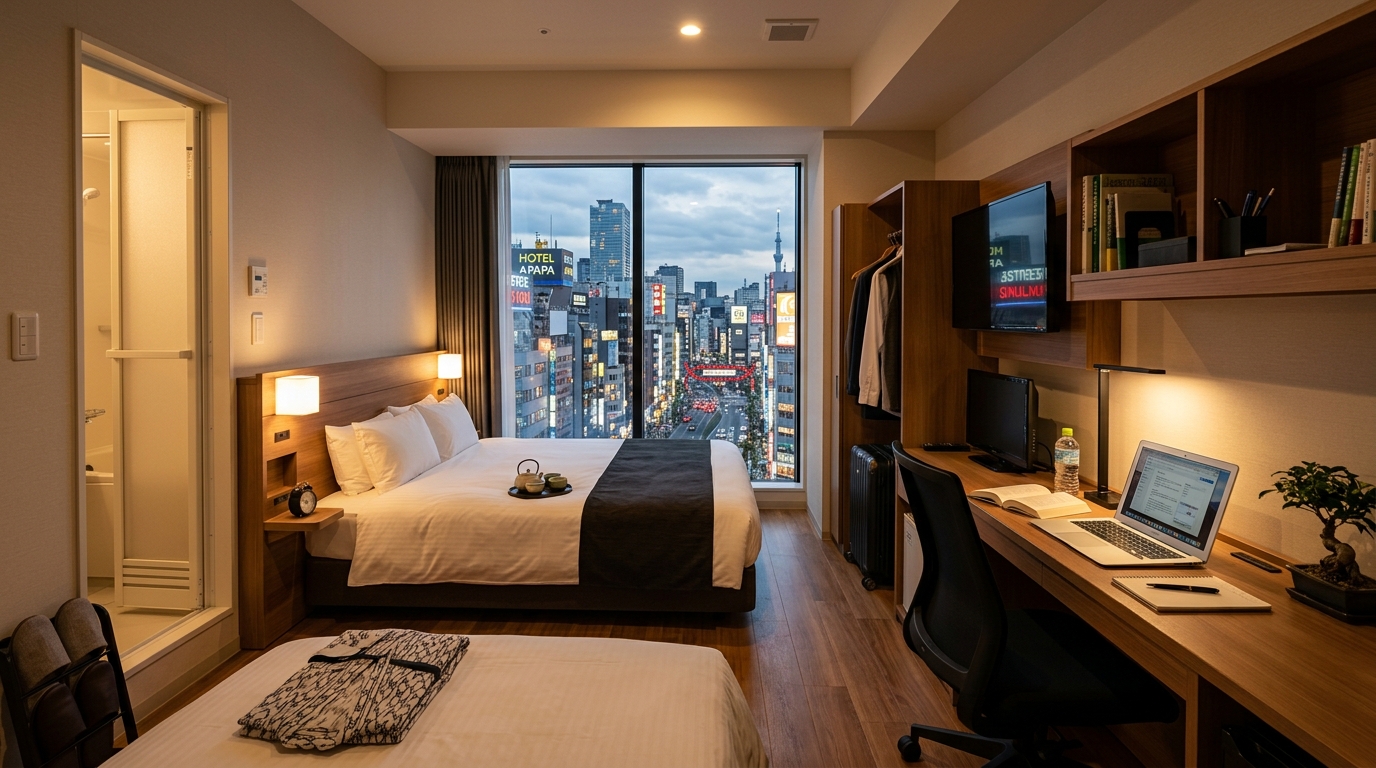
Tier 3: Business Hotel ($60-150/night)
Compact rooms (about 8-12 m²) designed for solo business travelers. Functional, clean, with everything you need.
Major chains: Toyoko Inn, APA Hotel, Super Hotel. APA Hotel alone has 700+ locations.
Why they're great: Spotless, predictable, often near train stations, often include breakfast. Reliable budget choice for most travelers.
Tier 4: Western Chain Hotel ($150-400/night)
Hilton, Marriott, Hyatt, IHG — exactly what you'd expect. Standard international quality, with Japanese twist (impeccable service, slightly smaller rooms).
Who uses them: Business travelers on company expense, foreign tourists wanting familiar comfort.
Tier 5: Luxury Boutique / 5-Star ($400-1,500/night)
Andaz Tokyo, The Ritz-Carlton, Aman Tokyo, Park Hyatt, The Peninsula. Same as global luxury, but with sublime Japanese touches: rooftop onsen, kaiseki breakfast, immaculate service.
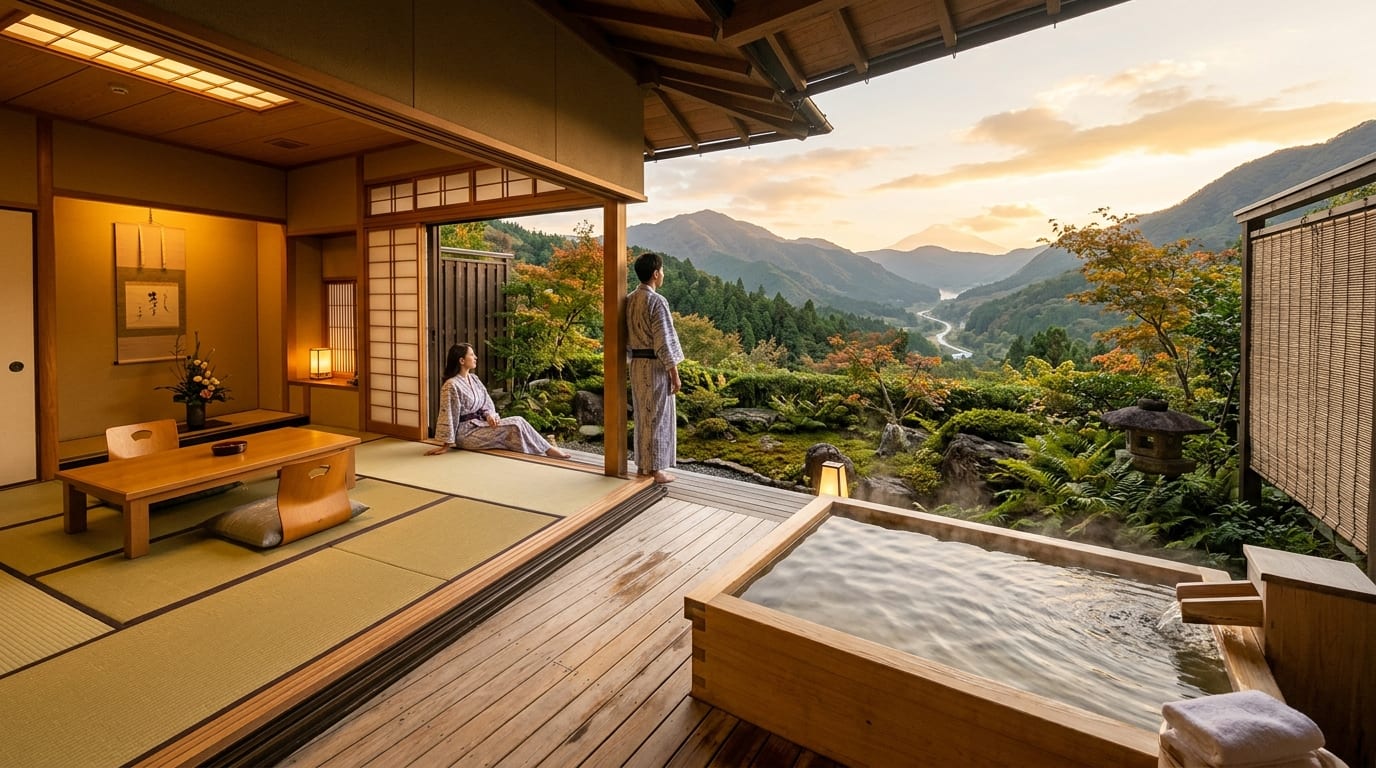
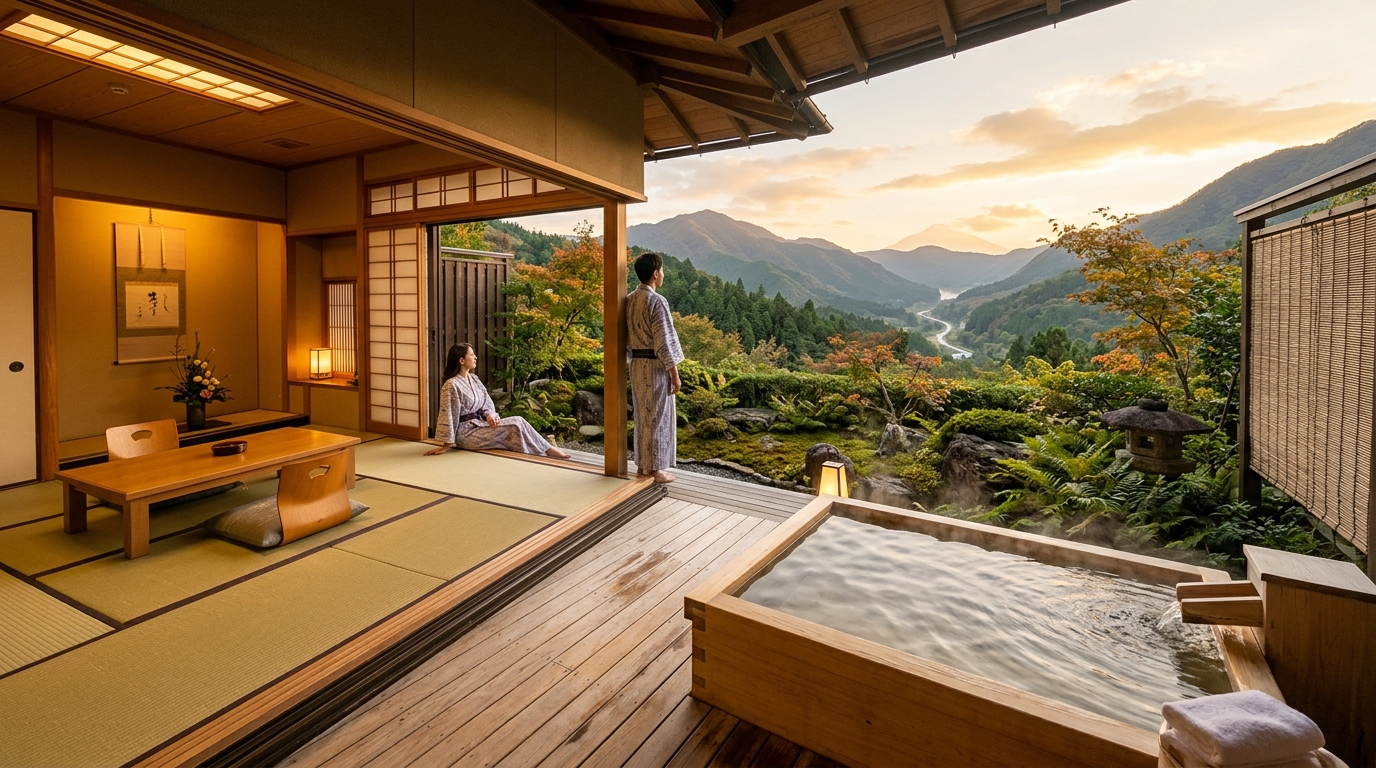
Tier 6: Top Ryokan ($800-5,000+/night)
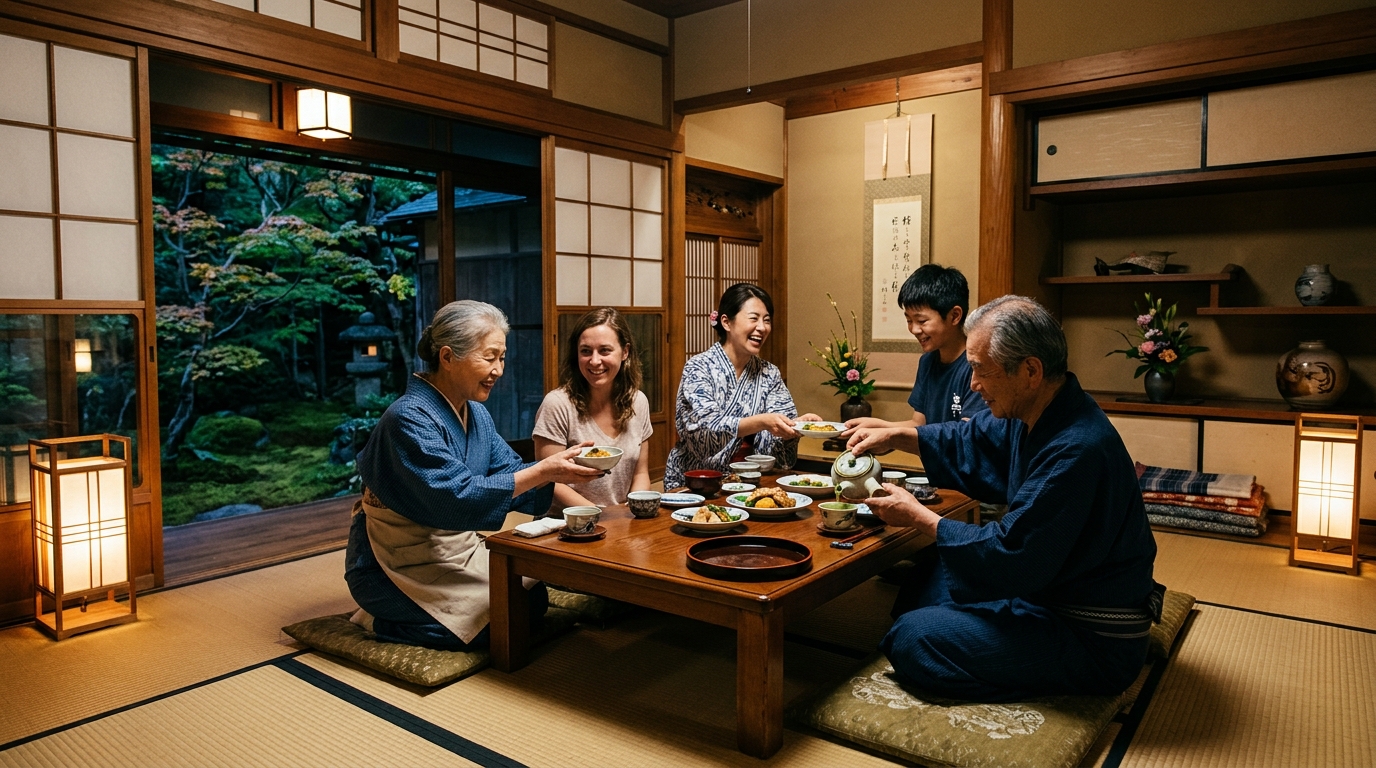
This is where Japan separates from the rest of the world. Top ryokans are not hotels — they're complete cultural experiences.
For $1,500-5,000/night you typically get:
- Private suite with traditional tatami
- Multi-course kaiseki dinner served in your room
- Private indoor and outdoor onsen baths
- Traditional yukata and wooden sandals
- Personal nakai-san (room attendant) who anticipates every need
- Multi-course breakfast in-room
Famous top-tier ryokans: Hoshinoya Kyoto ($800), Asaba Ryokan in Shizuoka ($1,500), Beniya Mukayu in Yamashiro ($2,500).
How This System Evolved
This wild range exists because Japanese accommodation evolved differently than Western:
1. Rigid Class System Created Specialization
In Western countries, hotels evolved from "place you sleep when traveling." In Japan, accommodation evolved from very specific historical functions:
- Ryokan: 1500s — for samurai and merchants traveling between cities
- Minshuku: 1700s — for farmers/villagers offering rooms in their homes
- Capsule: 1979 — solving Japan's specific problem (drunk salarymen who missed last train)
- Business hotel: 1960s — for the salaryman boom
- Manga cafe: 1990s — for young people without housing security
Each type evolved in isolation, optimized for specific use case.
2. Land Scarcity Drove Compaction
Tokyo land costs $30,000+ per square meter in central districts. Hotels had to maximize revenue per square foot — which created capsule and capsule-adjacent formats unavailable elsewhere.
3. Cultural Tolerance for Public Sleep
In Japan, public sleeping (parks, trains, cafes) is completely normal. This cultural acceptance enables formats like manga cafes, where strangers sleep within meters of each other.
4. The Onsen System
Hot springs (onsen) are everywhere in volcanic Japan. This created an entire luxury accommodation tier built around bathing experiences — something other countries can't replicate.
What to Choose for Your Trip
Backpacker / Budget ($30-50/night avg)
Mix of capsule hotels and manga cafes. Especially Cabin & Capsule chains in Tokyo, business hotel sales in Kyoto.
Standard Tourist ($100-200/night avg)
Business hotels (Toyoko Inn, APA) for cities. Add 1-2 nights in modest ryokan for cultural experience.
Luxury Tourist ($300-800/night avg)
Western 5-star in cities. Add 2-3 nights in mid-tier ryokan ($300-600).
Once-in-Lifetime ($1,500+/night)
Top ryokans for the bucket-list cultural experience. Combine with luxury Tokyo hotel.
The Booking Hacks Even Locals Use
Hack 1: Book directly with ryokans
Top ryokans give 10-20% discounts for direct booking vs. Booking.com. Email or call (or use their Japanese website with translation).
Hack 2: "Plan" packages
Japanese hotels often sell "plans" with breakfast/dinner/onsen included for cheaper than booking each separately.
Hack 3: Last-minute capsule deals
Tokyo capsule hotels often drop to $15-20/night same-day if not full. Check Capsule Booking apps.
Hack 4: Off-season ryokans
Top ryokans charge half-price in November-March (excluding holidays). Same room, same service, half the cost.
Hack 5: Love hotels for couples
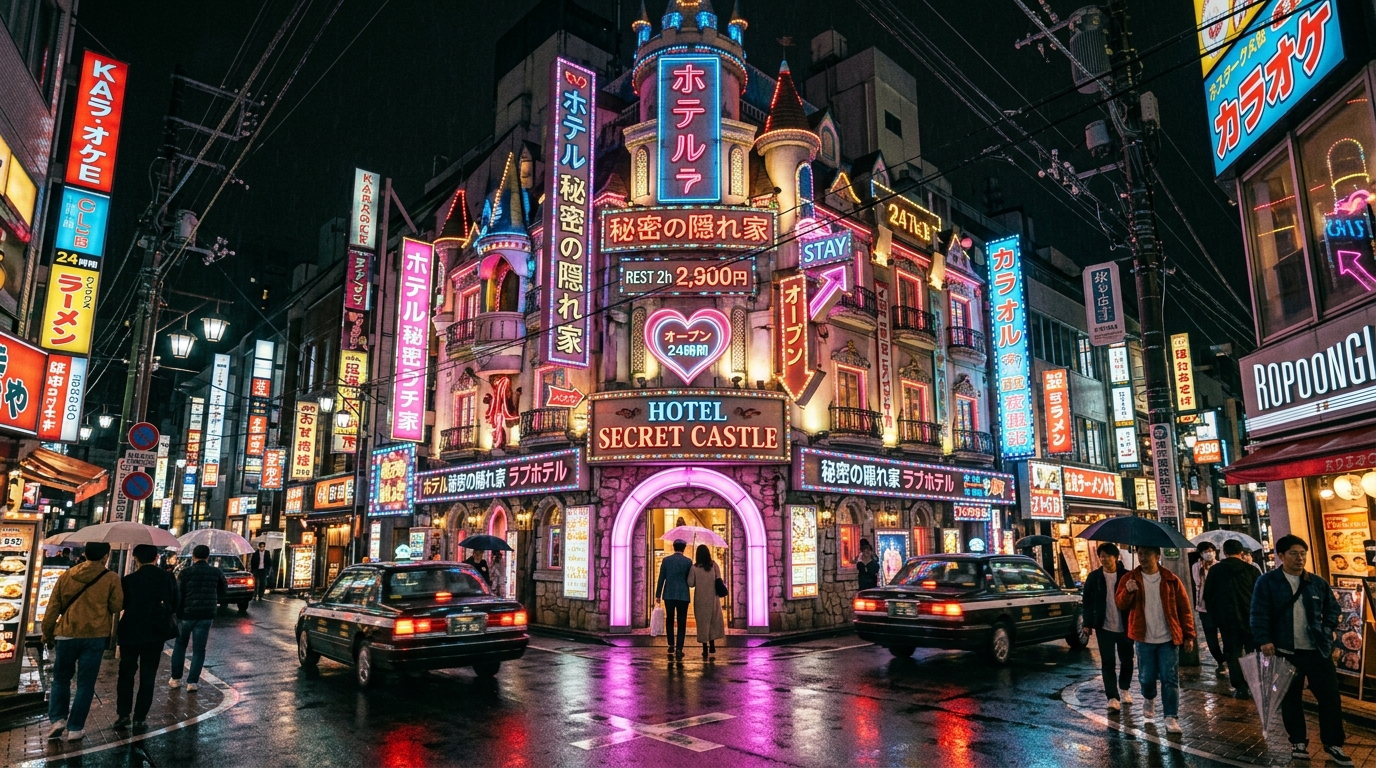
Yes, "love hotels" are an option. The themed rooms (some bizarre, some elegant) are actually a great deal for couples — $50-150/night for huge themed suites with jacuzzis. Just book at night for proper rates.
Bonus: The 7 Weirdest Japanese Hotels
- Henn-na Hotel — Run mostly by robots
- Book and Bed Tokyo — Sleep in bookshelves
- Capsule Hotel Inn-Side-Out — Looks like industrial lab
- Hotel Coco Grand — Owl-themed
- Train Hotel — Old train cars converted to rooms
- Wabi-Sabi Hotel — Designed entirely around imperfection aesthetic
- Cosplay Hotel — Themed rooms (anime, samurai, sci-fi)
The Real Lesson
Japan's hotel ecosystem teaches something profound: price doesn't equal value, and luxury doesn't equal experience.
A $25 capsule hotel can be the most memorable night of your trip. A $5,000 ryokan can be transformative.
Both work because Japan refuses to homogenize. Every form of hospitality serves a specific human need, perfectly.
When you visit Japan, don't just stay in one tier. Mix them. Spend one night in a capsule for the experience. One night in a ryokan for the soul. One night in a business hotel for productivity. Each will teach you something different about how humans can rest.
That's what Japan's wild hotel system actually offers: complete freedom in how you sleep.