
An Australian couple just bought a 120-year-old Japanese farmhouse for $3,300. It wasn't a steal — it's the going rate. Inside Japan's 9-million-empty-house crisis, the new April 2026 foreign-buyer rules, and why the government is quietly opening the door.
Read this article to earn +5 MTC
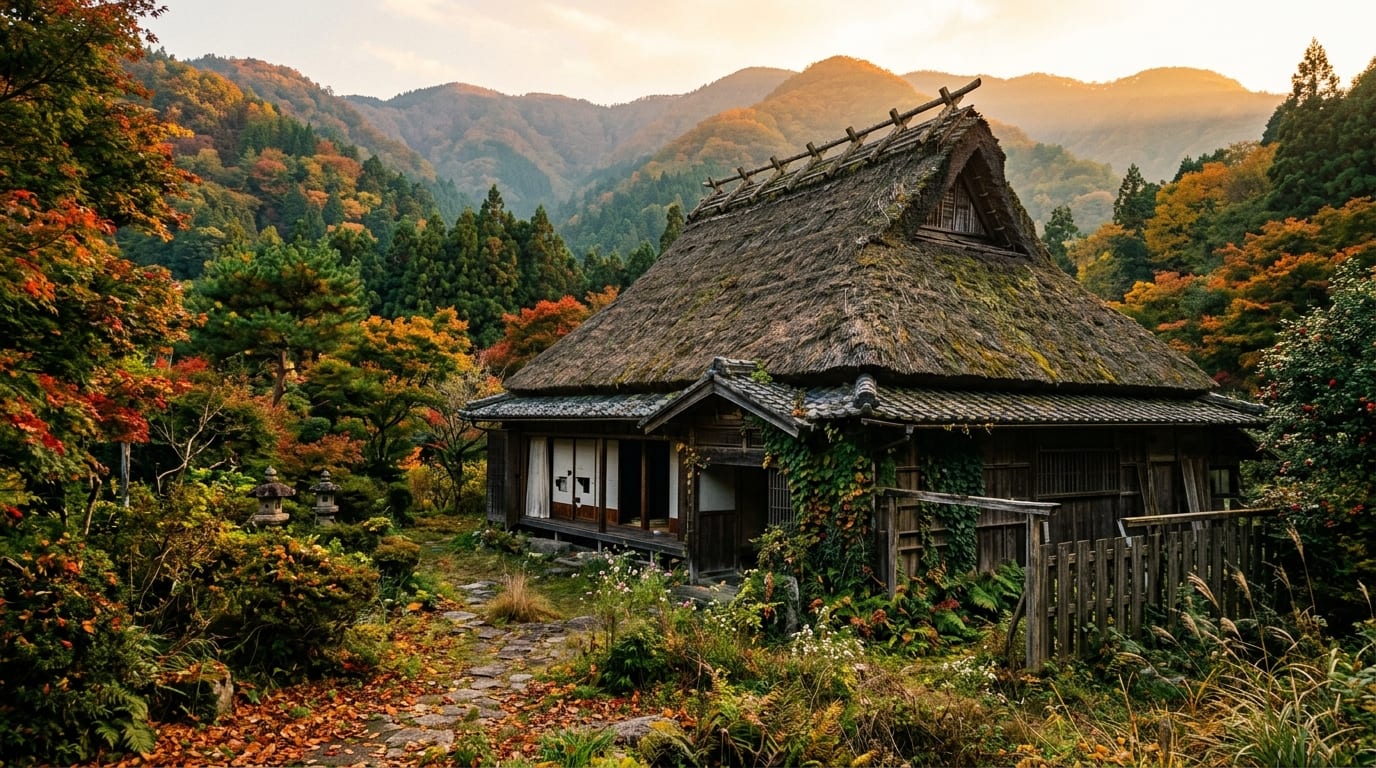
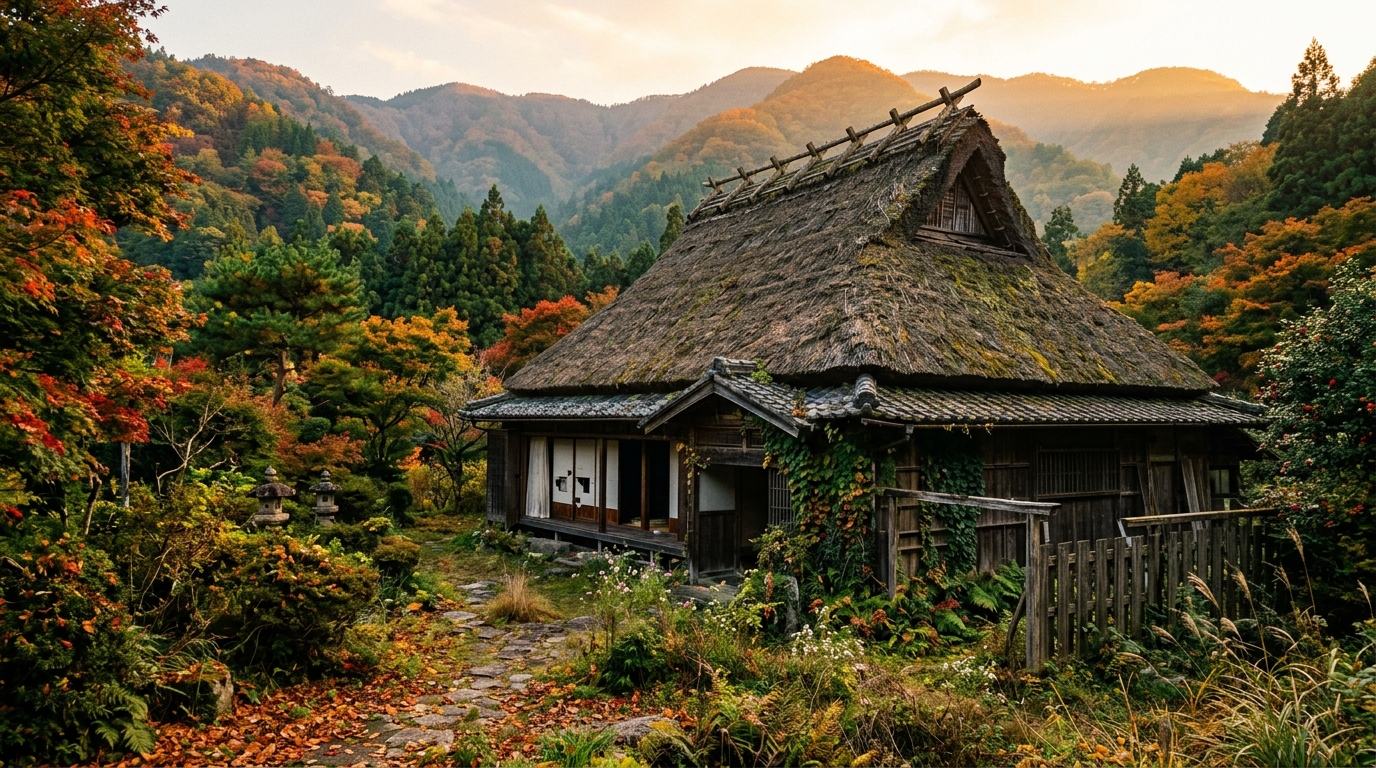
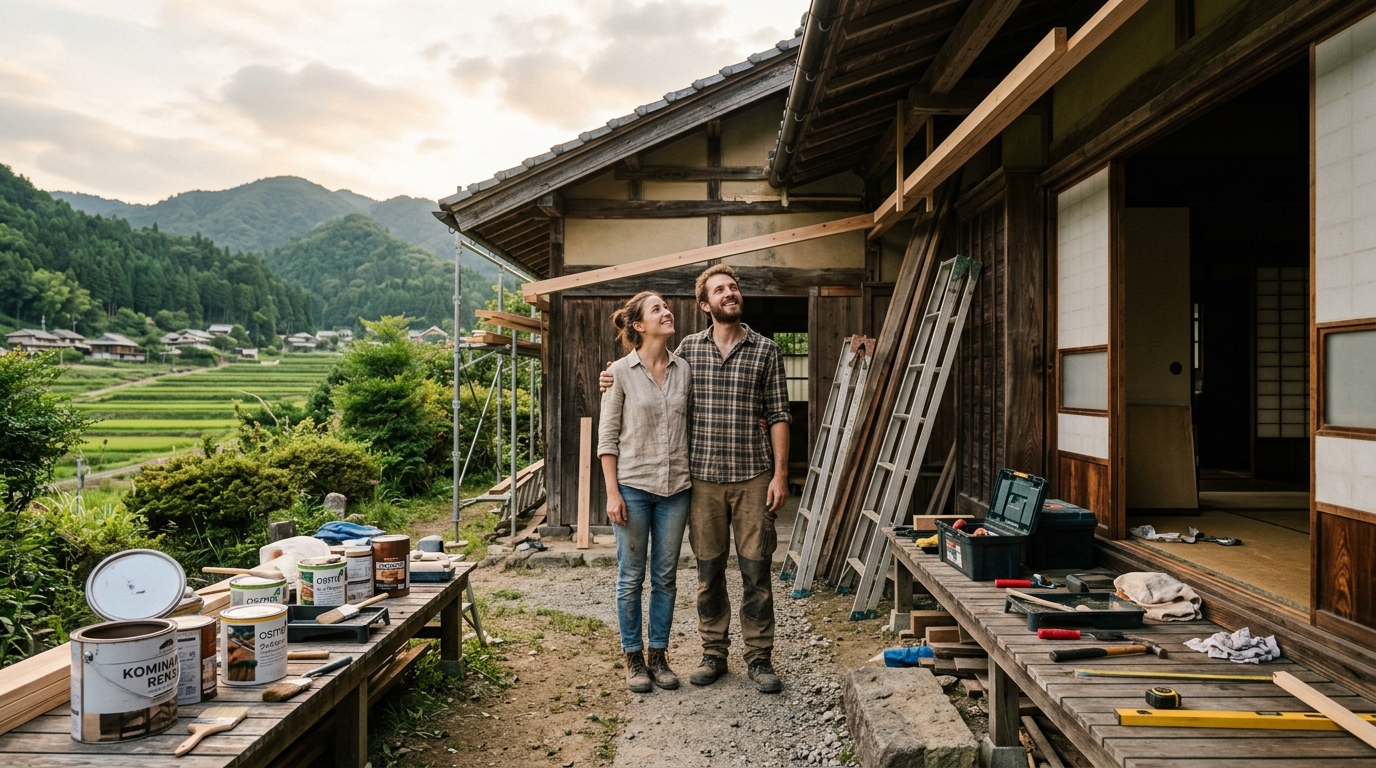
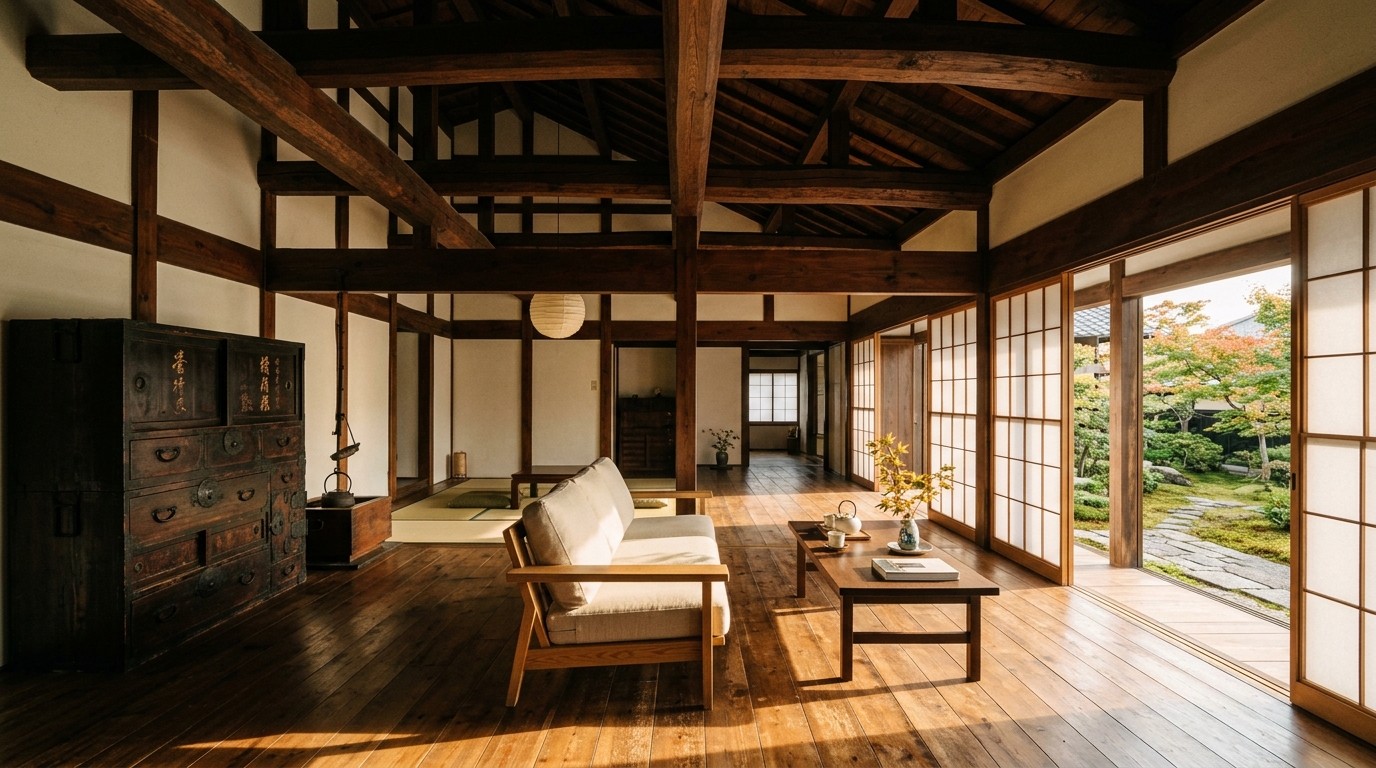
In April 2026, an Australian couple in their early thirties — Ruth and Tim Mitchell — moved into a 120-year-old farmhouse in rural Wakayama. The house has dark cedar beams the width of a person's body, a wood-burning irori hearth in the floor, sliding shoji screens, and a view of terraced rice fields backed by mountains.
They paid ¥500,000 for it. About $3,300 USD.
The house wasn't a steal. It was the going rate.
The Number That Stops People Cold
According to Japan's 2023 Ministry of Internal Affairs and Communications housing survey — the most recent official count — Japan has 9 million abandoned and vacant houses.
Nine million. 13.8% of the country's entire housing stock.
For comparison: California's total housing stock is about 14 million units. Japan has almost as many empty homes as California has homes. The Nomura Research Institute projects this will hit 20% by 2033 — meaning one in every five homes in Japan will sit empty.
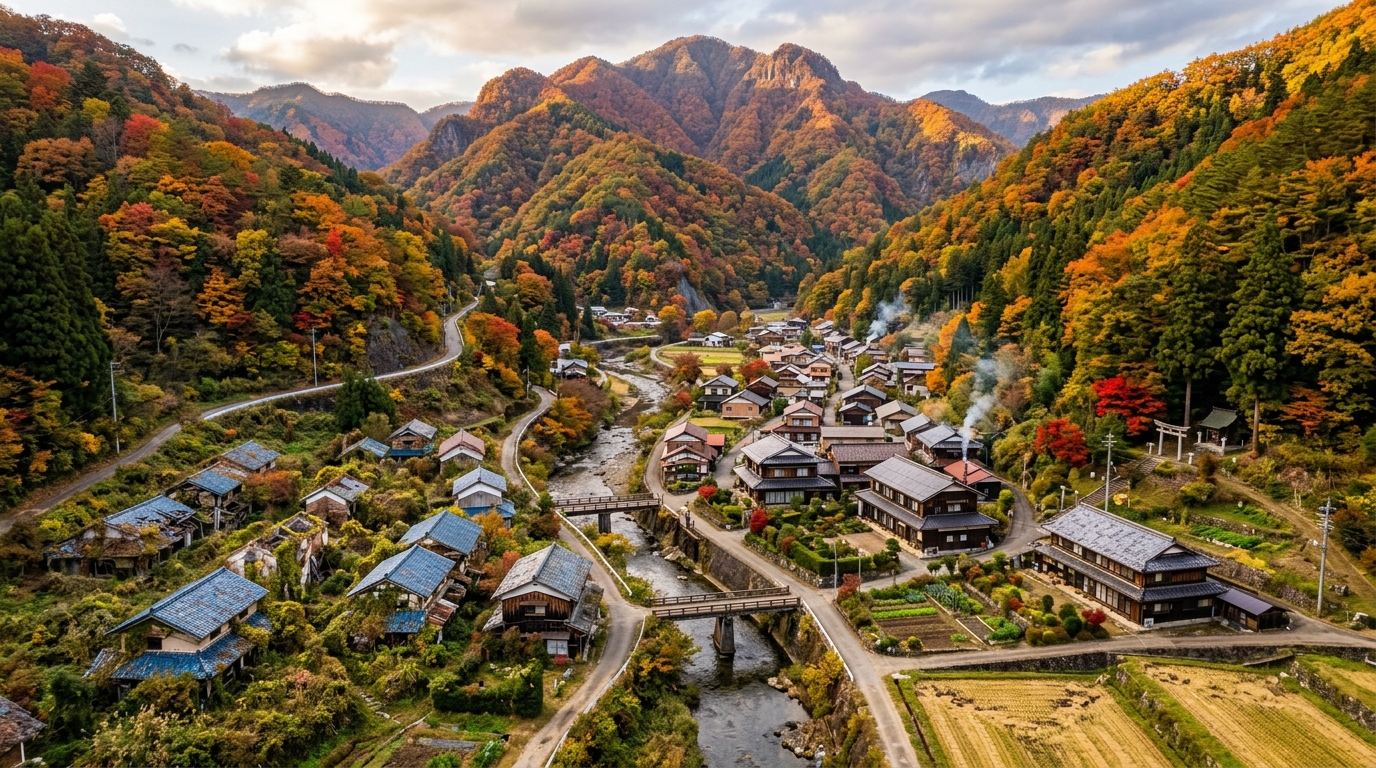
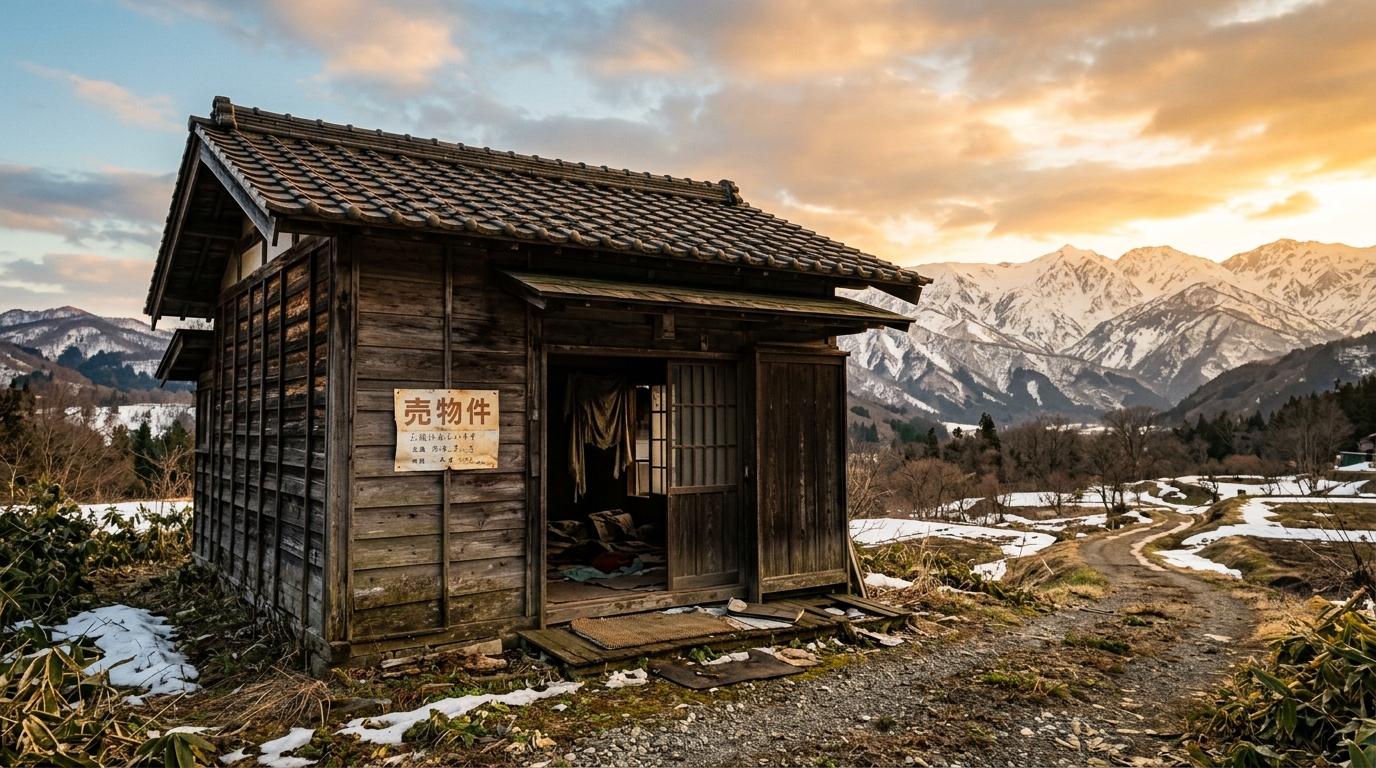
These houses have a name: akiya (空き家), literally "empty house." They are scattered across rural prefectures — Niigata, Wakayama, Tochigi, Yamagata, Tokushima — and increasingly creeping into the suburbs of major cities. Some are 30 years old and structurally fine. Some are 120 years old and architecturally extraordinary. Many are free.
Yes. Free.
Several Japanese municipalities, terrified of demolition costs and ghost-village status, list houses on official akiya banks (空き家バンク) where listings start at ¥0 — the only catch is the new owner agrees to live in it, renovate it, or pay annual property tax (often as low as ¥30,000 per year).
This is the largest housing surplus in the developed world.
Why Did This Happen?
The akiya crisis has four overlapping causes, and none of them are obvious.
1. The population is shrinking faster than housing is decommissioned. Japan's population peaked in 2008 at 128 million. It is now under 124 million and falling by roughly 700,000 people per year — a city the size of Sapporo erased annually. But housing stock has continued to grow because of postwar construction culture and Japan's preference for new builds over used homes.
2. The tax code rewards keeping a useless house standing. Until a 2023 reform, Japanese property tax on land with a structure on it was one-sixth the rate of vacant land. Demolishing a falling-down house meant your tax bill jumped six-fold. Rational owners kept the houses standing, even rotting.
3. Inheritance is a bureaucratic nightmare. When a Japanese person dies and leaves a house, all heirs (often siblings spread across the country) must agree before anything can be done — sold, renovated, demolished, anything. If even one heir refuses, the house enters administrative limbo. With Japan's aging population, this is now happening on millions of properties at once. Many "abandoned" akiya are not actually abandoned — they are owned by 8 cousins who can't agree on what to do.
4. Rural depopulation is irreversible. The young leave for Tokyo and don't come back. The grandparents die. The house sits. There is no buyer because the village has no jobs. The house enters the akiya bank for ¥0, where it waits.
Enter the Foreigners
In 2024, an unexpected thing started happening: foreigners began buying akiya at scale.
Australians, Americans, French, Singaporeans. Some are remote workers buying second homes. Some are retirees converting akiya into peaceful exit strategies. Some are entrepreneurs running them as guest houses or pottery studios.
The numbers are still small (Japan doesn't publish foreign-buyer statistics by nationality), but the trend is unmistakable. Platforms like Akiya Japan, Akiyamart, and Cheap Houses Japan have built English-language listing services. CNBC, the Wall Street Journal, and the BBC have all run stories. TikTok is full of restoration before-and-afters.
There is, of course, fine print.
What ¥500,000 Actually Buys
A foreigner buying an akiya is buying:
- A house, often structurally sound but cosmetically rough. Tatami may be moldy. Shoji screens are torn. Wiring is 1970s.
- A renovation budget of ¥3–10 million ($20K–$70K) to make it livable by Western standards. Insulation is the largest line item — traditional Japanese homes are intentionally airy for hot summers, which means brutal winters.
- A property tax bill of ¥30,000–¥100,000 per year.
- A required local relationship. Many municipalities ask buyers to commit to living in the house, joining the local jichikai (neighborhood association), and participating in community events.
- Land, which the foreigner can fully own. Japan is one of the most foreigner-friendly countries on Earth for real estate — there are no restrictions on foreign land or building ownership.
Since April 2026, a new rule requires foreign buyers to:
- Disclose their citizenship at property registration.
- File a residential use report within 20 days of purchase.
These are administrative, not restrictive. The Japanese government wants the data. It does not want to block the sales.
What Foreigners Are Actually Doing With Them
The Mitchells in Wakayama are converting their farmhouse into a personal home plus a small farm-stay. A French software engineer in Niigata bought three connected akiya for ¥1.5 million and is running a co-working retreat. An American retiree in Tochigi spends six months a year there, renovating slowly with the local carpenter.
A pattern emerges: foreigners are filling rural Japan's most painful gap — population.
In some villages, a single foreign family moving in has pulled the population up enough to prevent the village's official "depopulated" classification. That classification triggers the closure of the local elementary school. So foreign akiya buyers, sometimes unknowingly, are keeping schools open.
Japanese opinion on this is — perhaps surprisingly — quietly enthusiastic. A 2025 Kyodo News poll found 64% of Japanese respondents in rural prefectures support foreign akiya buyers, citing community revival, tax base preservation, and tourism benefits. The biggest concerns weren't cultural — they were practical: language barriers and unfamiliarity with neighborhood norms (e.g., garbage day rules).
Why You Probably Haven't Heard This
If you live in Tokyo or Osaka, the akiya story barely touches you. Urban housing is still expensive, demand is still high, and central Tokyo is full of new construction. The akiya crisis is, by definition, a rural problem hiding in the data.
If you live abroad, you've heard fragments — a viral TikTok, a CNBC clip — but probably not the structural picture. The story isn't "buy a cheap Japanese house." The story is a country with too many houses and too few people quietly inviting outsiders into its emptying countryside, on extremely generous terms.
This is a controlled experiment in cultural exchange that no other developed country has tried. France has empty villages. Italy has €1 houses. Japan has 9 million empty homes, no foreign-buyer restrictions, and a government that's nudging the door open further.
What This Quietly Says About Japan in 2026
The Japan you read about in headlines — overtourism in Kyoto, ¥160 to the dollar, AI race with the U.S. — exists. But underneath it, a quieter Japan is reorganizing itself.
A century-old farmhouse in Wakayama, sold for $3,300 to an Australian couple, is the smallest unit of that reorganization. So is the 1.5 million yen pottery studio in Niigata. So is the elementary school still open because a French family moved in.
For 150 years, Japan was a country foreigners visited. The akiya market quietly turns it into a country foreigners can belong to, in places the country itself was about to abandon.
That trade — empty houses for new residents — is the most interesting deal in real estate today.
And almost nobody is talking about it.